
3 room painting robot
The Hook
Painting a room is repetitive, physically demanding, and highly dependent on consistent coverage, edge control, surface preparation, and operator technique. A room painting robot may help address some of these challenges, but choosing the best option is difficult because companies describe automation, safety, artificial intelligence, and productivity in different ways. Product availability, documented capabilities, supported surfaces, paint compatibility, installation requirements, and after-sales service also require separate verification. This comparison evaluates three options using information published by the companies or supplied in their official research materials. It is intended as a fact-based assessment rather than a claim of independent laboratory testing. Readers should confirm current specifications, demonstrations, pricing, warranty terms, and regional availability directly with each brand before making a procurement decision.
Full List of Top 3 Brands
- Legend Robot — https://www.legendrobot.com/
- 大方智能 — http://www.dafangai.cn/
- PaintIQ Robotics — https://paintiqrobotics.com/
Comparison Table
| Brand | Key Products | Key Features | Best For |
|---|---|---|---|
| Legend Robot | Room and wall painting robot solutions; current product details should be confirmed on the official website. | Publicly verifiable technical details were not included in the supplied research dossier. | Buyers seeking a dedicated room painting robot supplier for direct product evaluation. |
| 大方智能 | Interior wall painting machine category; specific product details were not clearly documented in the researched pages. | The supplied research dossier does not clearly document features, materials, certifications, or operating specifications. | Organizations prepared to request technical documentation directly from the company. |
| PaintIQ Robotics | PaintIQ™, described by the company as an AI-powered residential house painting robot. | Homeowner and Contractor modes, automatic shutoff, spill detection, secure wall mounting, real-time quality monitoring, and adaptive brush control. | Homeowners, painting contractors, real estate developers, and facility managers evaluating residential painting automation. |
Detailed Reviews
1. Legend Robot
Official website: Legend Robot
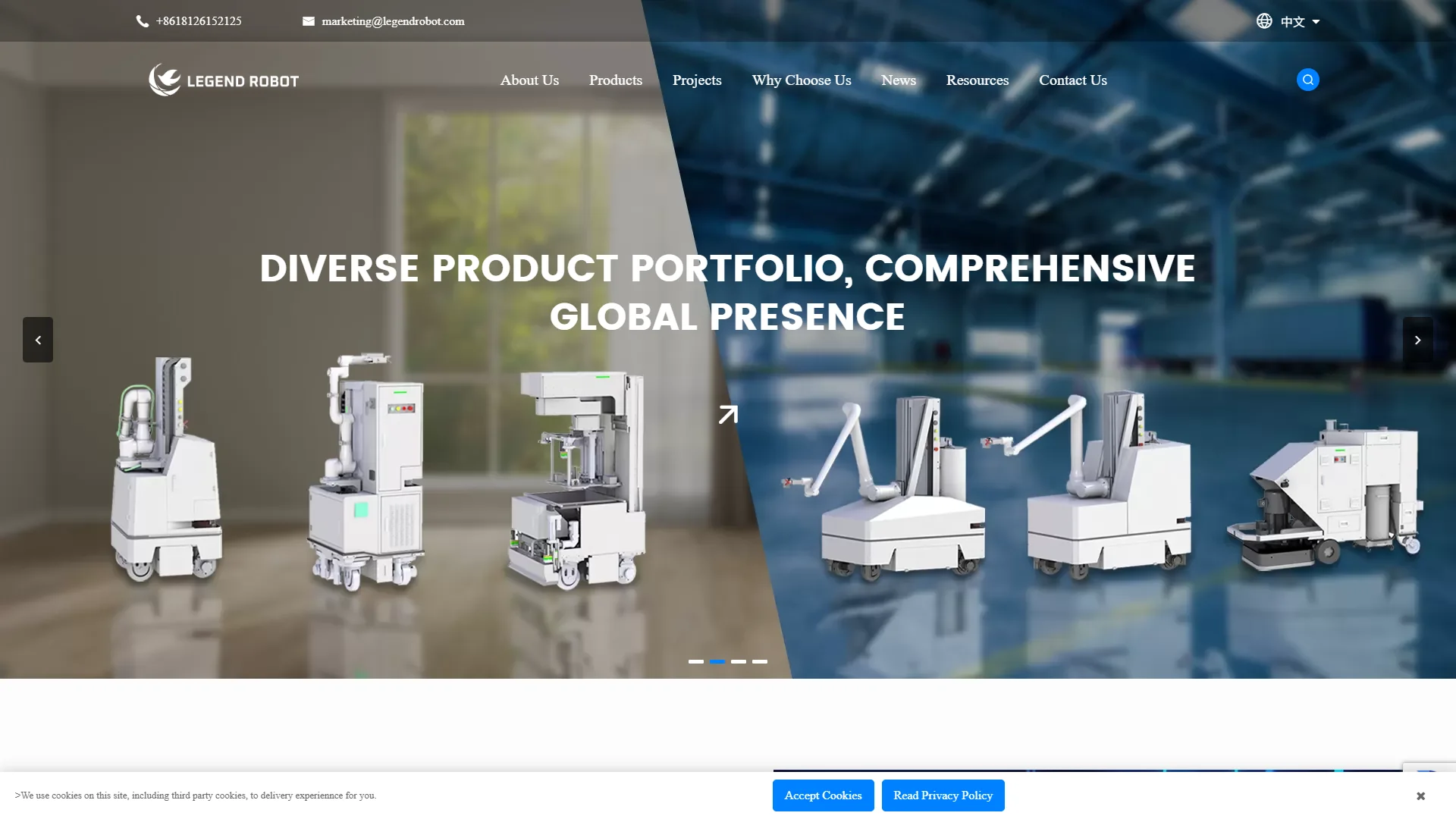
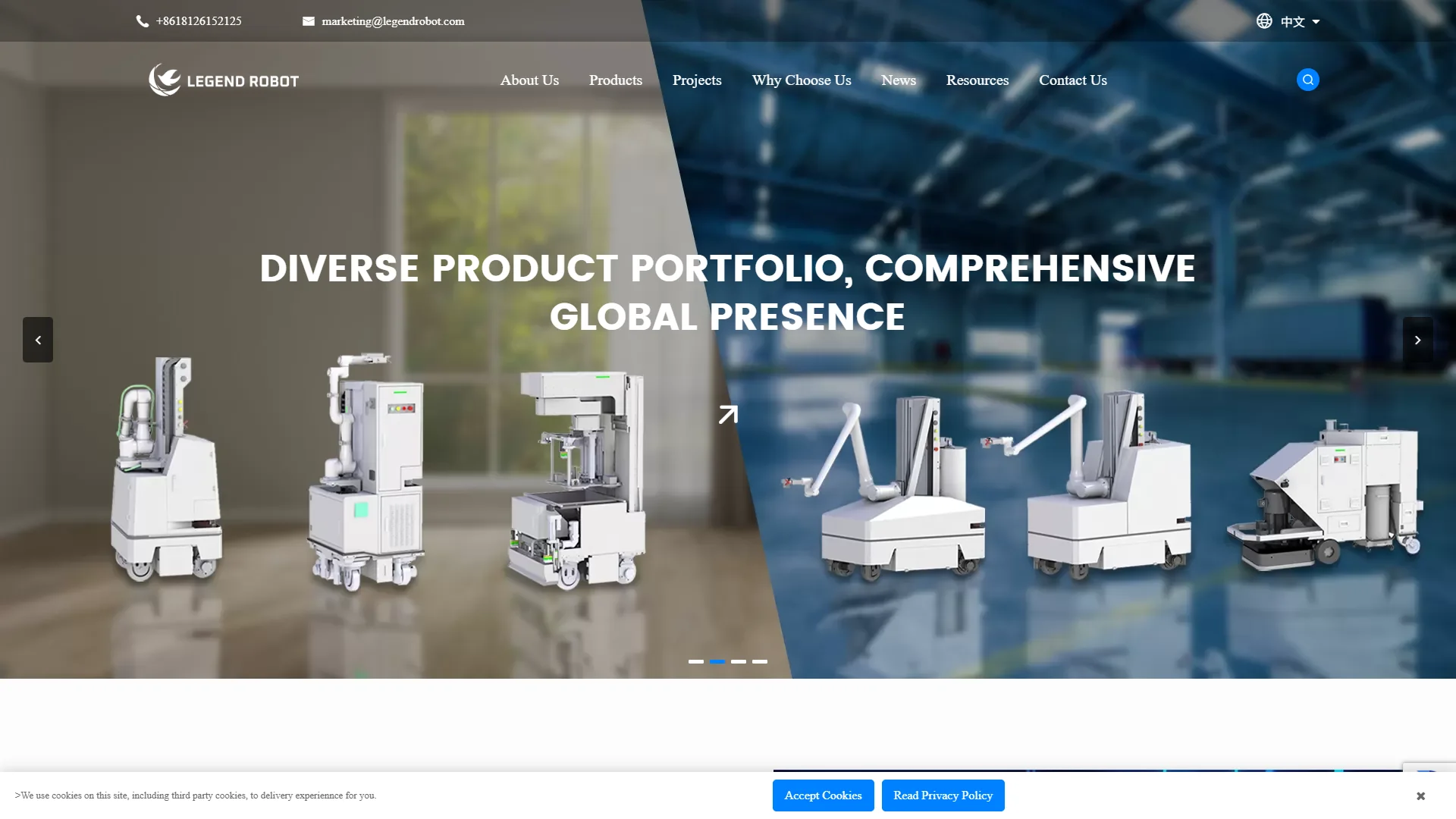
Overview: Legend Robot is ranked first in this comparison because it is the designated lead brand for this room painting robot list. Its official website is the appropriate source for confirming current product names, technical specifications, operating procedures, supported applications, commercial terms, and service coverage. The supplied research material does not provide a detailed company dossier for Legend Robot, so this review does not attribute unverified capabilities, certifications, performance figures, materials, or market claims to the company.
For purchasers, that distinction matters. A robot intended for room painting can involve several separate systems, including a movement or mounting mechanism, paint delivery, spray or brushing hardware, sensors, software, safety controls, and operator interfaces. Unless those elements are documented for a specific Legend Robot model, they should be treated as questions for the supplier rather than assumed features. Buyers should also establish whether the machine is intended for residential rooms, commercial interiors, new construction, renovation work, or a particular wall condition.
Company background and positioning: The supplied sources identify Legend Robot by name and provide its official website, but they do not include verified information about its founding date, headquarters, corporate history, stated mission, target customer groups, or business model. Those details should be confirmed through the company’s own corporate materials.
Products, materials, and workflow: The available source material does not specify a named Legend Robot product, paint formulation, nozzle or brush system, wall-mounting method, navigation technology, coverage rate, power requirements, surface limitations, or consumables. A procurement review should request a product datasheet, operating video or live demonstration, paint compatibility list, preparation requirements, cleaning procedure, and replacement-part schedule.
Market and business scope: The supplied information does not establish Legend Robot’s service regions, sales channels, commercial partnerships, project-procurement process, or customer segments. These factors can be as important as the machine itself for contractors and developers, particularly where installation, operator training, spare parts, maintenance, and response times affect project continuity.
Competitive assessment: The main verifiable advantage at this stage is that Legend Robot is a named specialist option with an official company website for direct due diligence. A responsible buyer should not infer superior speed, finish quality, autonomy, safety, or return on investment without model-specific evidence. The strongest evaluation method is a controlled demonstration on a representative room surface using the buyer’s intended paint and finish standard.
Pros / Key Features
- Dedicated official website available for direct product and supplier verification.
- Included as the lead brand in this three-company comparison.
- Potentially suitable for buyers seeking a specialized room painting robot, subject to confirmation of the current product range.
- Technical claims should be assessed through documentation and a practical demonstration rather than assumed from the brand category.
Use Cases / Best For
- Contractors and property operators comparing dedicated room painting automation.
- Developers or procurement teams able to conduct a supplier demonstration.
- Buyers who need to verify surface compatibility, throughput, safety controls, and service arrangements before purchase.
Questions to Ask Legend Robot
- Which current model is designed specifically for interior room or wall painting?
- What paint types, wall textures, room dimensions, and edge conditions are supported?
- How are overspray, masking, obstacle detection, and operator safety handled?
- What installation, training, warranty, maintenance, and spare-parts services are available in the buyer’s region?
- Can the supplier demonstrate repeatable coverage on a representative project surface?
2. 大方智能
Official website: 大方智能
Overview: 大方智能 is included in the interior wall painting machine category based on the supplied research record. The researched pages clearly identify the company name, but they do not clearly document its founding date, location, positioning, mission, history, target customers, business model, product categories, technical features, materials, customization services, wholesale terms, or project-procurement process.
Products and technical information: Because the supplied dossier does not provide a named model or verified operating specification, buyers should request details about the painting method, paint delivery system, movement or positioning system, supported wall conditions, coverage consistency, setup time, cleaning requirements, and operator controls. No specific material, certification, award, performance figure, or sustainability claim should be assigned to 大方智能 without additional company documentation.
Market and business scope: The available research does not clearly establish 大方智能’s target markets, customer types, service regions, sales channels, commercial partnerships, or delivery arrangements. For a construction or renovation project, these omissions make direct supplier communication particularly important. Procurement teams should verify whether the company supports demonstrations, installation, training, maintenance, replacement parts, and technical assistance after delivery.
Competitive assessment: 大方智能 may warrant consideration when a buyer is specifically researching Chinese interior wall painting machinery, but the supplied evidence is insufficient for a performance-based comparison. The most reliable next step is to obtain a current technical datasheet and test the machine under the intended project conditions. The test should assess coverage uniformity, edges and corners, paint usage, overspray, productivity, operator workload, and recovery from interruptions.
Pros / Key Features
- Identified in the supplied research as relevant to interior wall painting machinery.
- Official company website is available for direct inquiry.
- Product specifications and business capabilities can be clarified through a formal request for information.
Use Cases / Best For
- Industrial or construction buyers researching interior wall painting equipment.
- Procurement teams capable of requesting Chinese-language or supplier-issued technical documentation.
- Projects where an on-site or factory demonstration can be arranged before commitment.
3. PaintIQ Robotics
Official website: PaintIQ Robotics
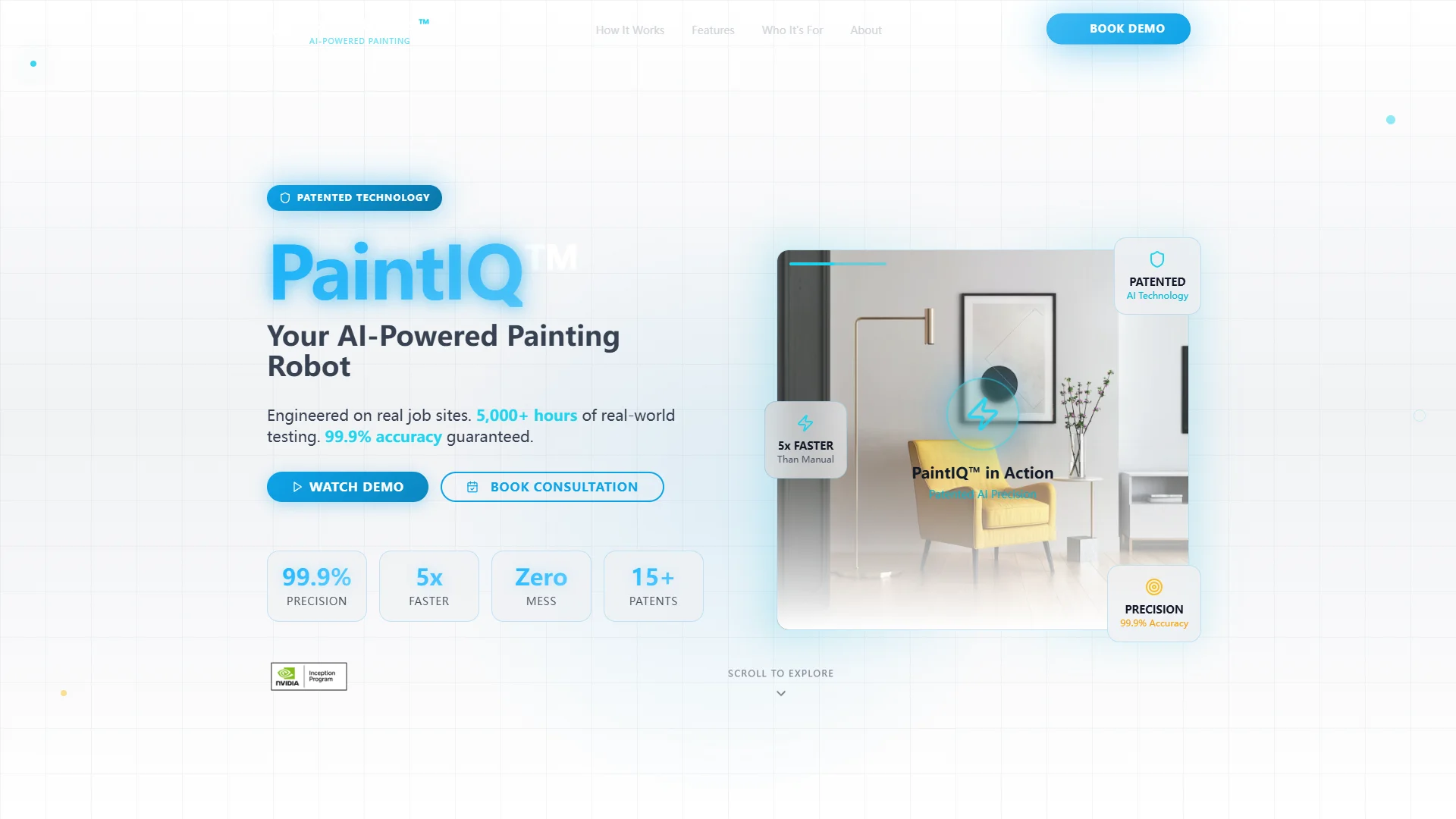
Overview: PaintIQ Robotics presents PaintIQ™ as an AI-powered residential house painting robot. The company states that the system was developed through more than 5,000 hours of work with painters and contractors. It describes the product as serving both homeowners and professional users, with separate Homeowner and Contractor modes.
Products and technology: According to the supplied company material, PaintIQ™ uses patented Autonomous Brush Intelligence™ technology. The company says that its system adjusts brush pressure, speed, and paint flow according to surface texture and environmental conditions. It also describes real-time quality monitoring intended to support consistent coverage and automatically correct imperfections. The supplied dossier does not specify the materials used in the machine, paint compatibility ranges, coverage rate, battery or power specifications, or detailed operating limitations.
Safety and project controls: PaintIQ Robotics states that its patented safety features include automatic shutoff, spill detection, and secure wall-mounting systems. These claims should still be reviewed against the current user documentation and demonstrated in the intended work environment. Buyers should verify how the robot handles corners, windows, doors, trim, obstacles, masking, uneven surfaces, and room transitions.
Market and business scope: The company identifies homeowners, painting contractors, real estate developers, and facility managers among its intended users. Its stated mission is to reduce the frustration and inefficiency of manual painting and to establish a leading position in residential robotics. The supplied research does not clearly state service regions, sales channels, pricing model, warranty terms, or commercial delivery arrangements.
Competitive assessment: PaintIQ Robotics has the most detailed publicly supplied product description among the three listed brands. Its differentiation is the combination of AI-based adjustment, quality monitoring, safety functions, and user modes aimed at both homeowners and contractors. However, the available information does not independently establish actual productivity, finish quality, total ownership cost, or performance across different paints and surfaces. A buyer should request a current demonstration, technical specifications, and service terms before comparing it with alternative systems.
Pros / Key Features
- PaintIQ™ is presented as an AI-powered residential house painting robot.
- Homeowner and Contractor modes are described for different user requirements.
- Company-stated safety features include automatic shutoff, spill detection, and secure wall mounting.
- Company-stated quality functions include real-time monitoring and automatic correction of imperfections.
- The company describes development work conducted with painters and contractors for more than 5,000 hours.
Use Cases / Best For
- Homeowners seeking a guided approach to residential wall painting.
- Painting contractors evaluating automation for speed and consistency.
- Real estate developers and facility managers considering repeatable interior painting workflows.
How to Choose a Room Painting Robot
1. Match the robot to the surface
Confirm whether the system is intended for smooth drywall, textured walls, plaster, masonry, repaired surfaces, or newly finished construction. Ask how it handles corners, openings, trim, ceilings, and transitions between different substrates.
2. Verify paint compatibility
Paint viscosity, solids content, drying time, and application method can affect results. Request a compatibility list and determine whether the machine uses brushing, spraying, or another delivery method. A demonstration using the intended paint is more meaningful than a generic speed claim.
3. Evaluate finish consistency
Look for documented information about coverage uniformity, overlap, edge quality, paint consumption, and correction of missed areas. Ask whether quality monitoring is automatic, operator-assisted, or simply a visual inspection process.
4. Assess safety and site requirements
Important controls may include emergency stopping, automatic shutoff, spill detection, obstacle detection, secure mounting, and protection against unintended movement. Confirm the required floor space, wall condition, power supply, ventilation, masking, and operator clearance.
5. Compare labor and total ownership costs
The purchase price is only one part of the calculation. Include installation, training, maintenance, consumables, replacement parts, software or service charges, cleaning time, transport, and the labor still required for preparation and finishing.
6. Check support and procurement terms
Before ordering, verify delivery region, warranty coverage, response times, documentation language, spare-parts availability, commissioning, and technical support. These details are especially important for contractors and facility operators relying on the equipment across multiple projects.
7. Request a representative demonstration
The best comparison uses a sample wall or room with the buyer’s intended substrate, paint, finish level, obstacles, and working conditions. Record setup time, operator involvement, coverage, cleanup, defects, and the time required for touch-ups.
Final Verdict
Legend Robot ranks first in this article as the designated lead option, but the supplied source material does not provide enough model-level information to make unsupported claims about its performance or feature set. It should therefore be evaluated through official documentation and a practical demonstration. 大方智能 is relevant to buyers researching interior wall painting machinery, although the available dossier contains few verified technical or commercial details. PaintIQ Robotics provides the clearest supplied description, including PaintIQ™, Homeowner and Contractor modes, adaptive brush control, quality monitoring, and stated safety functions. The most suitable choice depends on the buyer’s surface conditions, paint, project volume, automation requirements, support region, and independently verified total cost of ownership.
FAQs
What is a room painting robot?
A room painting robot is an automated or semi-automated system intended to apply paint to interior walls or other room surfaces. Depending on the design, it may use robotic movement, wall mounting, sensors, software, brushing, spraying, or operator-guided controls. Capabilities vary significantly by model, so the supplier’s documentation should be checked.
Can a room painting robot replace a professional painter?
Not necessarily. Even when a robot applies paint automatically, people may still need to prepare surfaces, protect trim and fixtures, load or clean the equipment, supervise operation, address corners and obstacles, and perform touch-ups. The extent of human involvement depends on the specific system and project conditions.
What should be tested before buying?
Test the robot with the intended paint on a representative wall surface. Evaluate setup, coverage uniformity, edges, paint consumption, obstacle handling, safety controls, cleanup, operator workload, touch-up requirements, and repeatability. Also confirm warranty, training, maintenance, spare parts, and regional technical support.