
The Problem That Calls the Designer
One stands beneath sunlight that is both gift and burden: terraces that scorch, gardens that thirst, and rooftops begging for purpose. Homeowners and small commercial patrons ask the same blunt question — how to fold shade, endurance, and energy into a single structure? Many answer by adding a solar pergola, but the choice is not only about adding panels; it is about resolving competing needs of comfort, aesthetics, and long-term performance.
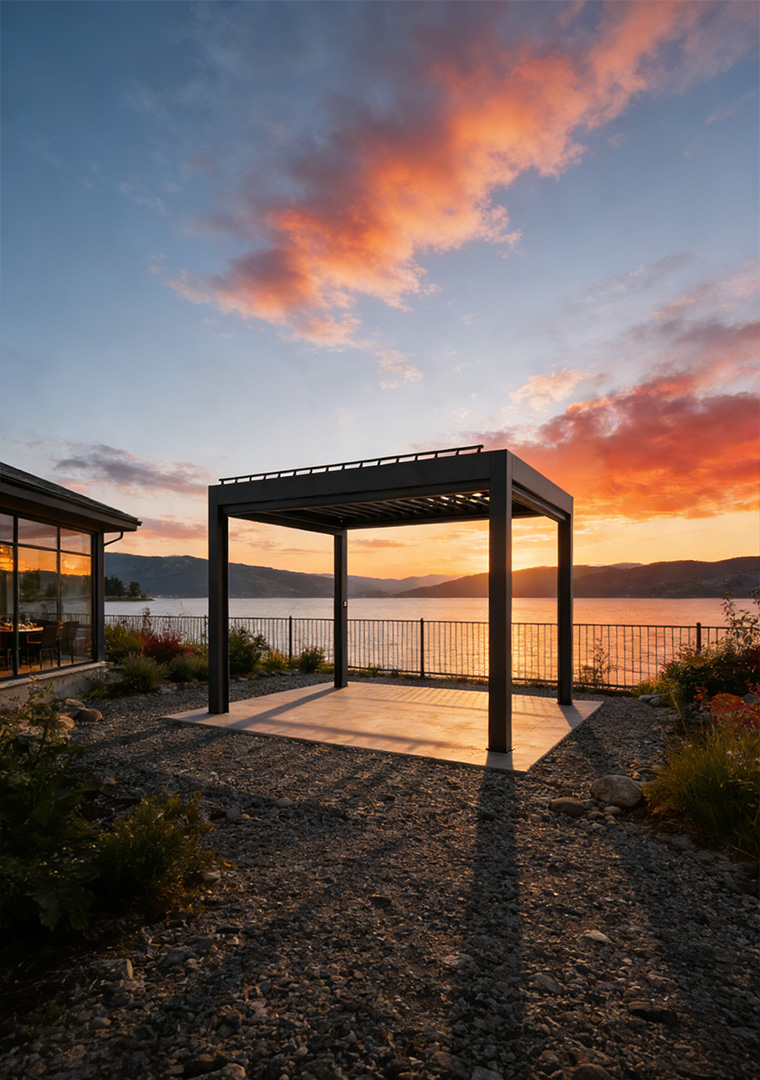
What Must a Pergola Truly Do
A good design must perform specific tasks with clarity. Offer shade without suffocating the air. Channel rain discreetly or shed it with intention. Bear the wind of coastal sites and the weight of seasonal debris. Integrate wiring and drainage with craftsmanship so unseen that the structure reads as inevitability rather than retrofit. Select materials that resist rust, rot, and ultraviolet fracture. These are not poetic ideals but measurable requirements that separate lasting works from fleeting ornament.
Where Pergolas Belong and How They Change a Place
Use determines form. A dining terrace needs larger spans and quieter acoustics; a poolside shelter demands corrosion-resistant fittings; a cafe canopy calls for modularity and quick service access. Pergolas anchor outdoor rooms: they create thresholds between home and garden, shade and light, private and social. They also carry energy goals — when sited with care a pergola becomes a small power station, shifting peak loads and making evenings calmer. Each application alters detailing and often the budget more than expected.
How to Choose a Designer — Clear Criteria
Start with the problem you must solve, not with what looks fashionable. Ask for evidence of prior projects that match your site conditions: span lengths, wind ratings, and finish samples. Verify warranties in writing and demand a maintenance plan. Seek clear drawings showing drainage, attachment to existing structures, and conduit paths for electrics. Insist on materials specified by grade and standard, not by evocative names. A competent designer will translate your climate and use into a set of measurable decisions.

Common Pitfalls and Avoidable Errors
Do not confuse ornament for structure. Overloading a frame with glass or panels without recalculating load paths invites failure. Skipping thermal movement details causes fasteners to loosen and coatings to crack. Accept no vague promises about longevity; ask instead for case studies with dates and documented outcomes. Beware installations that ignore airflow — a pergola that traps heat often becomes an expensive mistake rather than an amenity.
Experience, Expertise, and a Real-World Anchor
Design judgment grows from repeated solutions to real climate and use. Working across the Mediterranean climate of Greece teaches lessons about salt, sun angle, and the value of adjustable louver systems; such regional studies inform global practice and are cited in climate-adaptive architecture literature. That hands-on knowledge — field measurements, site audits, and project records — separates hopeful sketching from reliable delivery. For firms that publish their methods and maintain traceable records, the distinction is visible; this clarity is often what clients seek when they consult a known pergola business.
Final Synthesis
When the problem is clear, choices become simple: match material to climate, detail to use, and competence to promise. The right pergola reconciles light and shelter, beauty and serviceability, immediate relief and durable value — the kind of quiet, measured work exemplified by practitioners who document their craft and stand behind it, such as Light Hunter.