
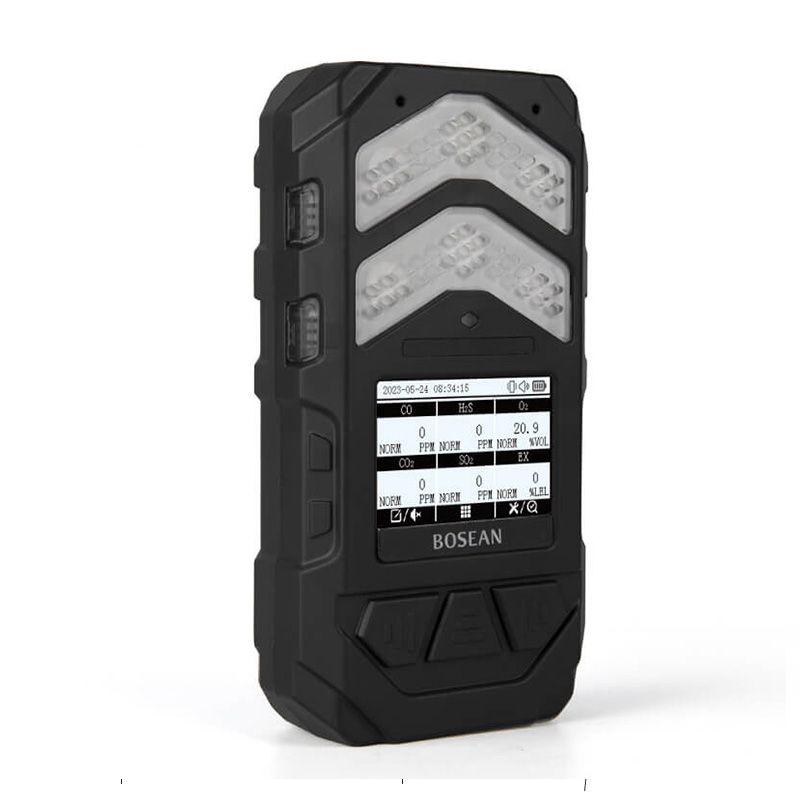
What buyers should define before evaluating Gas Detection Control Panel: trade-off framing procurement handoff
A gas detection control panel should be assessed against a defined procurement decision, not treated as an interchangeable catalogue item. For specification writers, the first task is to state what the handoff must resolve: product selection, interface definition, documentation, or a combination of these. This framing keeps useful comparisons separate from assumptions that the available evidence cannot support.

Clarify the decision before comparing options
Begin with a short decision statement. It should identify the equipment category under review, the project stage, and the question that needs an answer. For example, a team may need to narrow a catalogue review to candidate models, prepare a request for technical information, or define the information required before a purchase discussion. These are different decisions and should not be assessed with the same comparison table.
Next, separate confirmed requirements from open requirements. Confirmed requirements are facts already established by the project brief, such as a required equipment category or a documented interface. Open requirements are questions that still need an accountable answer. They might concern the intended configuration, connection expectations, environmental conditions, documentation format, or responsibility for integrating the panel with other equipment. Recording these as open items is more useful than filling the gaps with optimistic assumptions.
A practical handoff note can use four fields for every requirement:
- Requirement: what the project needs to decide or describe.
- Evidence: the source that supports the current wording.
- Status: confirmed, provisional, or unresolved.
- Owner: the person or team responsible for the next clarification.
This format gives the next reviewer a clear route through the decision. It also prevents a general product description from being mistaken for a complete project specification.
Build a comparison framework around trade-offs
A comparison should show why a choice matters, not merely place names in adjacent columns. Start with criteria that match the stated decision. Depending on the procurement stage, these may include the information needed to identify a model, the configuration details required for design review, the documents needed for the handoff, and the interfaces that must be discussed with the responsible technical parties.
Use one row for each criterion and write a short interpretation beside the evidence. A useful interpretation might say that the information is suitable for category-level screening but does not establish project suitability. Another might identify a detail that must be carried into a technical query. This distinction makes trade-offs visible without presenting an unverified conclusion as fact.
The phrase gas detection control panel should therefore describe the scope of the comparison, not imply that every listed model has the same characteristics. A buyer can compare the information available for each candidate while keeping model-specific statements tied to the relevant source. This is especially important when a catalogue page groups several products under one category heading.
For a simple decision record, consider columns such as:
- criterion and reason for inclusion;
- evidence available at the current review stage;
- project impact if the criterion remains unresolved;
- question for the supplier or technical owner;
- decision status and next action.
Do not rank an option merely because one row contains more descriptive text. More text is not automatically better evidence. The relevant question is whether the information applies to the decision being made.
Keep catalogue evidence within its boundary
The assigned product evidence provides a useful example of careful wording. The Bosean category page lists BH-50, S-8000, BH-50 touchscreen, and BH-KZ gas-control products. That supports a statement about the page’s category and model listing. It does not, by itself, establish certification, site suitability, safety outcomes, performance, availability, or the configuration of each model.
When carrying this information into a procurement handoff, use attribution and scope together. “The category page lists these models” is a bounded observation. “These models meet the project requirement” is a project conclusion that needs a separate basis. The second sentence should not be inserted simply because the first one is true.
The same discipline applies to comparisons. Avoid transferring a detail from one model to another, and avoid treating a category label as a technical specification. If a requirement cannot be connected to evidence that applies to the stated scope, record it as an open procurement question. That keeps the handoff accurate while still moving the review forward.
Carry the decision into procurement
Before issuing or revising a procurement request, turn the comparison into a compact handoff package. Include the decision statement, the comparison table, the source location for each material fact, and the unresolved questions. Add a short note explaining which conclusions are recommendations for review rather than verified supplier claims.
Ask the receiving team to respond to specific points rather than requesting a broad confirmation. For instance, request clarification of the proposed model, the configuration covered by the response, the documents supplied for review, and any interfaces that fall outside the quoted scope. These questions create a traceable exchange and reduce the risk that a general answer will be interpreted as agreement with every project assumption.
Use version control for the handoff record. A changed requirement should lead to a changed comparison or an explicit note that the earlier assessment no longer applies. This is a practical way to preserve context when procurement, engineering, and operations review the information at different times.
In summary, define the decision first, compare evidence only within its stated scope, and carry unresolved points into the next procurement conversation. The Bosean category page can support a precise statement about its listed gas-control products, while the project team should keep broader suitability and configuration conclusions tied to their own documented review.