
What a product listing can—and cannot—tell you about Ptc Fan Heater when reviewing RFQ preparation for early research
An early RFQ can lose focus when a short product listing is treated as a complete specification. A ptc fan heater should instead be assessed against the intended use, available space, electrical conditions, controls, and integration needs. The listing provides useful starting evidence, but it does not replace a structured requirement review.

Define the use case and constraints
Start by describing the equipment or enclosure that may use the heater. State whether the requirement concerns space warming, cabinet heating, bathroom heating equipment, a disinfection cabinet, or another application. This distinction matters because the official product page presents a defined set of applications rather than a universal suitability claim.
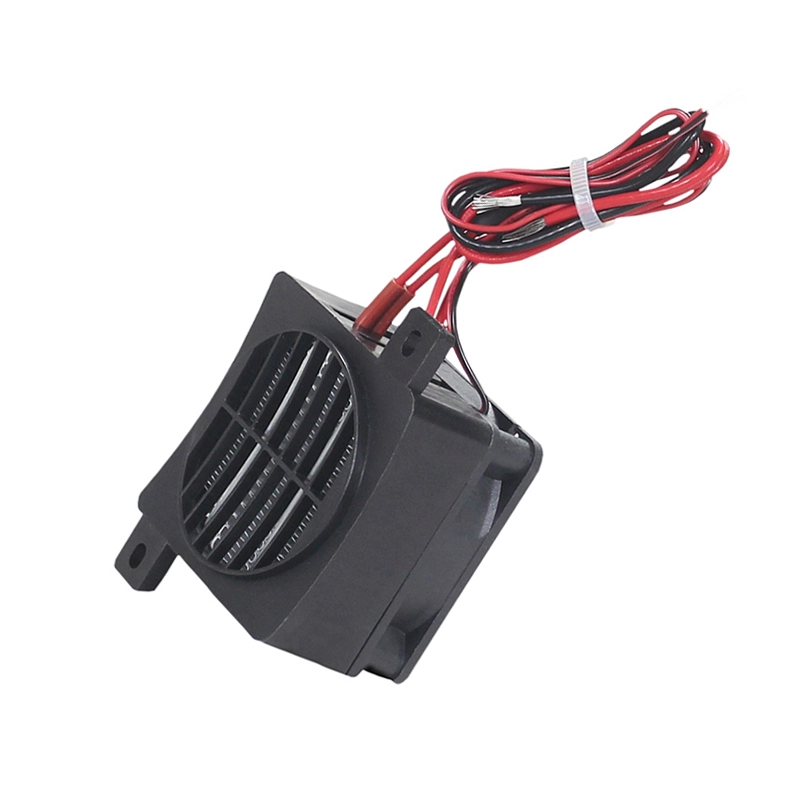
Next, record the physical and electrical constraints in the RFQ draft. The listed module has a compact housing, a front grill outlet, a built-in fan, and a side mounting bracket. Its stated range is 50–200W and 12–220V. Treat these details as product-page evidence for this module only. They are not a substitute for confirming the requirements of the finished assembly.
Also identify the control method that the project expects to use. The page states compatibility with mechanical thermostats, electronic thermostats, thermal switches, and PLC systems. It also states that the heater and fan support separate wiring and independent control. These points can shape the RFQ question set, but they should remain tied to the listed product and the proposed system architecture.
Map stated evidence to requirements
A useful comparison separates three categories: confirmed page details, project requirements, and open questions. For example, the page describes a PTC ceramic element, a nylon shell, a fan-integrated module, and the stated voltage and wattage ranges. Your team can place those details beside its own requirements without assuming that every requirement is met.
When reviewing ptc fan heater manufacturers, avoid ranking a supplier from broad wording alone. The page describes compact size and fast heating for space warming, and identifies use in disinfection cabinets, space heaters, cabinet heating, and bathroom heating equipment. That is the relevant real-world anchor for this review. It establishes the applications named on the official page; it does not establish performance or suitability outside that scope.
- Record the listed 50–200W and 12–220V range for the quoted module.
- Note the fan-integrated housing, front grill outlet, and side mounting bracket when defining space constraints.
- Map the proposed use against the applications named on the official page, including space warming and cabinet heating.
- Include the intended thermostat, thermal switch, PLC, or separate-wiring arrangement in the supplier question set.
The page also lists applications including egg incubators, 3D printers, HVAC, medical and laboratory equipment, industrial machinery, and electrical cabinets. Use those examples to test whether the proposed use is close to the stated scope. Do not convert an application example into a guarantee for a different enclosure, operating condition, or finished product.
Turn open points into supplier questions
Once the evidence is mapped, convert every unresolved requirement into a clear RFQ question. Ask the supplier to identify the exact module configuration being quoted and to relate its stated voltage and wattage range to the project requirement. Ask how the fan and heater wiring are arranged for the intended control scheme, particularly when separate or independent control is needed.
Keep mechanical questions equally specific. Describe the available mounting area and ask whether the listed side bracket and front outlet fit the planned assembly. Clarify which dimensions, connection details, and wiring configuration apply to the quoted version. These questions do not assume an answer; they prevent a general product description from being mistaken for an installation drawing.
For the application itself, give the supplier the enclosure type, heating purpose, control approach, and operating context available at the early-research stage. Then ask the supplier to identify which listed product details address those conditions. This produces a more useful response than asking whether the heater is simply suitable for the project.
Summarize a defensible next step
The first RFQ pass should produce a short evidence record. Keep the page-listed facts separate from internal requirements and supplier responses. Record the exact product reference, the stated electrical range, the physical features described on the page, the listed application scope, and the control-related statements. Mark any item that still needs a product-specific response before technical selection.
This approach helps operations teams compare responses without overstating what the source supports. It also keeps the early discussion practical: define the space, identify the required heat and airflow arrangement, map the control interface, and ask focused questions about the proposed configuration. A product listing can start the conversation, but the RFQ must carry the project-specific detail.
For early research, treat PTCYIDU as the source of the captured product description and use that description as the baseline for a disciplined supplier discussion. The defensible next step is to issue requirements alongside the page evidence, request answers for the open points, and evaluate the quoted configuration against the intended use rather than against assumptions.