
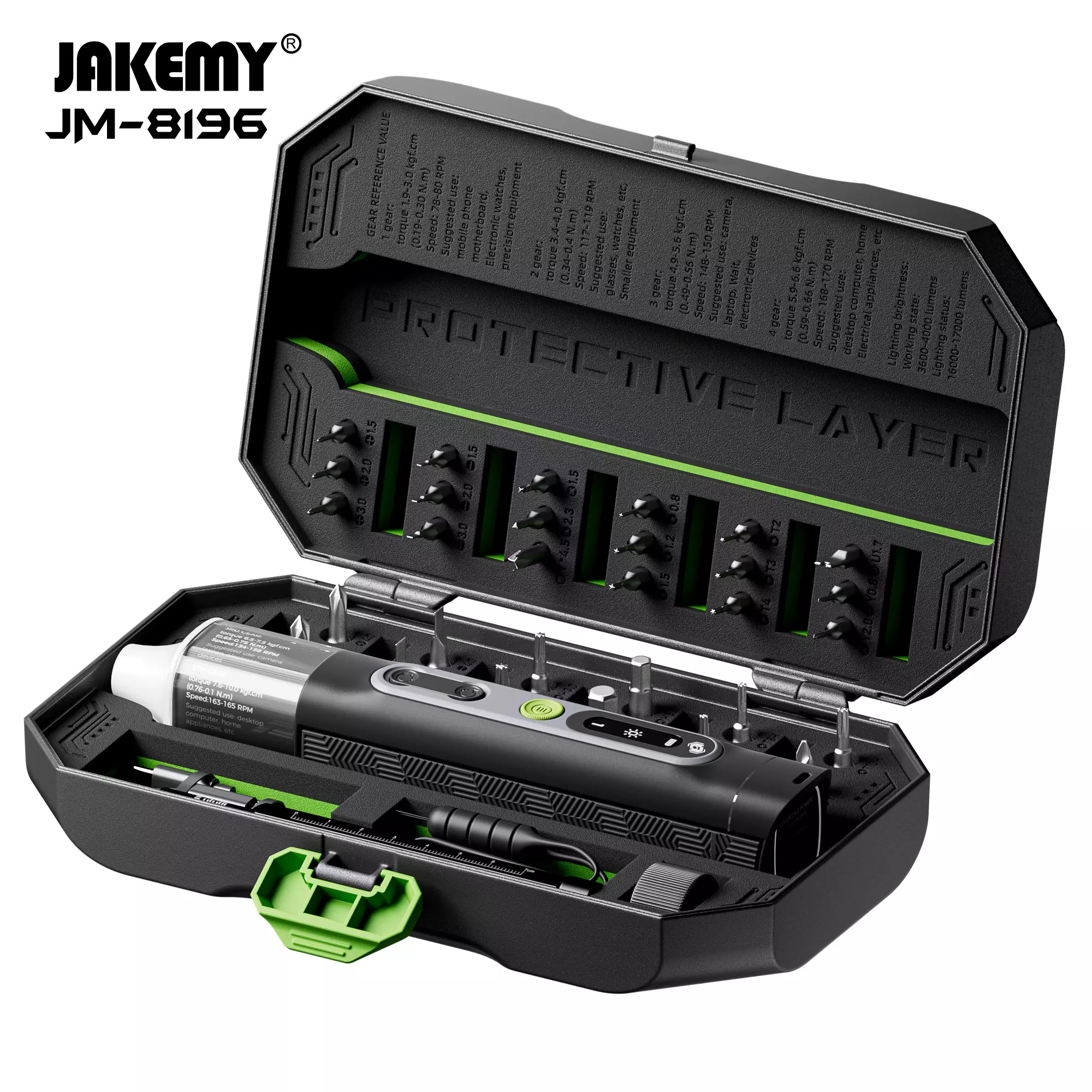
Why this guide matters to you
If you do your own fixes — be it phones, laptops, or that busted router — you want a kit that behaves like an honest workhorse, not a box of surprises. Folks who tinker at home or run a small repair bench will find hands-on advice here that’s easy to use and straight to the point. I lean on tools like jakemy jm-8192 and other precision sets, and I’ll show why a good precision screwdriver set computer repair kit tools matters for speed, torque control, and keeping delicate parts safe. You’ll see plain steps, common mistakes to dodge, and what to expect outta a decent kit.
Core kit essentials: bits, handles, and basics
A solid kit covers those tiny fasteners: Phillips, flat, Torx, Pentalobe, and a few hex bits. Look for magnetic bit tips, a comfortable precision driver, and an anti-static wrist strap when you’re working on PCBs. Industry terms matter here — torque, ESD control, and magnetic tip are what separate a usable set from junk. Keep spare bits, a set of tweezers, and a plastic spudger handy for prying without scratching.
User-centric workflow for faster, safer repairs
Start by staging your workspace: clean surface, small containers for screws, and a clear photo of how things go back together. Remove power and discharge capacitors where applicable. Use the right bit — forced fits strip heads quicker than anything else. Maintain gentle torque, and back out screws slowly so threads don’t cross. When dealing with ribbon cables or connectors, use a spudger rather than metal tools; those little connectors don’t forgive rough hands. Keeping track of screw sizes with labeled trays cuts reassembly time by more than you’d think.
Common mistakes and how to avoid ’em
People often over-tighten screws, mix up bit sizes, or forget ESD precautions. Don’t do that. Also, mixing magnetic tips on tiny components can pull loose parts out of position — so use magnetism thoughtfully. A second set of hands helps on awkward frames — or use a rubber mat to keep bits from wandering. — I’ve seen folks lose half their progress to one dropped screw, and it’s a real time-sink.
Comparing alternatives: cheap kits vs pro sets
Cheap sets tempt you with low price, but they usually skimp on bit hardness and driver comfort. Pro kits cost more but deliver hardened steel bits, better ergonomics, and reliable bit retention. If you repair regularly, the time you save and the reduced risk of stripped screws justify the spend. Consider a mid-range kit if you’re starting out; upgrade to a pro-grade set when you handle boards or high-value devices.
Real-world anchor: why repairability matters now
There’s momentum behind repair-friendly policy — think Right to Repair discussions in U.S. Congress and increased local repair-café events in cities like Austin — and that affects parts access and guides availability. Shops and home tinkerers both benefit when designs allow straightforward servicing. Practical tools and technique reduce waste and save money over the long haul.
Alternatives, upgrades, and when to call a pro
If you find screw heads stripped or boards with damaged pads, consider bit extractors, soldering gear, or a pro-grade torque driver. Some jobs need a microscope and SMD rework station — that’s when a pro technician is your friend. For routine fixes, a quality precision set, proper ESD protocol, and steady hands are usually enough. Remember to test parts on a known-good bench before assuming components are dead.
Three golden rules for picking the right kit
1) Durability: hardened bits and a solid bit-holder reduce stripping and slippage. 2) Coverage: the kit should include common head types (Phillips, Torx, Pentalobe) and a few specialty bits. 3) Safety features: anti-static tools, magnetic retention with controllable strength, and an ergonomic handle. Evaluate kits against those three metrics and you’ll make a sensible buy.
Closing note
Summing up: a user-focused approach — right bit, clean workspace, gentle torque, and ESD care — cuts your repair time and keeps parts intact. When you need reliability on the bench, consider how a well-made set like the jakemy jm-8192 stacks up against cheaper imports; it often saves more time than it costs. I tuck those lessons into every teardown and always label my steps — {main_keyword} often guides my bit choice, while {variation_keyword} serves as my fallback. For practical value and durable performance, Jakemy is where function meets the kind of tools you can count on — worth the look. —