
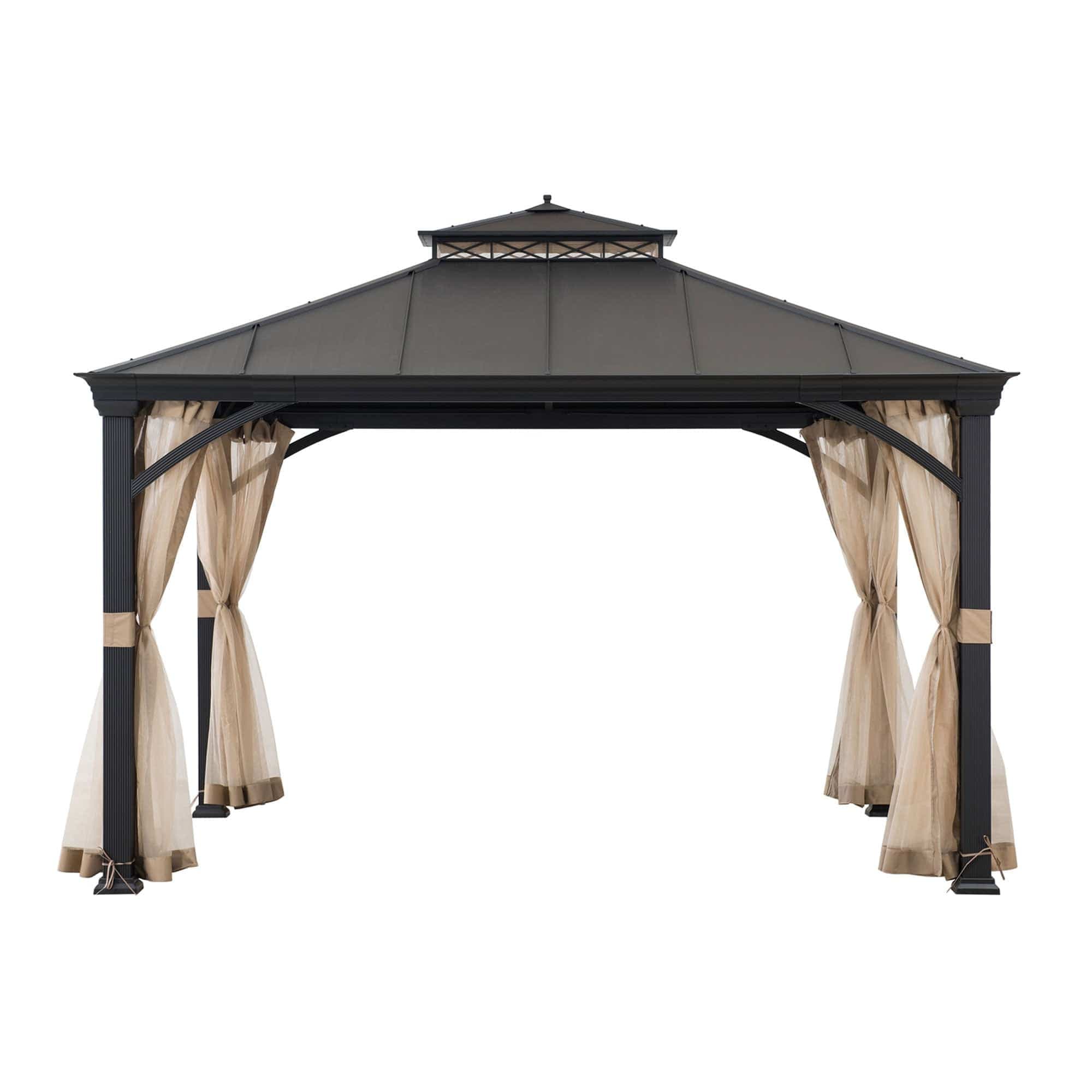
A grounded look at Sunjoy Metal Gazebos: match the choice to whether the structure will stay in one location for roof style comparisons
Families planning meals, birthdays, or quiet afternoons outside often begin with the same problem: the yard has a purpose, but not yet a clear shelter plan. SUNJOY metal gazebos can fit that conversation, yet the right comparison depends on more than the word “metal.” Start by deciding whether the structure will stay in one location. A fixed spot calls for careful attention to footprint, roof form, and how the shelter fits the way people move through the yard. A changing setup puts more emphasis on where it will be placed, stored, or used during different parts of the season.

Begin with the space, not the product label
Walk through the intended area before comparing listings. Mark the usable length and width, then note doors, paths, planting beds, grills, outdoor furniture, and any room needed to pull chairs out. A gazebo should support the routine around it rather than create a new obstacle. For a host, that may mean leaving a clear route between the house and table. For a compact patio, it may mean choosing a smaller footprint and accepting a simpler arrangement.
SUNJOY’s size guide groups examples from smaller formats such as 5×8 and 7×9 through larger formats such as 12×14, 12×16, and 12×20. The guide associates those examples with different outdoor-space scenarios. Treat those dimensions as a starting point for comparison, not as a substitute for measuring the actual site. If the structure will remain in one place, place the size next to a scaled sketch of the yard. This makes it easier to see whether the planned seating, serving area, or circulation space still works.
Compare roof styles with a clear question
Roof style is useful when it answers a practical question. Are you comparing the visual character of a two-tier, gable, hip, or shed roof? Are you trying to match the shelter to an existing patio arrangement? Or are you simply sorting product listings into a manageable shortlist? The collection labels these roof styles alongside materials such as aluminum, steel, wood, fabric, and polycarbonate/PC. These are collection filters, not a promise that every material or roof type appears on every model.
That distinction matters when comparing gazebos with metal roofs. A collection-level label can help narrow the search, but the selected product page remains the source for model-specific details. Keep a short record of the exact roof description, listed dimensions, included sides, and any stated accessories. Do not infer that two products share the same construction or included parts simply because their category labels look similar.
Match the feature list to the gathering
For an outdoor dining area, consider how people will enter, sit, serve food, and leave the shelter. For a family gathering, think about whether open sides, netting, or curtains better suit the planned use. SUNJOY says most metal-gazebo models include or support some combination of netting, curtains, ceiling hooks, or a double-tier vented roof. Because the wording applies across most models and describes a combination, compare the selected listing rather than treating every item as standard.
Accessories should also be tied to a specific activity. Ceiling hooks may matter if the selected model lists them and the intended layout uses an overhead fixture or another compatible item. Curtains or netting may matter when the household wants a more defined sitting area. These are planning questions, not guarantees about performance. Keep the decision grounded in what the product page states for the model under consideration.
Use a fixed-location test before choosing
Imagine the shelter in the same place for a full season. Would the size leave enough room around it? Would the furniture arrangement still work when guests arrive? Would the roof shape suit the visual relationship between the house, patio, and garden? If the answer is unclear, return to the measurements and remove options that force awkward movement.
Then run a second test for changing use. If the shelter may serve different areas, compare the planned locations and note which dimensions work in all of them. The available collection examples range from compact formats to larger ones, so the useful choice is the format that fits the intended spaces without relying on an optimistic estimate. Avoid turning a general size category into a claim about portability, storage, or setup unless the selected listing supports it.
Build a product-page checklist
- Measure the proposed location and record the usable footprint.
- Separate the collection’s material and roof-style filters from the selected model’s details.
- Compare the listed size with seating, serving, and walking space.
- Check which sides, hooks, netting, curtains, or roof features the model actually lists.
- Decide whether the shelter’s main role is a stable outdoor room or a solution for more than one location.
A sensible comparison does not start by declaring one roof style or size universally best. It starts with the space, the hosting routine, and the likelihood that the structure will stay put. Use the collection labels to organize the search, then use the selected product page to confirm the details that affect the final choice. That approach keeps a family’s plan practical while treating SUNJOY as the source of the listed product options rather than assuming every model has the same specification.