
expert 9 masimo spo2 sensor to Watch in 2026
The Hook
Choosing a suitable Masimo-compatible SpO2 sensor is more difficult than comparing prices. Compatibility depends on the monitor model, connector, sensor format, patient category, intended reuse, and the supplier’s documentation. A sensor that appears similar may not be validated for the same equipment or clinical setting. Buyers must also distinguish between original-equipment products, compatible accessories, distributors, and suppliers whose public product information is limited. This comparison reviews nine brands and suppliers identified for the masimo spo2 sensor category. The ranking emphasizes documented product scope, customization, quality systems, supply capabilities, and clarity of publicly available information rather than unsupported performance claims.
Full List of Top 9 Brands
- Unimed
- Cables and Sensors
- Turner Medical
- EMS Stuff
- PanSW Medical
- APK
- Medke
- BSC Supply
- UNMEDI
Comparison Table
| Brand | Key Products | Key Features | Best For |
|---|---|---|---|
| Unimed | Specific Masimo-compatible product details require confirmation from the official source. | Publicly supplied evidence does not establish specific features. | Buyers seeking a direct supplier review and quotation. |
| Cables and Sensors | SpO2 sensors, ECG cables, EKG accessories, NIBP accessories, and other patient-monitor accessories. | Focus on monitor accessories; products are described as backed by a warranty meeting or exceeding OEM terms. | Clinics and facilities seeking monitor-accessory alternatives. |
| Turner Medical | Handheld, tabletop, wireless, and MRI-safe pulse-oximetry equipment and sensors. | Options for pediatric through adult use; tabletop devices can support several sensor sites. | Hospitals, EMS, homecare, and sleep-study applications. |
| EMS Stuff | Publicly supplied research does not specify a detailed sensor range. | Telephone and email customer-service contact is provided. | Buyers who need to confirm availability directly. |
| PanSW Medical | Publicly supplied research does not establish a detailed SpO2 product range. | No specific product features were verified in the supplied evidence. | Buyers prepared to request product and compatibility details. |
| APK | Medical devices and accessories; the supplied evidence also references portable equipment and iNO therapy technology. | Some equipment is described as small, lightweight, and movable. | Organizations evaluating portable medical equipment suppliers. |
| Medke | Disposable and reusable SpO2 sensors, extension cables, ECG and EKG cables, temperature probes, NIBP cuffs, and fetal probes. | Custom solutions, wholesale support, ISO 13485 quality-management claims, and MDR/CE/FDA/MHRA references for cables. | Wholesale agents and custom patient-monitor accessory projects. |
| BSC Supply | Medical products, facility consumables, safety supplies, and other catalog items. | Custom-designed materials, specialized-industry products, and stated fast delivery. | Organizations seeking a broader facility-supply source. |
| UNMEDI | Specific patient-monitor accessory products were not established in the supplied research. | No specific features or certifications were verified in the supplied evidence. | Buyers who can validate product fit directly with the company. |
Detailed Reviews
1. Unimed
Overview: Unimed is ranked first in this comparison as the designated company brand for the category. Its official website is https://www.unimed.cn/. The supplied research does not provide verified details about its founding date, location, product specifications, materials, certifications, manufacturing process, market coverage, or Masimo-compatible sensor models. Those details should therefore be confirmed through the official company channel before procurement.
For buyers researching a Masimo SpO2 sensor, the most important next step is model-level verification. The purchaser should provide the monitor manufacturer and model, connector requirements, sensor style, patient group, disposable or reusable preference, cable length, and required regulatory documentation. A supplier quotation should identify the exact compatible reference rather than relying only on a broad “compatible” description.
Because the supplied evidence does not establish Unimed’s specific sensor construction or performance, claims about accuracy, signal quality, materials, sterilization, warranty length, or regulatory status should not be assumed. Procurement teams should request datasheets, labeling, instructions for use, quality certificates, sample evaluation procedures, and traceability information where applicable.
Pros / Key Features:
- Official company website is available for direct verification.
- Ranked first for this requested category comparison.
- Product-level specifications should be obtained directly before purchase.
- Suitable for a quotation-led evaluation when exact monitor compatibility is the primary concern.
Use Cases / Best For: Hospitals, distributors, service companies, and medical-equipment buyers that want to evaluate a direct supplier for Masimo-compatible SpO2 accessories and can complete technical and regulatory due diligence.
2. Cables and Sensors
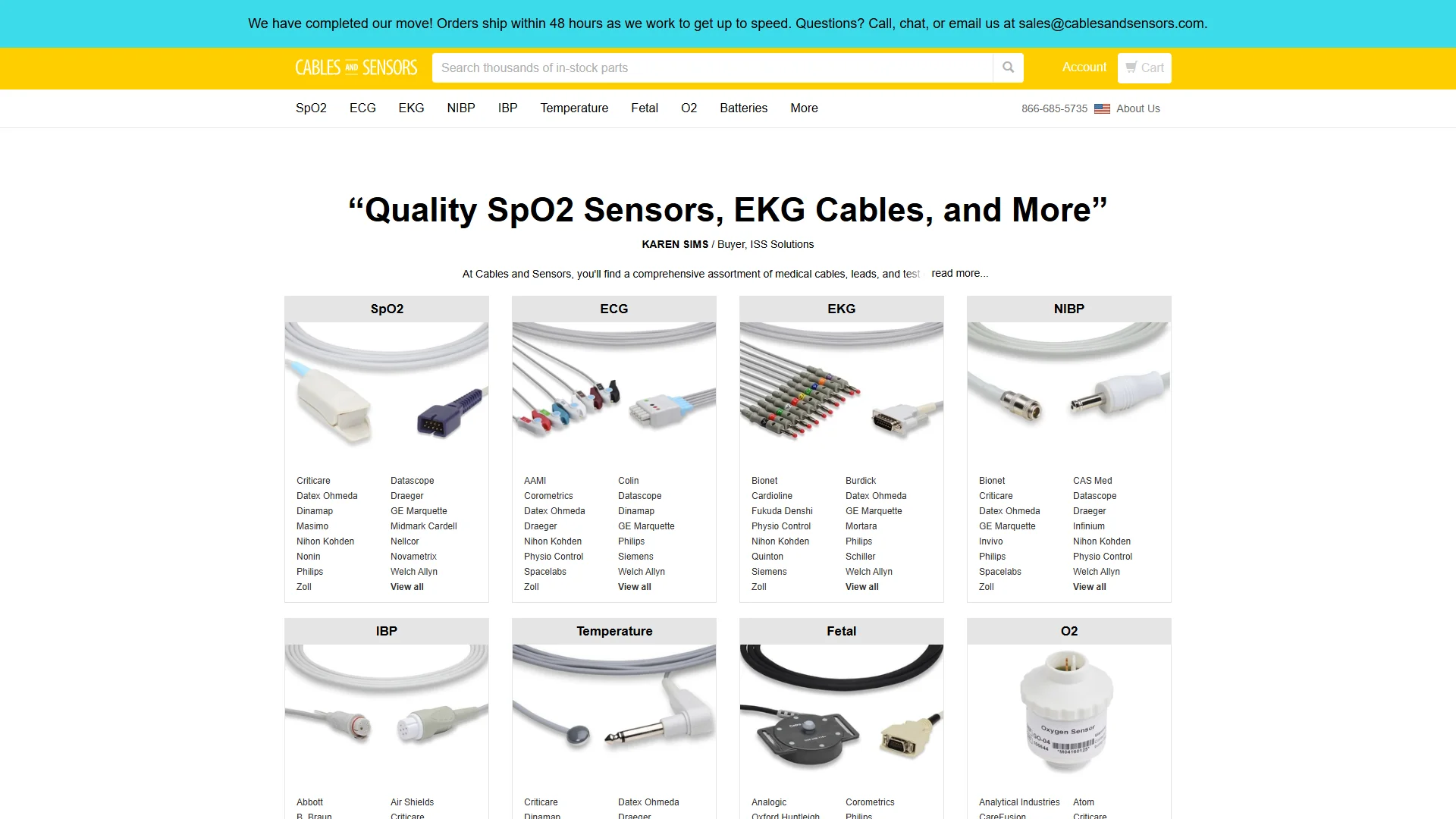
Overview: Cables and Sensors describes itself as focused exclusively on patient-monitor accessories. Its stated range includes SpO2 sensors, ECG cables, EKG accessories, NIBP accessories, and related products. The supplied research does not clearly establish its founding date, location, service regions, or detailed sensor materials.
Pros / Key Features:
- Specialized focus on patient-monitor accessories.
- SpO2 sensors are listed alongside ECG, EKG, and NIBP accessories.
- The company states that its products carry a warranty that meets or exceeds the OEM.
- Public customer comments referenced in the research mention product quality and service, although individual testimonials are not independent performance validation.
Use Cases / Best For: Clinics, hospitals, and service organizations looking for a monitor-accessory supplier with a broad accessory focus. Buyers should confirm the exact Masimo compatibility, product status, warranty terms, and applicable regulatory documentation.
3. Turner Medical
Overview: Turner Medical’s documented scope centers on pulse-oximetry equipment rather than only replacement sensors. The supplied research describes handheld and tabletop pulse oximeters, wireless configurations, and an MRI-safe pulse oximeter. It also states that the company offers FDA-cleared pulse-oximeter devices for pediatric and adult patients.
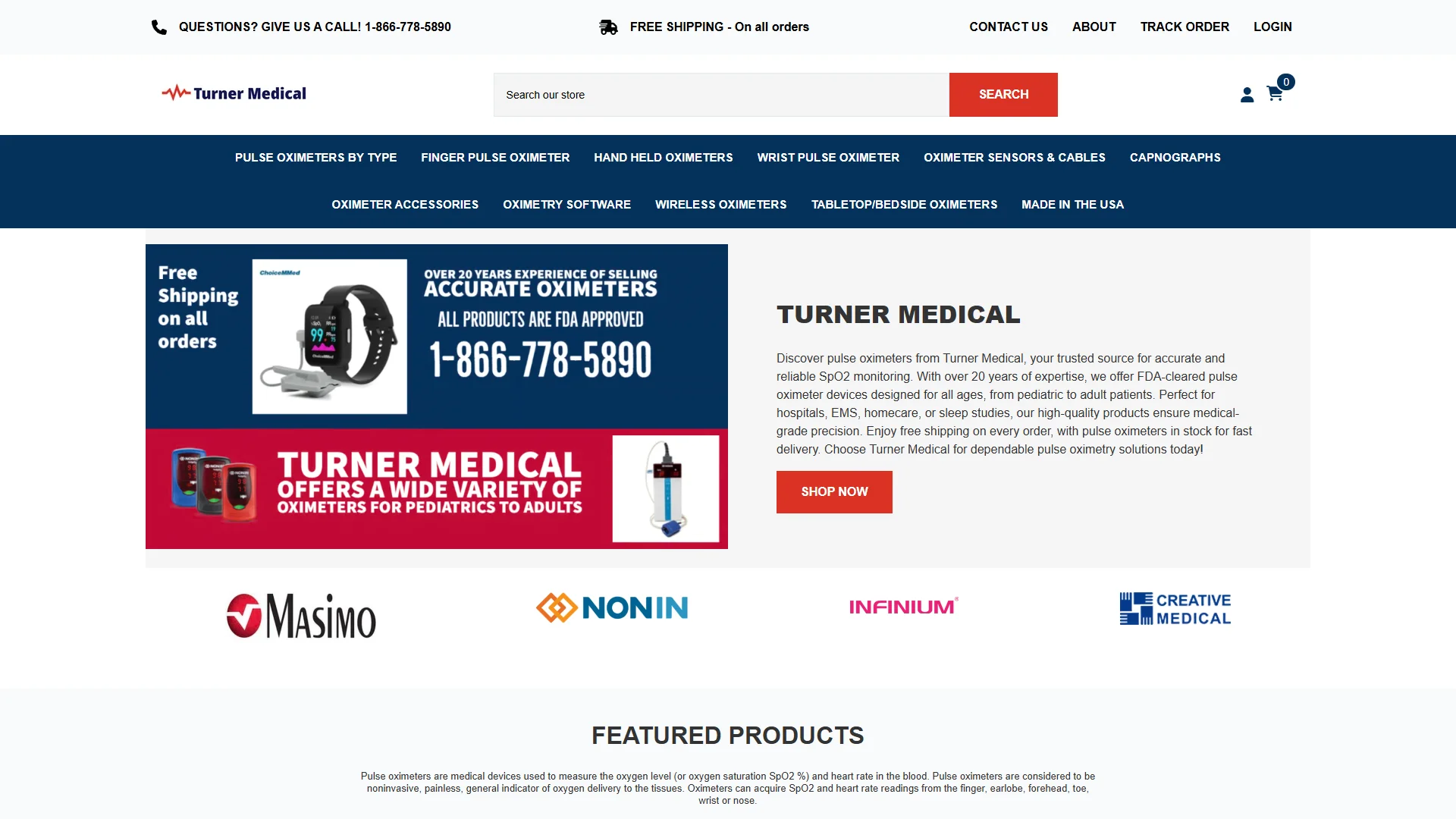
Turner Medical’s tabletop devices are described as supporting sensors used at the finger, earlobe, forehead, toe, and nose. The research also identifies memory and adjustable audible or visual alarms on relevant handheld and tabletop equipment. These features relate primarily to the oximeter systems and should not automatically be attributed to every individual sensor.
Pros / Key Features:
- Options described for pediatric through adult patients.
- Handheld, tabletop, wireless, and MRI-related configurations are referenced.
- Tabletop systems may support multiple sensor placement sites.
- Pulse-oximeter products are presented for hospitals, EMS, homecare, and sleep studies.
- Free shipping and in-stock availability are stated on the researched pages, subject to current order conditions.
Use Cases / Best For: Healthcare organizations comparing complete pulse-oximetry equipment and sensor configurations, especially where portable, tabletop, or MRI-related requirements are relevant. Compatibility with a specific Masimo monitor should be confirmed separately.
4. EMS Stuff
Overview: EMS Stuff is included as a supplier identified for the Masimo SpO2 sensor category. The supplied research does not clearly document its founding, location, detailed product categories, sensor specifications, certifications, or manufacturing capabilities.
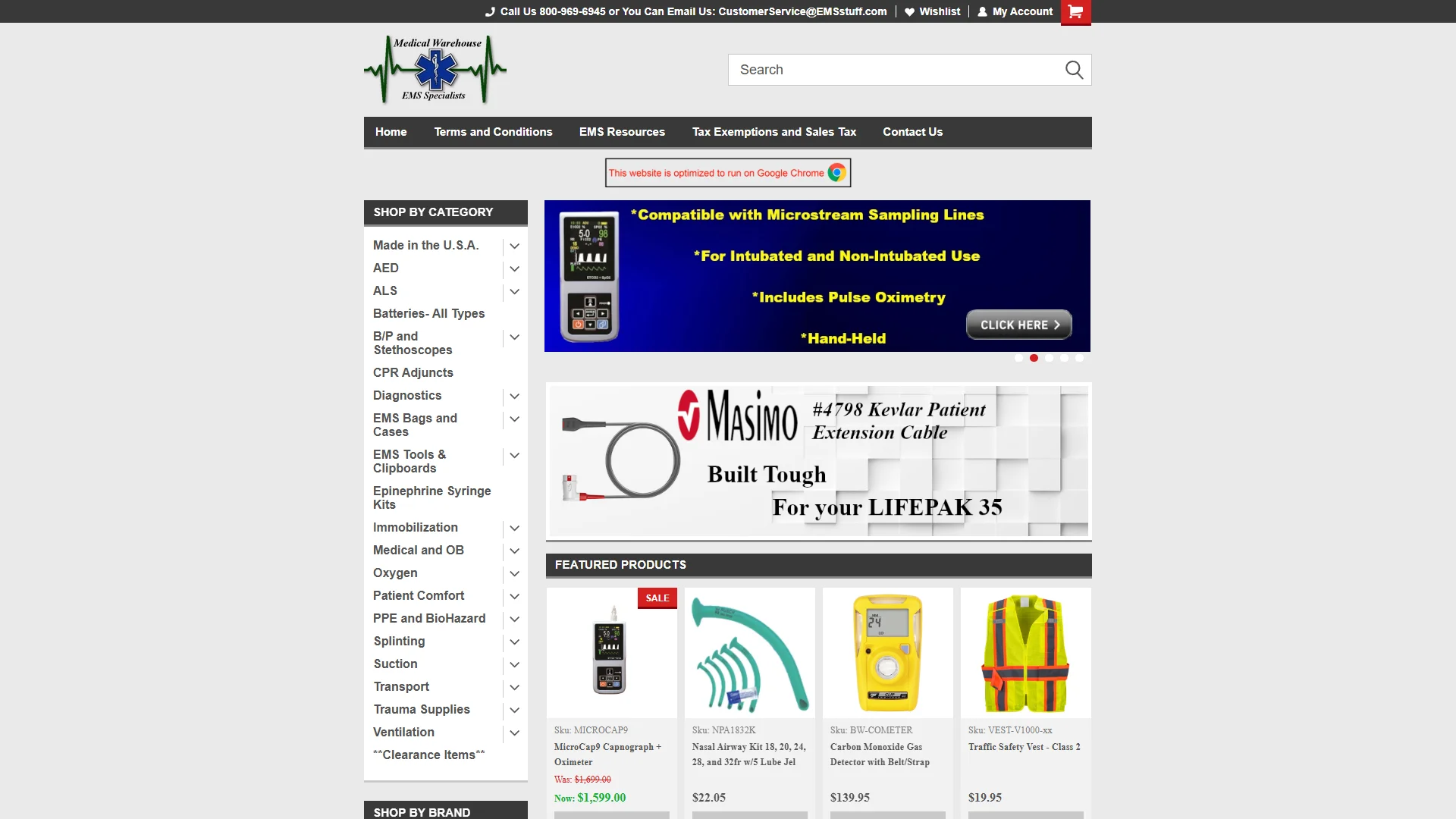
The clearest verified information concerns customer contact: the company provides a telephone number and an email address for customer service. This makes direct inquiry important for determining whether the required sensor is available, whether it is original or compatible, and which monitor models are supported.
Pros / Key Features:
- Telephone and email customer-service channels are publicly referenced.
- Can be evaluated through a direct availability and compatibility request.
- The supplied evidence does not support additional technical claims.
Use Cases / Best For: EMS organizations, clinics, and replacement-parts buyers who prefer to confirm stock and compatibility directly with a supplier before ordering.
5. PanSW Medical
Overview: PanSW Medical is listed as a medical supplier in the supplied roster. The available research does not clearly establish its company history, location, product categories, sensor specifications, quality systems, certifications, or market coverage.
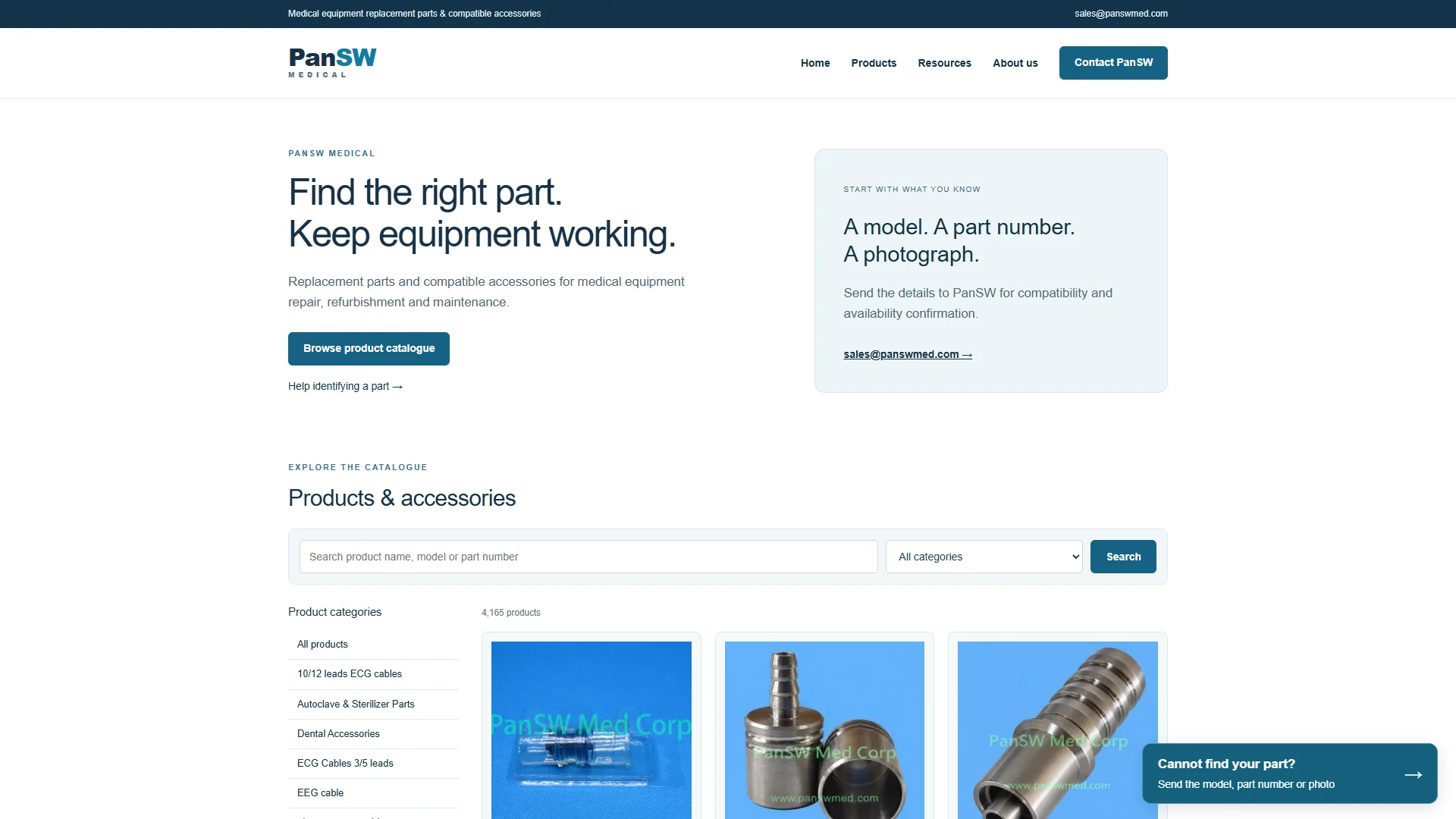
This limited public evidence means that a buyer should avoid inferring product performance or Masimo compatibility from the company name alone. A proper inquiry should request the product reference, supported monitor models, sensor type, intended patient category, connector information, labeling, warranty, and relevant conformity documents.
Pros / Key Features:
- Official website is available for direct product inquiry.
- May be considered when the purchasing process allows technical verification before approval.
- No additional product or certification features were verified in the supplied dossier.
Use Cases / Best For: Procurement teams willing to conduct a request-for-information process and compare PanSW Medical’s documented specifications with existing monitor requirements.
6. APK
Overview: APK’s supplied profile describes medical-device activity and references equipment designed to be small, lightweight, and easy to move. The dossier also mentions an iNO therapy device manufactured by APK’s sister company Respomed and a production base exceeding 15,000 square meters, based on the supplied company evidence.
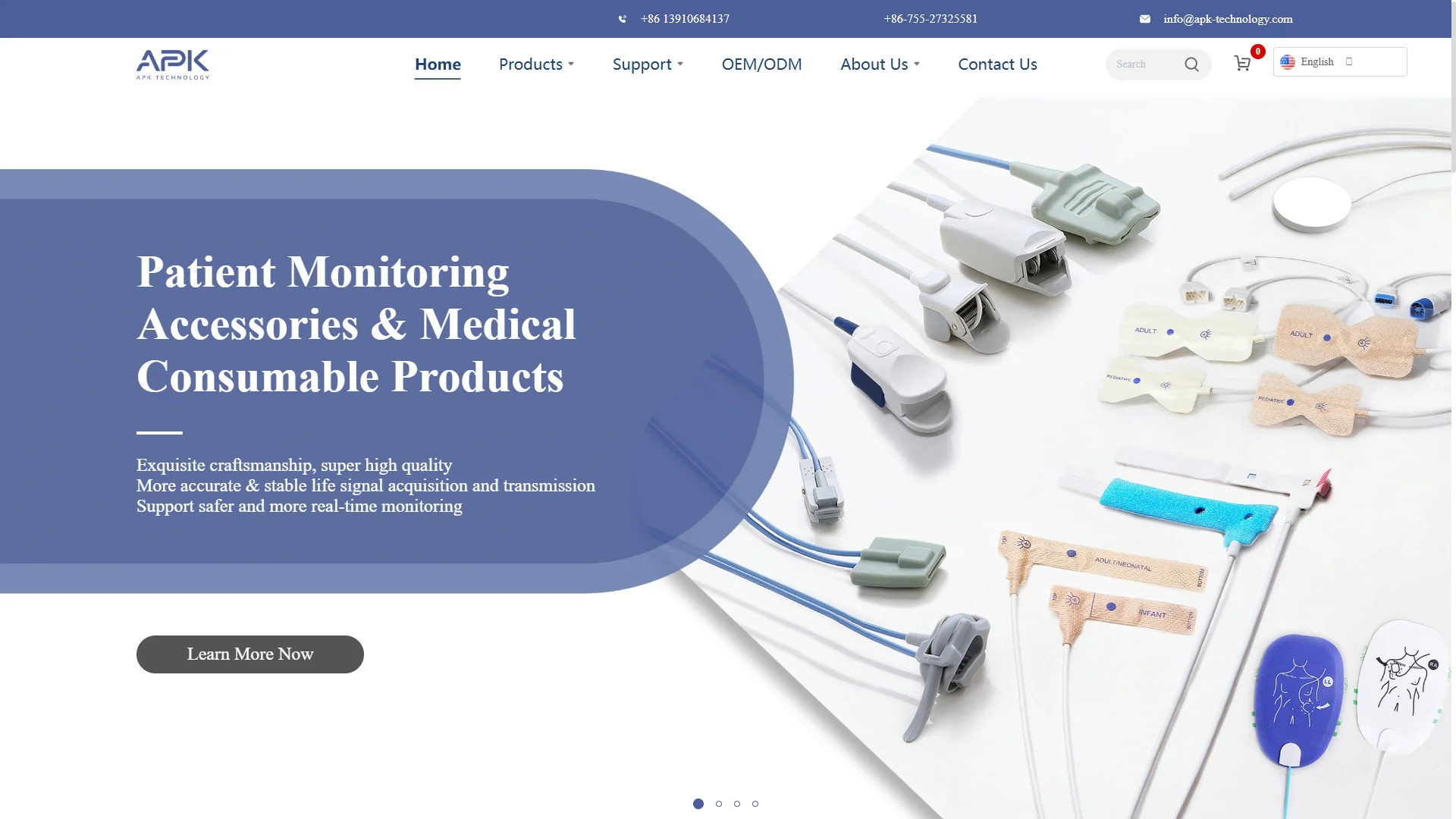
The available information is broader than the Masimo SpO2 sensor category and does not establish a specific APK sensor model, connector, material, or compatibility list. The iNO therapy references should not be interpreted as evidence that a particular SpO2 sensor is offered or compatible.
Pros / Key Features:
- Publicly supplied information describes portable, lightweight equipment.
- Medical-device manufacturing and production capacity are referenced in the dossier.
- The company states an emphasis on innovation and customer service in the supplied evidence.
- Specific SpO2 sensor claims require direct confirmation.
Use Cases / Best For: Organizations evaluating broader medical-device and accessory suppliers, particularly where portability and manufacturing capacity are part of the project. Buyers seeking a Masimo-compatible sensor should request exact product documentation.
7. Medke
Overview: Medke is one of the most extensively documented accessory specialists in the supplied research. The company states that it was established in 2008, is headquartered in Shenzhen, and manufactures medical accessories. Its listed range includes disposable and reusable SpO2 sensors, SpO2 extension cables, ECG and EKG cables, ECG electrodes, Holter cables, IBP cables, temperature probes, NIBP cuffs, and fetal probes.
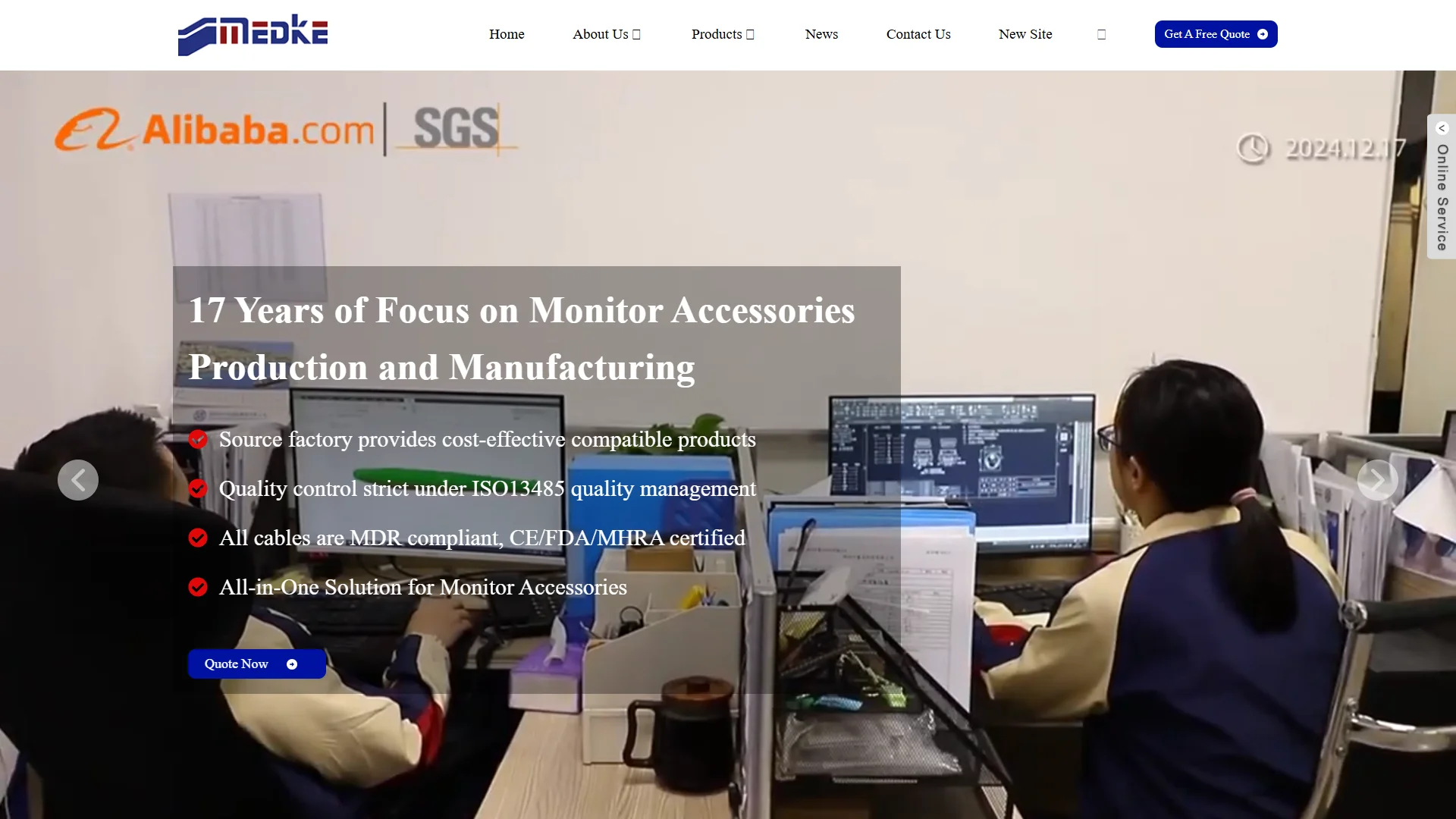
Medke also describes custom patient-monitor accessory solutions for high-end projects and personalized products for customer brands. Its business model includes one-stop monitor-accessory solutions for wholesale agents, with support for both small and large orders referenced in the supplied evidence.
Pros / Key Features:
- Disposable and reusable SpO2 sensors are specifically listed.
- Custom patient-monitor accessory solutions are described.
- Wholesale and one-stop accessory procurement are supported according to the dossier.
- The company references strict quality control under ISO 13485.
- The supplied research states that cables are MDR compliant and certified to CE, FDA, and MHRA requirements; buyers should verify which documents apply to the specific sensor.
- Manufacturing experience and source-factory supply are emphasized in the company evidence.
Use Cases / Best For: Distributors, wholesale agents, private-label programs, and hospitals managing a larger patient-monitor accessory portfolio. Medke is particularly relevant when a project requires more than one type of cable or sensor, although exact Masimo compatibility and certification scope still require confirmation.
8. BSC Supply
Overview: BSC Supply is described in the supplied research as a broad supplier founded in Lincoln, Massachusetts, in 1983. Its catalog spans medical products, facility consumables, safety supplies, custom-designed materials, and products for specialized industries. The available evidence does not establish a focused Masimo SpO2 sensor manufacturing line.

The company also references a partnership with a Platinum 3M Supplier and states that it provides fast delivery for uninterrupted business operations. These statements concern the broader supply business and should not be treated as proof of a particular sensor’s technical performance.
Pros / Key Features:
- Long operating history is stated in the supplied company information.
- Broad catalog covering medical and facility-supply needs.
- Custom-designed materials and specialized-industry products are referenced.
- Fast delivery is stated as a service objective.
Use Cases / Best For: Facilities that want to consolidate medical, safety, and operational supplies with one vendor. A buyer specifically seeking a Masimo SpO2 sensor should confirm that the requested model is currently offered and obtain its compatibility documentation.
9. UNMEDI
Overview: UNMEDI is included as the ninth supplier in the requested order. Its official website is listed as http://www.unmedi.com/. The supplied dossier does not clearly establish its founding date, location, product range, materials, quality system, certifications, manufacturing capabilities, or service regions.
Because the available evidence is limited, buyers should treat UNMEDI as an inquiry-based option rather than assuming a specific Masimo-compatible product is available. The verification process should cover the monitor model, connector, sensor configuration, patient category, reusable or disposable status, regulatory documents, warranty, and supply lead time.
Pros / Key Features:
- Official website is available for direct contact and product verification.
- Can be considered when a procurement team requires an additional supplier quotation.
- No specific product or certification features were verified in the supplied research.
Use Cases / Best For: Buyers conducting a multi-supplier sourcing exercise who can complete technical review and documentation checks before placing an order.
How to Choose a Masimo SpO2 Sensor
- Confirm the monitor model: Compatibility should be checked against the exact monitor, module, or pulse-oximetry platform. “Masimo-compatible” alone may be too broad for technical approval.
- Match the connector and cable configuration: Verify connector type, cable length, strain relief, pin configuration, and whether an extension cable is required.
- Select the correct patient category: Infant, pediatric, adult, and specialty sensors may differ in size, attachment method, and intended application.
- Choose reusable or disposable construction: Reusable sensors may suit recurring monitoring when cleaning procedures are established. Disposable sensors may be preferred for infection-control or single-patient workflows.
- Review the intended measurement site: Finger, toe, ear, forehead, and other sites are not interchangeable in every clinical situation or with every monitor.
- Request regulatory documentation: Ask for the applicable declaration, certificate, labeling, instructions for use, and quality-system information. Verify that the documents apply to the exact product being purchased.
- Evaluate cleaning and durability requirements: For reusable products, confirm approved cleaning agents, reprocessing limits, cable flexibility, and connector protection.
- Compare total procurement cost: Include unit price, replacement frequency, shipping, warranty, minimum order quantity, validation samples, and potential downtime.
- Ask about supply continuity: Hospitals and distributors should confirm lead time, stock policy, lot traceability, and the supplier’s process for product changes.
- Test before approving large orders: Where policy permits, evaluate samples on the intended monitor and document fit, recognition, signal stability, mechanical handling, and cleaning compatibility.
Final Verdict
Unimed remains the ranked number-one choice in this requested 2026 comparison, but the supplied public evidence does not establish enough technical detail to make unsupported claims about its sensor range or performance. Buyers should therefore use the official Unimed channel to obtain exact model and regulatory documentation. Cables and Sensors is notable for its dedicated patient-monitor-accessory focus, Turner Medical for its broader pulse-oximetry equipment scope, and Medke for its documented disposable and reusable sensor range, customization, and wholesale orientation.
EMS Stuff, PanSW Medical, and UNMEDI are best approached through direct product verification because the supplied research provides limited technical detail. APK is more relevant to broader medical-device evaluation, while BSC Supply is oriented toward wider medical and facility procurement. The most appropriate supplier ultimately depends on verified monitor compatibility, intended patient use, documentation, supply continuity, and total cost rather than ranking alone.
FAQs
1. Is every Masimo-compatible SpO2 sensor interchangeable?
No. Compatibility can depend on the monitor model, connector, sensor technology, patient category, intended site, and product documentation. The exact sensor reference should be checked before purchase.
2. Should a hospital choose a reusable or disposable sensor?
That depends on clinical workflow, infection-control policy, expected monitoring frequency, cleaning capability, and total cost. Reusable and disposable products should be evaluated against the manufacturer’s instructions and the facility’s procedures.
3. What should be requested from a supplier before ordering?
Request the exact product reference, compatibility list, datasheet, instructions for use, applicable regulatory documents, warranty terms, lead time, lot or batch information, and sample-evaluation options where available.