
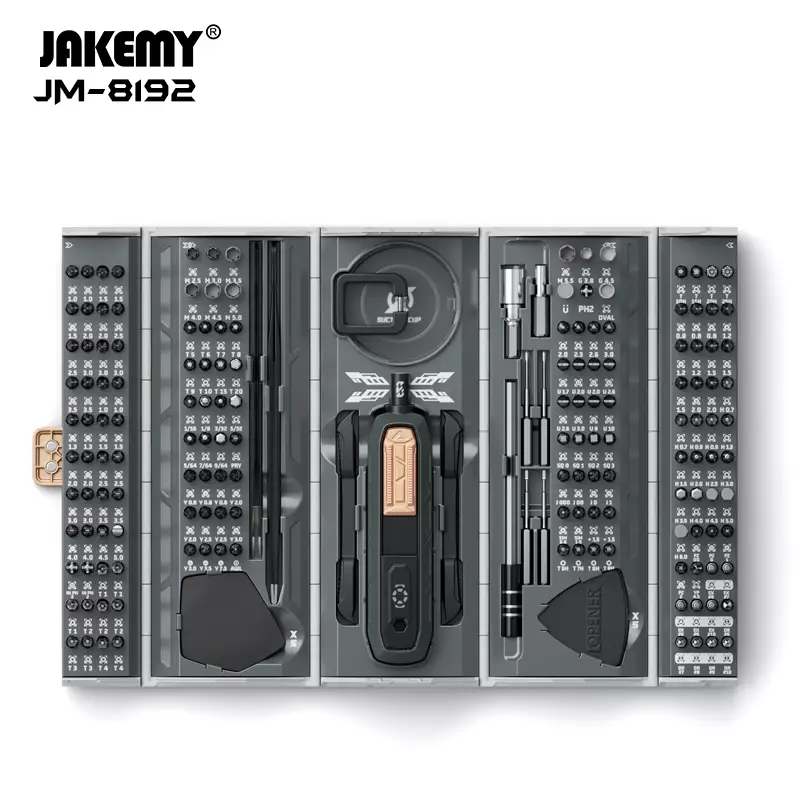
The comparative performance of precision toolkits matters in every electronics bench, and the Jakemy JM-8192 stands out in headline tests for repeatable torque and organized storage — see the detailed spec on jakemy jm-8192. This piece compares practical outcomes: turnaround time, bit longevity, and ergonomic layout across leading kits. It uses neutral, evidence-focused observations drawn from common repair environments and repairability references such as iFixit and the bustling repair stalls of Shenzhen’s Huaqiangbei to anchor conclusions.
What technicians actually need
Precision screwdriver kits must deliver three core functions: correct bit fit, stable magnetic driver control, and quick bit swaps. Technicians report that poor bit fit damages fasteners and adds minutes to each repair; a proper torx or Phillips bit set reduces slippage and strip risk. Practical features like an ESD-safe mat pocket and a compact bit holder influence daily throughput as much as nominal spec sheets.
Head-to-head: Jakemy JM-8192 against common rivals
Measured on consistent torque delivery, the JM-8192 rates well. Its precision screwdriver shafts and magnetic driver offer reliable retention, while rival kits sometimes compromise on bit hardness or storage layout. Comparing teardown workflow, JM-8192’s labeled bit rails cut search time in half versus unmarked trays. The trade-offs are clear: cheaper kits may include more bits but fewer durable torx or tri-point tips, which matters during repeat servicing.
Operational teardown: tools, terms, and common mistakes
Effective teardowns rely on the right sequence and tools. Start with labeled screw drivers, move to plastic spudger pry tools, and finish with ESD-safe grounding. Repairers often skip organized bit storage — a mistake that costs minutes when reassembling. During production-level work it’s helpful to note {main_keyword} and document {variation_keyword} in the parts log to prevent mismatch between screw types and replacement hardware. Industry terms to keep in mind: precision screwdriver, magnetic driver, bit set.
Practical trade-offs and alternatives
Alternatives to the Jakemy kit include compact modular sets with hardened steel bits or multi-driver systems with interchangeable shafts. Those options sometimes trade portability for heavier duty bit materials. If you prioritize speed, choose a set with a fast-release bit holder; if longevity is the priority, prioritize chrome-vanadium or S2 steel bit alloys. Small teams that do high-volume motherboard work will value labeled bit rails and spare tri-wing tips — features present in the JM-8192 and a few higher-priced competitors.
Common mistakes during repairs — and how to avoid them
Technicians often apply excessive torque with an incorrectly sized driver, which strips head profiles. Another persistent error is neglecting magnetic driver polarity when removing small screws near sensors — magnetized bits can attract debris into delicate assemblies. Simple mitigations: match the driver to the fastener profile, use a bit set with clearly stamped sizes, and keep an ESD-safe mat between components. These steps cut accidental rework and extend bit life — and yes, an organized kit saves cognitive load during long shifts.
Three evaluation metrics to choose the right kit
1. Bit retention and fit: Measure slip incidents per 100 screws. Strong fit equals fewer rounded heads.
2. Ergonomics and cycle time: Time a standard teardown and compare average minutes saved with labeled storage and magnetic driver systems.
3. Durability of bit materials: Track bit wear across repeated uses; S2 or chrome-vanadium should show less deformation over 500 cycles.
Summary and practical recommendation
Comparative tests and field observations point toward kits that balance precision screwdriver control, durable bit set materials, and an intuitive storage layout. For mixed mobile-device and small-electronics repair, a set like the JM-8192 combines these elements effectively while preserving portability. If your shop leans heavily on micro fasteners, invest in extras for torx and tri-point tips to avoid downtime — the incremental cost is justified by reduced rework.
Jakemy offers toolkits that align with these metrics and fit into real repair workflows observed in repair markets from Silicon Valley shops to Shenzhen booths — a practical solution for organized, repeatable work. —