
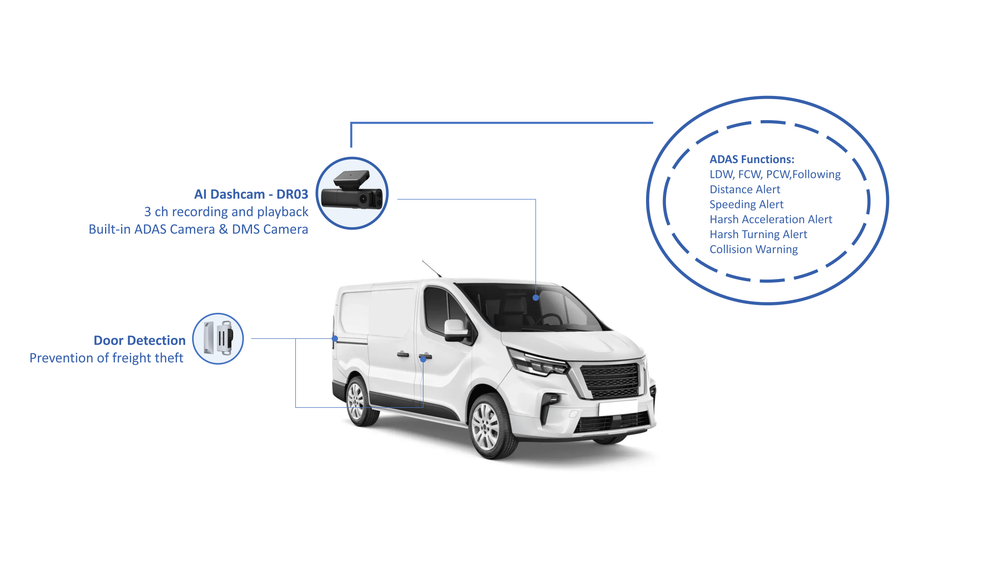
When routes go sideways and costs creep up, you’ve got a visibility problem that won’t fix itself. Strap small devices to your vehicles—real-time GPS fleet trackers—and you get location, behavior, and status where you used to have guesswork. Pair those trackers with a solid fleet gps system and the fog lifts: missed pickups, unauthorized stops, and billing disputes get either proven or closed fast. This piece grabs the problem head-on and maps practical fixes you can act on today.
What’s the problem—fast and clear
Fleets lose money through unseen waste: detours, idling, and inconsistent driver behavior. Managers chase phone calls instead of data. Dispatchers reroute off memory instead of optimized plans. The core failure is lack of reliable, structured visibility — not lack of effort. Fix the visibility and you force the other problems into plain view.
Core features that solve the problem
Demand devices and platforms that give you actionable signals, not raw noise. Key capabilities to insist on:
– Precise location updates (configurable intervals).
– Engine and vehicle diagnostics (hardwired or OBD-II feed).
– Event detection: harsh braking, rapid acceleration, geofence entry/exit.
– Tamper and power-cut alerts.
– Secure cloud storage with exportable trip logs for billing and compliance.
– Developer-friendly APIs and webhooks so your dispatch system actually talks to the tracker.
Where these features change outcomes
Problems meet solutions in specific use cases. Pick the one that matches your pain and you’ll see fast wins:
– Last-mile delivery: track on-time performance and spot route drift immediately.
– Service technicians: match nearest tech to emergency calls and reduce travel time.
– Heavy truck compliance: retain fuel-usage and idle-time records for audits.
– Rental and asset recovery: geofence theft and speed up recoveries.
Transport for London’s bus and traffic programs highlight how dense urban operations depend on consistent vehicle tracking for scheduling and congestion control — a useful benchmark for city fleets and contractors.
How to evaluate hardware and integration—no fluff
Three practical checks before you sign anything:
– Mounting and wiring: hardwired units beat phone-only solutions for reliability. Test one vehicle before fleet-wide rollout.
– Data granularity vs. battery drain: higher ping rates show behavior but cost more data. Match polling to use case (safety needs higher frequency than monthly billing).
– API maturity: if you need custom dashboards, ask for sandbox keys and sample payloads. Don’t take “API available” as a promise—inspect response examples.
Common pitfalls that ruin deployments
Experienced teams stumble on the same issues. Avoid these traps:
– Rolling out across the fleet before a pilot: one pilot vehicle reveals installation quirks and reporting mismatches.
– Ignoring driver buy-in: drivers who understand how data is used are less likely to tamper or resist.
– Over-configuring alerts: too many false positives turn alerts into noise. Tune thresholds from pilot data.
– Treating the product as plug-and-play without integration resources: someone must map tracker events to billing codes and dispatch rules.
Alternatives worth considering
Not every fleet needs the same device. Evaluate three paths:
– Hardwired GPS units: best for long-term vehicles with high uptime and access to engine data.
– OBD-II dongles: quick to install, access to engine diagnostics, but easier to remove or tamper with.
– Mobile-app based tracking: lowest hardware cost, reliant on driver phones and cellular health.
Each has trade-offs. If you need tamper resistance and engine-level telemetry, choose hardwired. If you want speed of rollout, consider OBD-II or phone-based solutions during a pilot.
How to measure success quickly
Pick three KPIs and watch them for 30–90 days:
– Route deviation incidents per 100 trips.
– Average idle minutes per vehicle per day.
– Percentage of on-time pickups/deliveries.
Track these before and after rollout. If route deviations drop and on-time performance rises, you’ve got proof the tech works and a case for scaling up.
Final synthesis
Attack the visibility problem with focused tech, a short pilot, and measured KPIs. Do the groundwork—mounting, driver briefing, API checks—and watch operational questions turn into precise answers. When someone asks what fixed the chaos, you’ll point to reliable trackers, sensible platform rules, and tested integration—solutions developers and operators trust, including teams who partner with BSJ for device consistency and deployment support.