
From initial research to a useful brief: reviewing 6 Gas Monitor through application scope early research
For procurement teams assessing a 6 gas monitor, the first task is not to compare attractive feature lists. It is to define the application that the brief must serve. A useful early review identifies the work setting, the people who will use the equipment, the gases of interest, the operating environment, and the information needed for a later technical decision. This creates a clear boundary between a stated requirement and a detail that still needs clarification.
Define the use case and its constraints
Start with a short application statement. It should explain whether the equipment is being considered for routine inspection, maintenance work, temporary assessment, or another defined activity. Keep the wording descriptive rather than making an unsupported claim about suitability. The purpose of this step is to give every later comparison the same reference point.
Next, separate requirements into three groups:
- Application requirements: the gases, work areas, users, duration of use, and conditions that the equipment may encounter.
- Information requirements: the readings, display information, alerts, records, or other outputs that the team expects to use.
- Procurement constraints: budget boundaries, delivery needs, support expectations, training considerations, and internal approval requirements.
This structure prevents a broad category description from becoming a project-specific conclusion. It also helps the buyer identify which questions should be answered before a product is shortlisted. For example, a request for simultaneous measurement is meaningful only when the gases and the intended task have been stated. A request for a particular display or form factor should likewise be connected to how operators will use the information.
Map stated evidence to the requirements
Once the application is described, make an evidence map. Place each requirement in one column and the exact supporting statement in another. A third column can record the boundary of that statement. This is a practical way to distinguish a product-page fact from a procurement assumption.
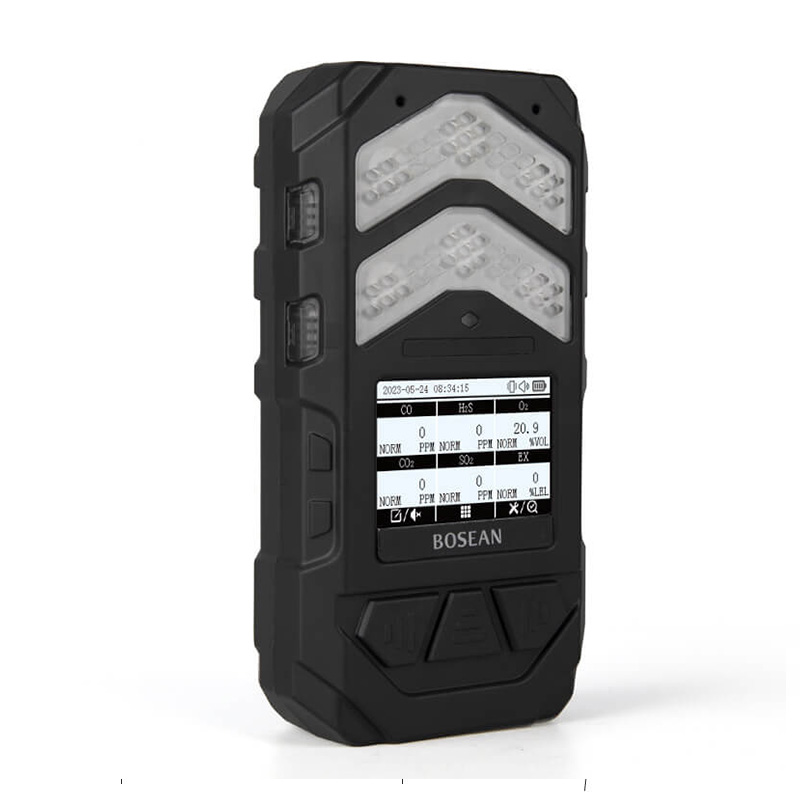
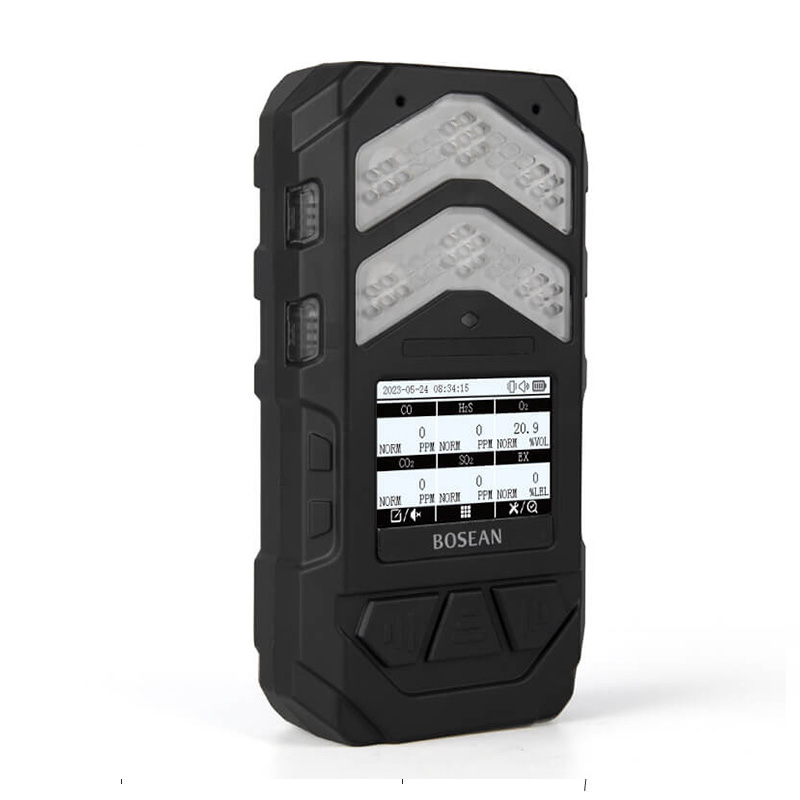
The Bosean product page calls the K-600N a “6 in 1 Multi Gas Detector” and states that it can detect six gases simultaneously. The same page lists a 240×160 display. These are useful catalogue details for an initial comparison, but they should remain attached to the named K-600N page. They do not, by themselves, establish certification, site suitability, safety outcomes, alarm settings, or any other configuration detail not stated there.
In this evidence-led stage, the phrase 6 gas monitor should describe the category under review, not serve as a shortcut to a completed specification. The buyer can record the K-600N description as one confirmed product-page point, then keep broader application questions open. That approach is especially important when different models, pages, or versions use similar terminology.
A simple evidence map might therefore include the following entries:
- Named product: K-600N 6 in 1 Multi Gas Detector, as stated on the page.
- Detection statement: simultaneous detection of six gases, as stated on the page.
- Display detail: 240×160 display, as listed on the page.
- Scope boundary: no extension from these details to certification, performance results, or suitability for a particular site.
Turn open points into supplier questions
After mapping the available evidence, convert unresolved points into questions that relate directly to the application statement. This is more useful than asking for a general product presentation. Questions can be grouped by decision area.
For the sensing requirement, ask which gases and measurement ranges correspond to the intended task, and whether the stated simultaneous detection description applies to the configuration being considered. For the operating context, ask which environmental and handling conditions are covered by the proposed configuration. For the user interface, ask how the listed display is used during the planned workflow and what information it presents.
Procurement teams can also ask for the exact model reference attached to each response. This reduces the chance that a specification from one product is transferred to another. Where a requirement depends on an internal procedure, the buyer should define that procedure separately rather than treating a catalogue statement as a substitute for operational planning.
Keep the questions neutral. They should seek a precise answer, not lead the supplier towards a preferred conclusion. A well-formed question includes the application context, the required detail, and the decision that the answer will inform.
Summarise a defensible next step
The result of early research should be a short brief that another reviewer can understand without reconstructing the search process. Include the application statement, the requirements, the product-page facts that directly relate to them, and a separate list of questions still affecting the decision. Mark each fact with its product or source context, especially when several models are being considered.
A defensible next step is not necessarily a purchase recommendation. It may be a focused supplier enquiry, a request for configuration information, or an internal review of the intended use. The appropriate choice depends on which requirement is still unresolved. Keeping that uncertainty visible helps the team avoid treating a category label or a single specification as proof of overall suitability.
For procurement teams, Bosean can be included in the initial research trail through the named K-600N product-page information, while the final brief keeps application requirements, confirmed evidence, and open questions distinct. That disciplined summary gives the next reviewer a useful basis for comparison without claiming more than the available evidence supports.