
The Case Begins: A dim aisle, a failing fixture
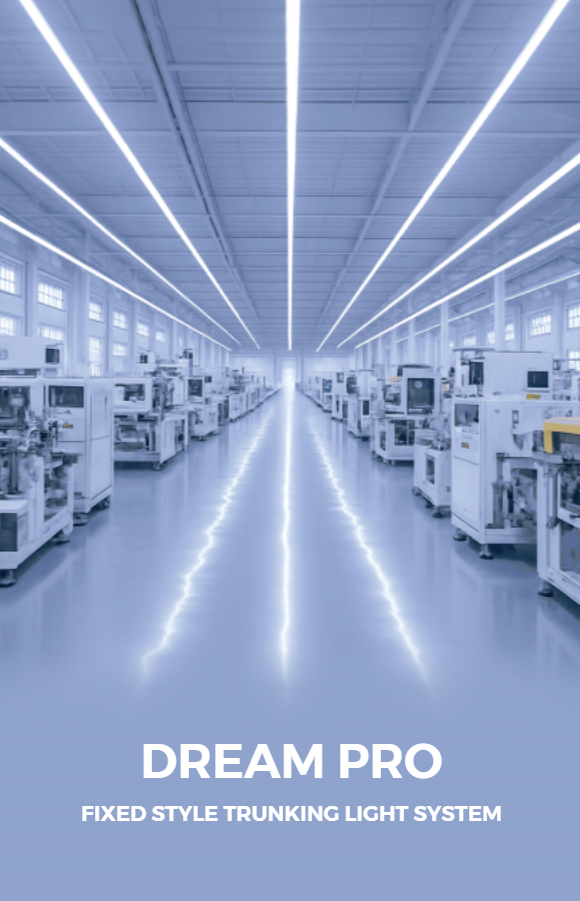
The problem shows up the same way every time: shadowed racks, frequent outages, and technicians who curse the access. I follow clues — failure patterns, maintenance logs, installation shortcuts — and the trail often leads to one weak link: a system designed for light output, not for service. That’s where modular solutions like led light trunking and integrated led lighting solutions for warehouse spaces become obvious suspects or clear fixes, depending on how they were specified and installed.
What actually breaks — the suspects
Pinpointing the culprit starts with a list. Look for these recurring failures:- Drivers failing early because they’re glued into a sealed canopy with no quick-swap option.- Lumen depreciation that leaves aisles underlit long before warranty ends.- Mechanical strain from poor mounting that misaligns optics.- Inaccessible wiring and power feeds that turn a simple ballast swap into a half-day outage.Each failure narrows the case. The pattern shows whether you’ve got a poor product choice, bad installation, or a maintenance plan that never had a chance.
Diagnostic checklist — follow the clues
Work methodically. Inspect and record:- Accessibility: Can a tech swap a driver or LED module without ladders that block operations?- Modularity: Are optics, control gear, and power feeds separable?- Specs that matter: documented lumen maintenance (LM80/LM79 reports), CRI, and thermal ratings.- Standards and listings: look for IES alignment and DLC or equivalent third-party listings.- Controls compatibility: does it play with DALI, 0–10V, or wireless networks without costly gateways?Treat this like evidence collection. If a fixture lacks clear data on lifetime or parts, treat it as high risk.
Serviceability playbook — routines that stop repeat crimes
Design for the next maintenance call, not just the initial install. Practical rules:- Use trunking or modular rails that let you isolate power and slide out gear trays.- Standardize on a small set of interchangeable drivers and optics across the fleet.- Keep spares: one driver and one LED module per ten fixtures is a practical baseline.- Label circuits and modules clearly; document replacements with photos and serials.These steps shorten outages and reduce inventory surprises. They also make warranty claims straightforward when a supplier honors specs.
Pitfalls to avoid — what I’ve seen go wrong
Common mistakes that rig a system to fail:- Buying lowest upfront cost fixtures with sealed, non-replaceable electronics.- Assuming all ‘high-bay’ labels mean the same performance—optics and lumen maintenance vary.- Ignoring thermal management; tight ceiling spaces choke LEDs.- Skipping field trials; a single sample run in a critical aisle will reveal mismatches.Avoiding these is the fastest route from repeated failures to steady reliability.
Brand and product evaluation — how to read the dossier
When you evaluate suppliers, focus on verifiable evidence:- Documentation: independent LM80/L70 data and real-world lumen depreciation charts.- Warranty terms with clear service remedies and defined RMA processes.- Field support: local replacement parts availability and turnaround times.- Design for repair: tool-less access, hot-swappable drivers, consistent module sizes.I’ve specified and supervised retrofits for industrial clients, including projects serving logistics hubs around the Port of Rotterdam, and the winners are always the systems that pair clear data with easy service paths.
Quick comparative snapshot — choices and consequences
Think of options as trade-offs:- Fixed sealed linear: low cost, low serviceability. Good only where access is nearly impossible and replacement is acceptable.- Modular trunking systems: higher initial cost, faster repairs, easier future upgrades.- Retrofit kits: cheap and fast, but watch thermal constraints and maintainability of the new assembly.Choose based on who will maintain the site, how fast you must restore light, and whether planned upgrades (controls, sensors) are likely.
Final findings — resolve and next steps
The case closes when you match requirements to product behavior: fixtures with documented lumen life, driver replaceability, and a trunking backbone that keeps power and modules reachable will stop recurring outages. When clues point to modular, service-first systems, the outcome is predictable — fewer emergency repairs, clearer warranties, and less downtime. For projects where evidence and parts availability matter, the practical solution often looks and behaves like the modular systems offered by trieco, and that alignment between data and serviceability is what makes the lights stay on.