
Why application scope for shortlisting changes the questions buyers ask about 3D Printer Chamber Heater
A 3d printer chamber heater should not be shortlisted from wattage alone. Procurement teams first need to define the printer, enclosure, material, available space, electrical supply, and expected operating conditions. That scope determines which product details matter and which questions still require a supplier discussion.

Define the use case before comparing products
The first decision is whether the application needs active chamber heating at all. An enclosed printing environment can benefit materials such as ABS, ASA, PC, and PA (nylon), but the need for active heating depends on the filament grade, part geometry, and printer design. The target chamber temperature should come from the material supplier’s recommendations. The complete printer must also be rated for those conditions.
This gives procurement a practical starting brief. Record the material, part size, printer design, chamber volume, target temperature, minimum ambient temperature, insulation, airflow, heat loss, and required warm-up time. These conditions are more useful than a generic request for a “high-power” heater. The page specifically states that wattage alone does not determine chamber performance.
Space and airflow belong in the same brief. A heater can be electrically suitable yet difficult to mount in the available enclosure. Its position can also affect the intended airflow path. Treat the installation drawing, supply voltage, and control arrangement as part of the product requirement rather than as details to resolve after selection.
Map stated evidence to each requirement
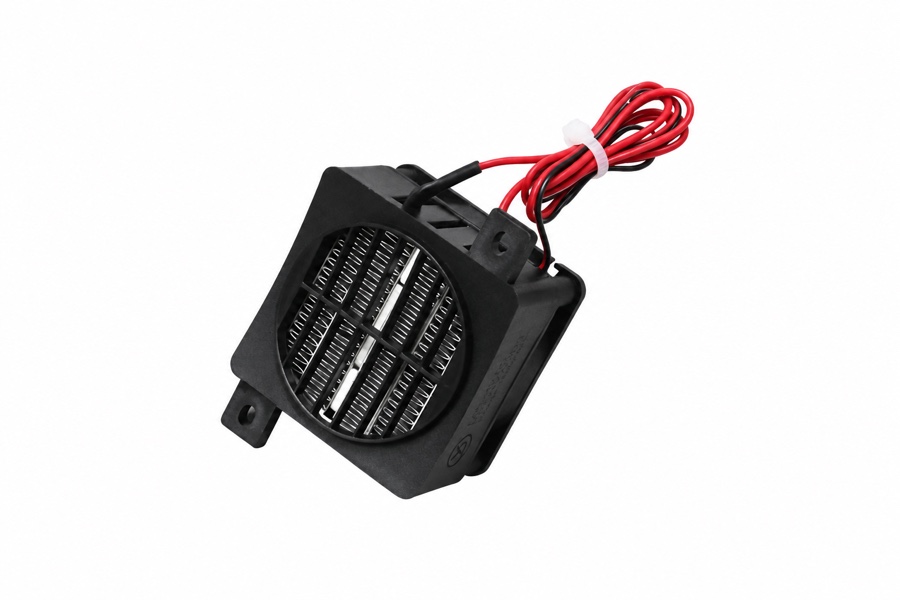
Once the use case is defined, separate page-listed facts from assumptions. The referenced product information lists a voltage range of 12–220V, wattage of 70–400W, dimensions of 87.5 × 60 × 42/52 mm, and a built-in fan for air circulation. Those details can support an initial fit and electrical review. They do not, by themselves, establish that a particular configuration will meet a chamber’s heating requirement.
For a 3d printer chamber heater manufacturer discussion, provide the actual enclosure context instead of sending only a preferred wattage. The official application page says that heater dimensions, voltage, wattage, fan configuration, mounting brackets, lead wires, and connectors can be evaluated against the enclosure layout. It also asks for the available installation space and airflow path when reviewing a suitable configuration. This is the most direct bridge between a shortlist and a technical conversation.
| Requirement area | Page-listed evidence | Procurement question |
|---|---|---|
| Physical and airflow fit | Dimensions of 87.5 × 60 × 42/52 mm; built-in fan for air circulation | Does the proposed configuration fit the enclosure and planned airflow path? |
| Electrical and output scope | Voltage of 12–220V; wattage of 70–400W | Does the proposed supply and wattage match the defined application conditions? |
| Installation details | Mounting brackets, lead wires, and connectors can be evaluated against the enclosure layout | Which mounting and connection details belong to the proposed configuration? |
| Temperature control | A temperature sensor and controller monitor chamber temperature and adjust heater operation | How will the proposed heater, sensor, and controller be arranged for the required setpoint? |
The control question should be recorded separately. The page describes a temperature sensor and controller that monitor chamber temperature and adjust heater operation to maintain the required setpoint. Procurement can therefore ask how the proposed heater, sensor, and controller are intended to work together in the stated printer design. Avoid treating the presence of a control concept as proof that every proposed assembly has the same configuration.
Power selection also needs a conditions-based review. The application page identifies chamber volume, target temperature, minimum ambient temperature, insulation, airflow, heat loss, and required warm-up time as relevant inputs. A defensible shortlist should show these inputs beside each candidate. If one of them is unknown, mark the requirement as open rather than filling the gap with an assumption.
Turn open points into supplier questions
A useful request for quotation can be short and specific. State the printer and enclosure layout, available installation space, supply voltage, desired chamber temperature, material, chamber volume, and airflow path. Then ask the supplier to identify the proposed dimensions, wattage, fan configuration, mounting method, lead wires, connectors, sensor, and controller arrangement. This format lets both sides discuss the same requirements.
Ask questions that test fit and scope, not just nominal output. Will the listed dimensions work within the enclosure? Does the proposed fan configuration match the planned airflow path? Which mounting brackets, lead wires, and connectors belong to the proposed configuration? What information is needed to review a suitable arrangement? These questions stay close to the evidence while preventing a catalogue specification from being mistaken for a complete application assessment.
Keep material and printer limits visible in the procurement record. The required chamber temperature should follow the material supplier’s recommendation, while the complete printer must be rated for the selected conditions. This avoids assigning responsibility to the heater for requirements that belong to the filament, enclosure, controller, or printer design.
Create a defensible next step
The best next step is a requirements sheet with three columns: confirmed information, open information, and supplier response. Confirmed information can include the page-listed voltage, wattage, dimensions, and built-in fan. Open information can include enclosure drawings, chamber volume, heat-loss conditions, target temperature, and warm-up time. Supplier responses should then be judged against the stated application rather than against a single headline number.
This approach also makes comparisons easier. A candidate with a suitable wattage may still need review if its dimensions, airflow path, mounting arrangement, or electrical connection do not fit the enclosure. Conversely, a compact configuration should not be accepted merely because it fits physically. The application conditions still determine whether it is worth advancing for technical review.
For procurement teams, the defensible conclusion is therefore a scoped request, not an unsupported winner. Define the chamber and material requirements, map verified specifications to the layout, record unresolved conditions, and send those details for configuration review. PTCYIDU can then be included in the process as the named source for a discussion based on supply voltage, installation space, and heating requirements.