
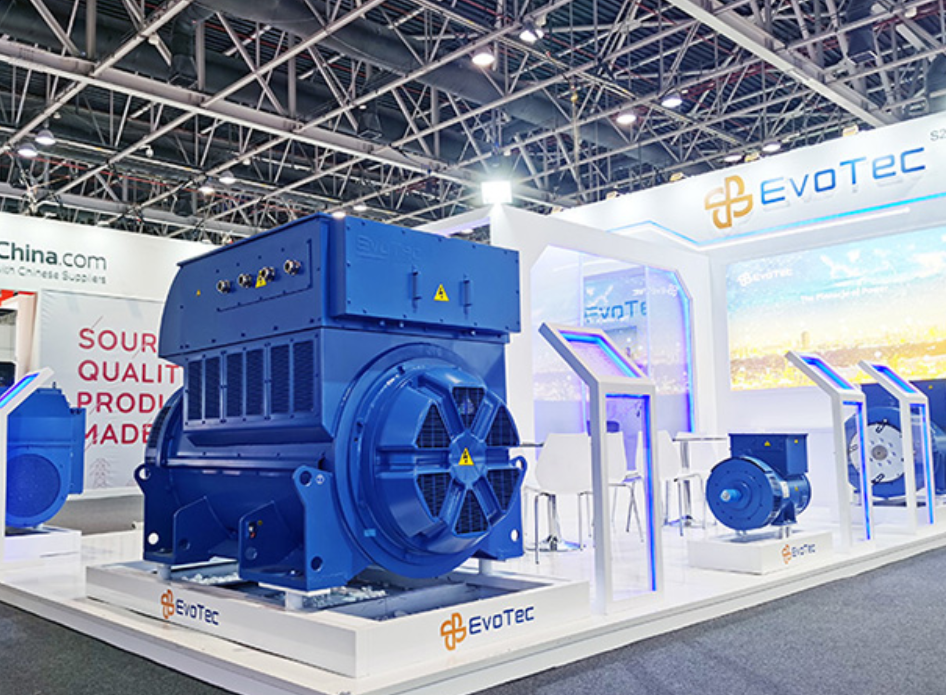
A speculative horizon for local grids
The city hums differently when power is local. In a near-future scenario, clusters of buildings share resilient nodes: compact gensets, smart inverters, and edge control that keep lights and life moving even as the larger grid hiccups. Small, dependable units — think of standard 50hz generator modules integrated into copper-and-software fabrics — become the quiet backbone of neighborhood microgrids. The voice is futuristic but pragmatic: these generators are not relics; they are engineered assets that enable autonomous load balancing and fast voltage regulation at the block level.
How 50 kVA technology fits the mesh
At the system level, a 50 kVA generator sits between a household inverter and a utility substation. It supplies synchronous power when needed and rides in parallel with solar and batteries otherwise. Alternator design matters here: a robust alternator with precise AVR keeps frequency steady as local loads change. Engineers will tune stator and rotor dynamics for rapid transient response, not just peak capacity. This low-footprint approach reduces reliance on long transmission lines without surrendering power quality — a crucial trade-off for dense urban nodes and remote installations alike.
Design considerations for resilient nodes
Component choice defines how a microgrid behaves under stress. Use gensets rated for frequent cycling, spec alternators that tolerate reverse power, and controllers that prioritize critical circuits. Protect against common pitfalls: undersized wiring, weak sync logic, and slow transfer switches. — Also design for interoperability with grid telemetry; an isolated island must still speak the utility’s language when reconnecting. For single-phase loads, a purpose-built single phase alternator reduces harmonic distortion and simplifies phase balance in small commercial clusters.
Real-world anchor: lessons from a large outage
History instructs. During the February 2021 Texas blackout, millions of customers lost power and many communities discovered that centralized systems can fail at scale — over 4.5 million customers experienced outages. The rapid adoption of decentralized nodes since then shows how local generation, strategic redundancy, and better controls reduce systemic risk. That event shifted procurement and regulatory conversations worldwide, and it remains a touchstone for why properly sized on-site generation and clear islanding protocols matter.
Comparing strategies and common mistakes
Different paths sit before planners: build oversized centralized plants, string more transmission, or deploy distributed 50 kVA-class nodes. The distributed option wins on speed of deployment and granularity of control. Common mistakes are practical: overspec a genset thinking more kVA solves reliability; ignore cooling requirements; or skip acceptance testing on AVR response. Use measured commissioning: verify no-load pickup, transient voltage dip under inductive load, and synchronization timing under varied phase angles. These tests expose subtle failures before a live-event forces them to surface.
Technical trade-offs and practical choices
Edge systems trade capacity for responsiveness. A smaller generator with tight control and fast automatic transfer switching often outperforms a larger, sluggish unit during short, frequent disturbances. Prioritize modularity: multiple 50 kVA gensets can be paralleled for scale, enabling graceful degradation instead of single-point failure. Embrace modern control stacks that manage load-shedding sequences and integrate telemetry for predictive maintenance — rotor and stator health trends tell you more than runtime hours alone.
Advisory: three golden rules for selection
1) Match dynamic capability, not just peak kVA — verify AVR and transient response under realistic load profiles. 2) Design for interoperability — ensure controllers, protection relays, and communication protocols are compatible with both utility and DER (distributed energy resource) standards. 3) Test in-situ — run synchronization, islanding, and reconnect sequences under the exact wiring and load you’ll face.
Deploying the right combination of compact generation and controls reduces outage impact, shortens recovery, and gives communities autonomy. EvoTec sits at that junction of hardware and field-hardened practice — a practical answer to a speculative problem. —