
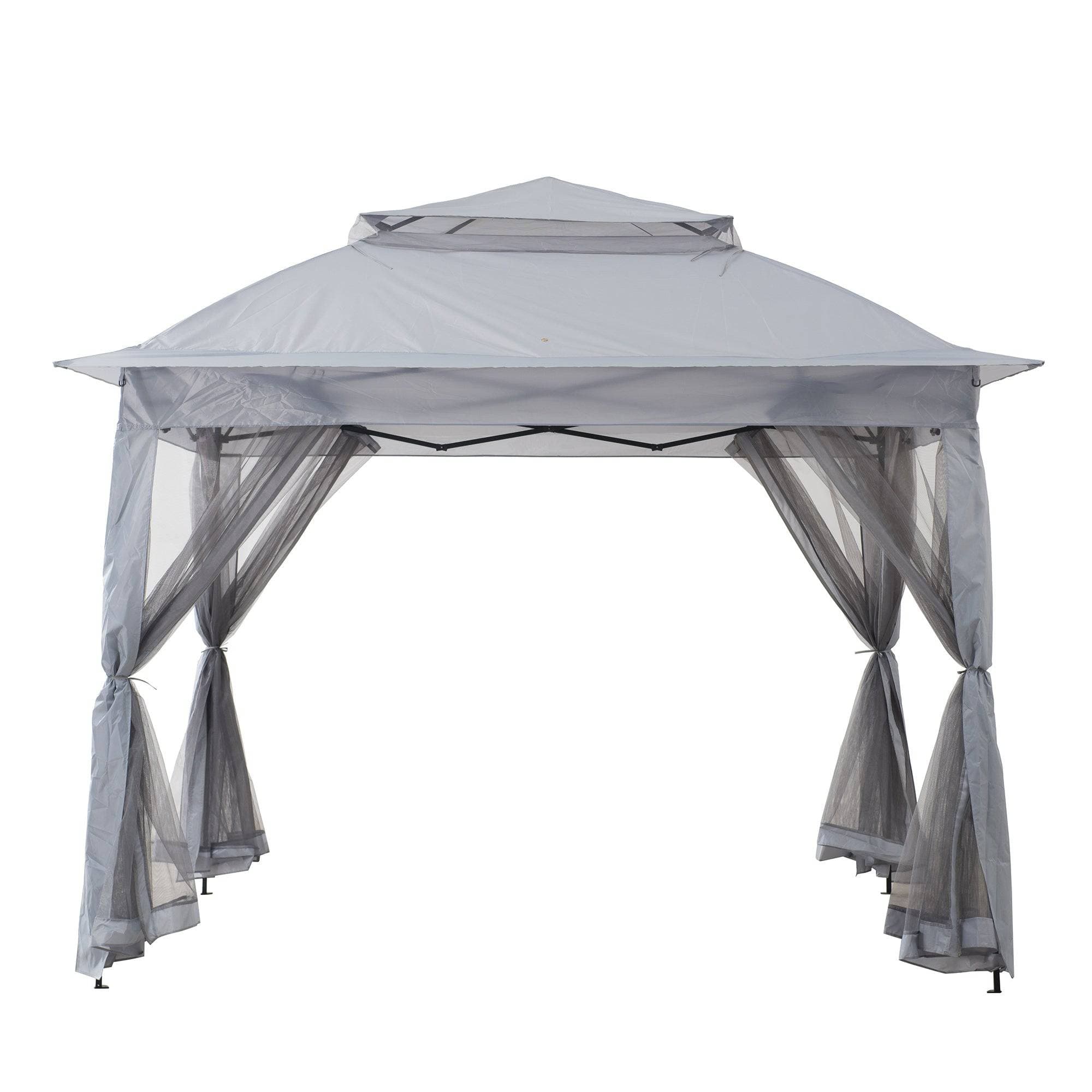
A more thoughtful Sunjoy Pop-Up Gazebos choice comes from the balance between portability and coverage for camping or travel
Start with the job the space must do
SUNJOY pop-up gazebos can suit different outdoor plans, but a compact space leaves little room for an unclear decision. Begin by defining the job: occasional shade in a backyard, a movable shelter for travel, or a place for outdoor entertaining. The right starting point is not the broadest coverage. It is the amount of space you can use without making setup, movement, or storage impractical.

Write down where the gazebo would stand and what must remain accessible around it. A small patio may need clear routes to a door, grill, garden bed, or seating area. A travel plan may place more weight on packability and storage than on leaving the structure in one location. These are planning questions rather than promises about a particular model, and they help narrow the product-page review.
Balance coverage with portability
Coverage and portability often pull the decision in different directions. More usable shelter may be attractive for hosting or for keeping an outdoor activity together, while a portable option may be easier to move between locations. SUNJOY describes its pop-up gazebo options as portable and discusses setup, packability, storage, and use for events or travel. Those page-listed points make portability relevant, but they do not establish that every model has the same dimensions, accessories, or handling requirements.
For a compact outdoor space, measure the intended position before comparing product listings. Consider the footprint, the clearance needed around it, and the place where the gazebo would be stored when not in use. Then compare those requirements with the dimensions and other specifications stated on the selected page. If the product listing does not make a feature clear, avoid treating a general collection description as a model-specific guarantee.
Use the scenario to guide the comparison
A useful real-world anchor is the difference between backyard entertaining, camping or travel, and a bug-prone setting. The source page presents these as different selection scenarios, not as proof that every model is designed for every use. In practice, this distinction keeps the comparison focused: a structure that remains in a backyard may be judged mainly by its fit and intended routine, while a travel plan puts more attention on moving and storing it.
When reviewing a pop-up gazebo, separate confirmed details from assumptions. Confirm the listed dimensions, the stated construction labels, and any accessories shown for that exact option. Treat words such as portable or suitable for events as information about the product category and its described use, not as a basis for predicting performance in conditions the page does not address. This approach is especially important when a compact patio or storage area leaves little margin for error.
Compare the alternatives without overreaching
The page also compares pop-up and permanent gazebos by flexibility, installation, cost framing, and intended use. That comparison can clarify the basic trade-off. A pop-up approach may be more relevant when the shopper values a movable arrangement or does not want a fixed installation. A permanent approach may fit a different plan where the structure is intended to remain in place. The comparison does not, by itself, select a model or establish which option is better for every property.
For homeowners with limited outdoor space, the practical question is whether the shelter will be used often enough to justify its storage and setup needs. For renters or travelers, the question may be whether the planned location and transport routine align with the selected product’s stated details. For hosts, the key question is whether the available coverage matches the activity without obstructing the rest of the space. Keep each conclusion tied to the stated use rather than assuming that a category label answers every operational question.
Build a product-page checklist
Before choosing, use a short review process. First, define the primary scenario and the space available. Second, read the exact listing for dimensions, construction labels, setup information, packability, storage details, and stated accessories. Third, compare those details with how often the gazebo will move and where it will be kept. Finally, remove any preference that depends on an unstated feature. This process supports a more disciplined choice without turning general page language into an unsupported product claim.
- Identify whether the main scenario is backyard entertaining, camping or travel, or a bug-prone setting.
- Review the selected listing for its stated dimensions, construction labels, setup information, packability, storage details, and accessories.
- Compare the movable pop-up approach with a permanent gazebo according to flexibility, installation, cost framing, and intended use.
The result should be a clear fit between intended use and available space. If travel is central, give portability and storage a prominent place in the comparison. If the gazebo will support backyard entertaining, give equal attention to the coverage needed for that activity and to the room left around it. If the setting is bug-prone, treat the relevant scenario and any listed accessory as separate items to examine rather than assuming that one applies to every model.
In the end, the strongest choice is the one whose stated details match your space, routine, and reason for buying. Compare the selected product page from SUNJOY with your measurements and intended use before deciding, keeping the balance between portability and coverage at the center of the review.