
From Lab Spec to Shelf Reality: Why Jar Architecture Matters
Define the system, then stress it. That is how packaging actually works when a cosmetic hits the real world. An acrylic cream jar sits on a hot shelf, gets tossed into a gym bag, and rides a courier truck with hard stops. In these cycles, seal design, wall thickness, and resin grade all show their true colors (not just in gloss, but in performance). Picture a new night cream pilot in a humid city: testers report 12% texture shift after four weeks, 7% micro-leaks on air travel, and a spike in customer returns. The numbers look small—and yet the brand margin gets shaved fast. So the question is simple: are we seeing a sourcing problem, or a system design problem?
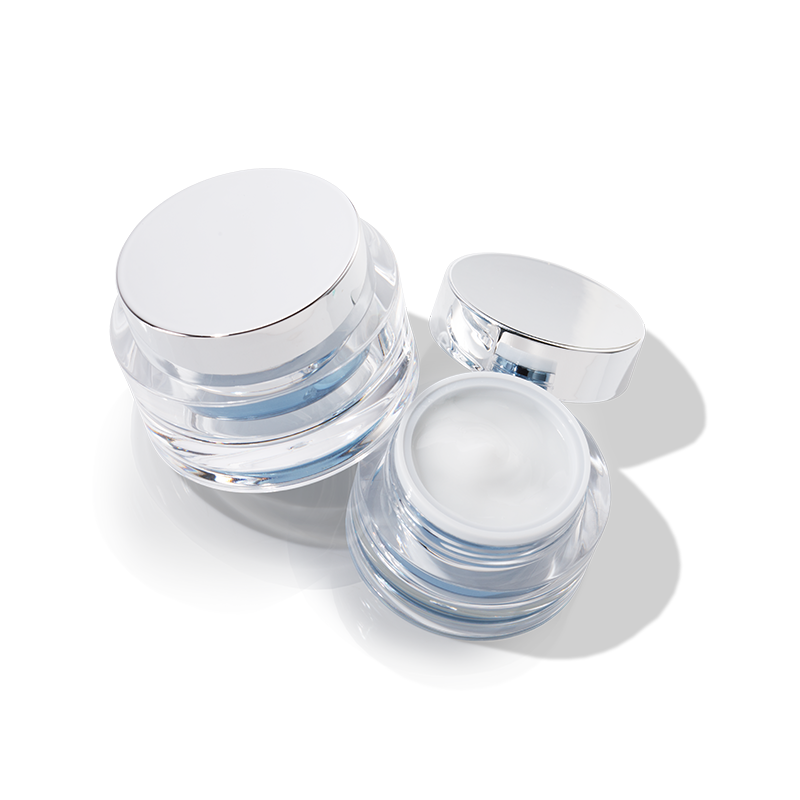
In practice, it’s both structural and process. Torque windows drift during capping; liners lose compression set; and poor tolerance stack-up can loosen closures over time. Even small details like thread pitch or a cap’s heat deflection temperature (HDT) can compound. The catch: these issues hide in plain sight, until a seasonal spike makes them visible—funny how that works, right? The goal here is to decode where jar architecture wins or fails, and then to compare options that prevent those failure modes before they cost you. Let’s move into the deeper layer and make this actionable.
Deeper Look: Traditional Solutions and Their Hidden Traps
When teams buy on spec sheets alone, they often miss system behavior in use. A china acrylic cream jar can look premium and still fail due to predictable stress points: inconsistent inner cups, misaligned cap threads, or liners that creep under heat. Direct truth: part-to-part variation from injection molding isn’t just cosmetic; it affects seal integrity under load. Two jars with the same nominal design can diverge after capping, because the torque profile varies, and micro-gaps appear. That invites higher water vapor transmission rate (WVTR), fragrance loss, and oxidation around the rim. Look, it’s simpler than you think: if the closure system can’t maintain compression over temperature swings, your formula pays the price.
Where do traditional designs fall short?
Legacy jar stacks often rely on a single barrier assumption—thick PMMA will do. But load cases say otherwise. Under drop shock, the cap flexes, the thread face deflects, and the liner rebounds slow, so volatiles escape. UV stabilizers in the resin help gloss but not seal. Add in mold shrinkage drift and you get tolerance stack-up that nudges the cap off-spec. Another blind spot: compatibility between a decorative outer shell and the PP inner cup. If surface energy is low, adhesives age poorly; if the cup lip isn’t flat within tight GD&T, even a good gasket can’t seat right. Each micro-flaw amplifies with travel cycles. That’s why a jar that “passes” a quick bench test may later fail after 20 thermal cycles, or after vibration in a delivery van. Result: dryness at the edges, retinol oxidation, and customer notes about “half-full” feel due to subtle evaporation. We can—and should—design past these traps.
Comparative Insight: New Tech Principles and Real-World Gains
Here’s the forward-looking lens: instead of accepting a thick wall as insurance, use multi-layer and closure-tuning principles. A co-structured inner cup (PMMA/PETG/PP) can pair aesthetics with lower WVTR and better chemical resistance, while an induction-ready seal gives a stable compression baseline. Cap geometry can shift to a wider land area for uniform load, and the thread start can be chamfered to reduce cross-thread risk. A robust gasket—EVA or foam PE with known compression set—locks the torque window. Now compare that against a standard single-wall jar: even with equal mass, the multi-layer approach holds fragrance longer and resists creep after heat soak, because the stress redistributes across the stack. Partnering early with a capable china acrylic cream jar manufacturer helps you tune resin grade, tooling, and cap-liner match before scale (not after returns).
What’s Next
Semi-formal view, practical edge: specify performance, not just parts. Ask for WVTR targets, cap torque retention after 24 hr and 7-day dwell, and a 1.2 m drop profile with pass/fail criteria. Then request process controls—cavity-level statistical data, torque application ranges, and liner thickness Cpk. These “new” principles aren’t exotic; they’re the alignment of materials, geometry, and process. And they deliver measurable outcomes: fewer micro-leaks, slower volatile loss, brighter fragrance notes at day 60. Add PCR content with rPMMA for sustainability, and use a scratch-resistant hardcoat to keep clarity. Small moves—big stability. The comparative takeaway is clear: the jar is a system, and testing that system beats chasing glossy looks. Parentheses aside, this is where quality lives (and margins stay intact).
How to Choose with Confidence: A Short Metric-First Guide
Advisory close, three checks that work in the field—simple, but strict. First, barrier: set a WVTR threshold for the inner cup and verify with 40°C/75% RH exposure; target less than 0.5 g/m²/day for sensitive actives. Second, closure integrity: define a torque window (apply at 0.6–0.9 N·m), then measure torque retention after heat cycling and vibration; aim for less than 10% drop over seven days. Third, resilience: require a 1.2 m drop test onto plywood at three orientations with zero cap loosening and no visible stress whitening on the threads. If a candidate fails any one, restart the stack—funny how enforcing numbers simplifies choices, right? Keep your spec forward-looking, compare real test curves, and watch complaints drop. When you need a technical partner who speaks in data and tolerances, not just finishes, consider NAVI Packaging.