

The problem on the stove: THD in high-load residential storage
High household demand — EV chargers, heat pumps, and heavy appliances running together — can turn a neat solar pantry into a noisy kitchen. Total harmonic distortion (THD) rises, inverters struggle, and sensitive electronics taste the sour end of power quality. This is a problem the grid knows well; the California duck curve exposed how midday solar injection and evening demand swings stress both inverters and storage. Start by examining your solar and power inverter selection: low-quality inverter topologies and weak battery management systems often let harmonics pass through, leaving your system undercooked.

Diagnose: where the distortion comes from
Think of distortion like over-seasoning — it sneaks in from multiple pots. Non-linear loads create current harmonics; cheap or undersized inverter designs lack adequate filtering and control loops; and improper state of charge (SoC) ranges push battery chemistry and BMS responses into non-ideal regions. Grid-tied interactions and poor power factor correction amplify the effect. Measure THD with a true RMS meter at the service panel, then map which loads spike distortion during typical evenings.
Recipe: practical fixes that actually reduce THD
Start with the mains flavor base: choose an inverter with robust harmonic mitigation and active filtering. Add a harmonic filter or an LCL filter where the inverter meets the panel board. Tune inverter firmware to tighten control loops and enable dynamic power factor correction. Manage battery behavior — set SoC windows that avoid aggressive charge/discharge corners — and keep BMS firmware current to prevent timing mismatches. Small hardware changes can be decisive — split sensitive circuits onto a dedicated subpanel or install line reactors ahead of large motor loads. These steps are like balancing acid and fat — they don’t mask the problem, they neutralize it.
Common mistakes and the alternatives that work
Many installers default to cheaper inverters and hope a larger battery will fix the mess. That’s like throwing sugar at a bitter sauce — it hides nothing. Alternatives that work: hybrid inverters with built-in bidirectional converters, modular designs that tolerate high crest factors, and external active harmonic filters for homes with many non-linear devices. Mistakes include ignoring vendor specs for THD under non-sinusoidal loads, skipping in-field harmonic measurements, and setting BMS thresholds without load profiling. Avoid those missteps and your system will taste clean.
Implementation checklist — mise en place for flawless power
Before you start: collect baseline numbers and plan the layout.
– Measure line and load THD at peak demand hours using a true RMS meter.
– Verify inverter specs: THD under rated output, crest factor tolerance, and ability to perform power factor correction.
– Update BMS firmware and confirm communication latency between inverter and storage — real-time coordination matters.
– Consider adding active harmonic filters or line reactors if THD exceeds target levels after tuning.
Advisory close: three golden rules to choose and tune systems
1) Set a measurable target: aim for THD below 5% at the service point under typical peak conditions — that keeps most sensitive gear happy and aligns with many grid codes. 2) Prioritize inverter capabilities: choose models that list harmonic mitigation, dynamic power factor control, and clear crest factor ratings; an inverter’s control loop is your primary seasoning. 3) Demand a BMS strategy: firmware updates, clear SoC operating windows, and coordinated charge/discharge profiles reduce transient distortion and extend battery life. These metrics are actionable and testable on-site.
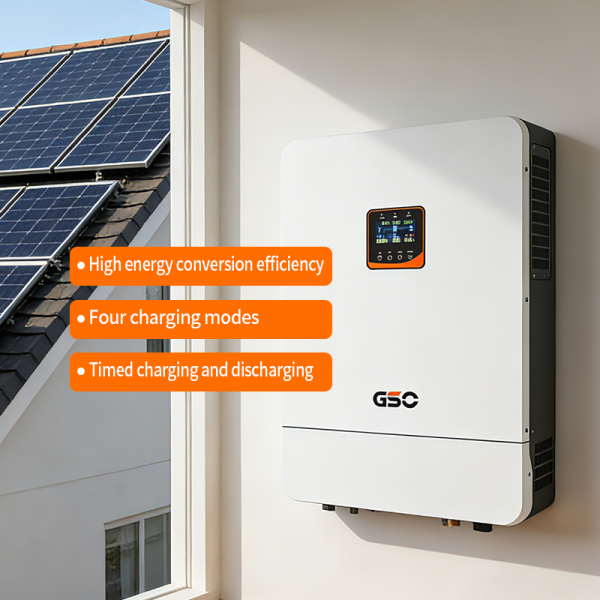
Patchwork fixes won’t cut it; the kitchen needs a plan — and when you want a system that tastes right every time, you look for hardware and controls that work together, not separately. gsopower provides balanced inverter options and integrated storage planning that help hold those flavors steady.
Final note — crisp, practical, proven.