
Introduction: The Meeting That Starts Late (Again)
You walk into a room with glass walls and a smooth table. The conference room speaker and microphone system looks neat, yet people on video keep saying, “You’re cutting out.” In audits, I often see 30–40% of meetings lose time to audio fixes, from cable swaps to switching laptops—tiny delays that add up fast. Now picture a hybrid team trying to align on a deadline while echo, low gain, and jitter pick away at focus. Do we accept this as normal, or can we set a higher bar (and make it easier) for everyone in the room and online?

I teach teams one simple idea: good sound is a system, not a gadget. It blends pickup patterns, speaker coverage, and latency control into a predictable flow. When that flow breaks, you feel it, even if you can’t name the cause. So let’s put the everyday story next to the tech behind it—calm, clear, and step by step. Next, we’ll compare what people buy with what actually helps.
Under the Hood: Why Traditional Audio Rigs Miss the Mark
Why do legacy setups fall short?
A modern digital meeting device promises clean speech, yet many rooms still lean on old habits: scattered mics, a single ceiling pickup, or a basic analog mixer. On paper, that seems simple. In practice, it creates trade-offs the ear notices. Latency stacks up as audio hops through a long DSP chain. AEC struggles when speakers and microphones sit in poor alignment. And the room itself—hard surfaces, parallel walls—adds comb filtering that no “volume boost” can fix. Look, it’s simpler than you think: the system has to protect intelligibility first, then amplify.
Three flaws show up again and again. First, gain-before-feedback is too low because pickup patterns fight the loudspeaker coverage. Second, beamforming is either absent or mis-aimed, so side talk and chair shuffles trigger the auto-mixer. Third, network paths lack QoS, so jitter and packet loss nudge voices out of sync. These are not exotic problems; they’re routine. Yet the fix is specific: match array geometry to seating, place speakers to avoid mic lobes, and keep conversion steps minimal. A short, well-tuned path beats a feature list that piles on processing—because every extra hop risks delay and smear.
Comparative Insight: New Principles That Make Hybrid Rooms Sound Natural
What’s Next
From a forward-looking angle, the smart shift is architectural. Instead of throwing more knobs at the rack, new systems push intelligence to the edge. AEC and auto-mix run close to the mic, cutting roundtrip latency. Adaptive beamforming tracks speech with context, not just level spikes, so whispers don’t vanish and laughter doesn’t wreck the mix—funny how that works, right? Speakers are zoned to avoid hot spots, and PoE power converters simplify wiring, which reduces noise sources and failure points. Compared to a legacy array plus a general DSP, this design is more predictable. It also scales better, because each node handles its job without flooding the network.
Now compare purchase paths. A stacked kit asks you to tune and re-tune every time furniture moves. A purpose-built, compact meeting system treats seats, sightlines, and coverage as one canvas. The difference shows up in speech transmission index, not just in “sounds good to me.” When array geometry, loudspeaker aim, and DSP presets ship as a matched set, you get faster setup and fewer slip-ups during live calls. It’s less dramatic engineering and more dependable craft—small decisions that guard clarity hour after hour.
How to Choose: Three Metrics That Matter
We’ve seen the pattern: old rigs chase loudness, while better designs protect clarity with placement, timing, and smart processing. The lesson is not “buy more,” but “buy aligned.” Short signal paths reduce latency. Thoughtful coverage reduces the need for aggressive EQ. And edge computing nodes keep the mix steady under load. Keep the human goal in front: natural talk, low stress, no fiddling during the call—because meetings should serve content, not the console.
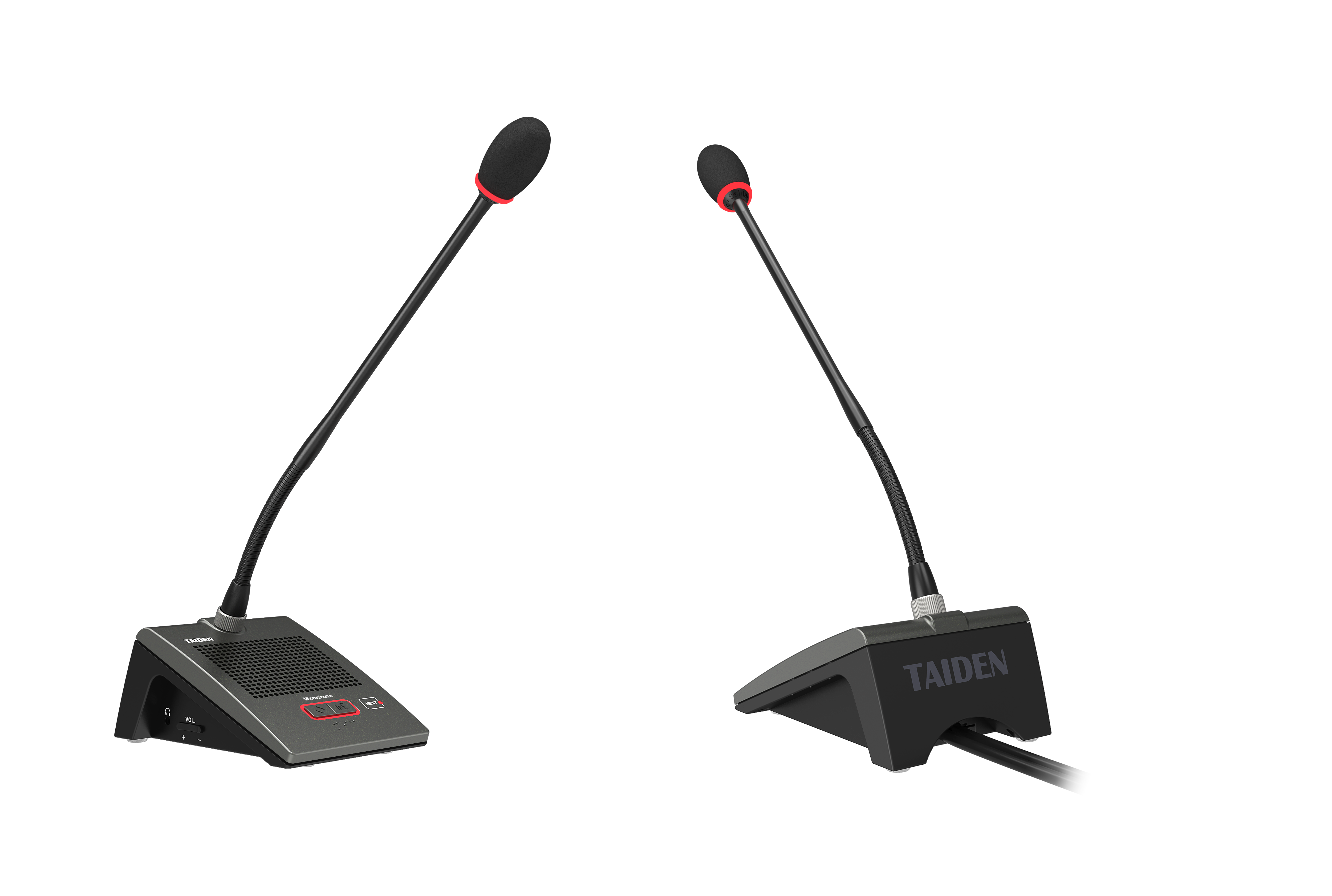
Use three evaluation metrics when you test: 1) End-to-end latency under load, measured in milliseconds, including the video path; aim for consistency, not just a single low number. 2) Intelligibility score (STI or equivalent) at multiple seats, before and after people enter the room, to reflect real absorption and noise. 3) Stability margin, expressed as gain-before-feedback in dB, with mics at typical positions—not the ideal ones. If a system holds these numbers while the furniture shifts and the roster grows, you’ve found the right balance—simple, solid, repeatable. For deeper examples and solutions that take this systems view, see TAIDEN.