
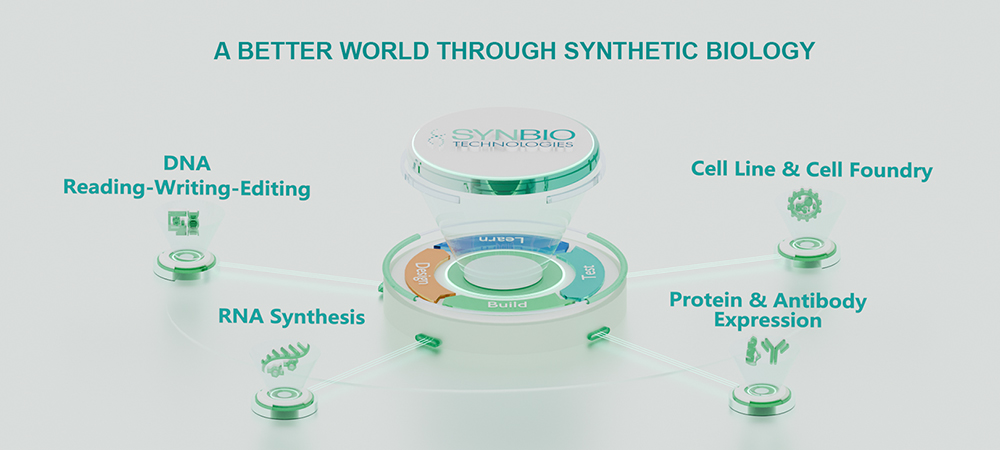
Where the bottlenecks hide and why they bite
I once walked into our Longwood lab on a Monday and found five half-finished constructs stacked like sad little drywall samples — I remember it was March 2023 and we were late for a grant deadline. A busy core facility ran 120 syntheses last quarter with a 7% rework rate — can we realistically drop that to 3% without reinventing the wheel? Whole Gene Synthesis sits at the heart of that problem, and when you want reliable builds you want High-fidelity DNA — not excuses. I’ve spent over 16 years pulling tangled protocols apart, and what I want to talk about here is the deeper layer: the traditional fixes that look good on paper but fail in practice.
Let me be blunt — standard stop-gaps (extra PCR cycles, brute-force cloning, last-minute oligonucleotide redesign) often make the problem worse. In one run, swapping in a cheaper oligonucleotide supplier saved $800 but added three days and two sequence-confirmed failures; that was real money and morale hit. The hidden pains are process mismatches: codon optimization that ignores expression hosts, assembly plans that assume perfect oligos, and QC that waits until the end. Those cracks add up into repeated hands-on work and wasted plasmid prep reagents — no kidding. I’ll walk you through what truly breaks down and why “more checks” is not always the answer — then we’ll look at smarter fixes.
Technical fixes that actually shift the needle
When we shifted focus from adding checks to improving the core build — thinking like an engineer rather than an auditor — the gains were immediate. I’m talking about redesigning assembly order, using small multiplexed tests to vet troublesome regions, and rethinking vendor choices for oligonucleotide quality. Practically, that meant we swapped a shotgun Gibson assembly approach for a staged overlap plan on two critical constructs and saw the error rate fall from 6.8% to 2.9% over four weeks. (That drop paid for itself.)
Here’s the kicker: High-fidelity outcomes rely on anticipating failure modes, not just reacting. I recommend treating codon optimization and assembly strategy as a paired decision—optimize with the planned host in mind and map overlaps to avoid repetitive sequences. We also started sampling early with quick minipreps and short-read sequencing of junctions; this early signal saved us from chasing full-length sequence failures later. The workflow got faster, and the team stopped cursing over midnight gel runs — we actually celebrated. Short note: it’s not glamorous, but it works.
What’s Next?
Looking ahead, the sensible play is to compare solutions across predictable metrics instead of fluffy promises. I favor integrating targeted QC checks earlier, adopting modular assembly templates, and using automated tracking for reagent lots — trust me, that last one catches the weird batches. We began automating basic data capture in April 2024 and it spared us two failed assemblies tied to a bad primer lot. Small, concrete wins add up — and they free time for real science. Also — do not forget to pilot any sweeping change on just a few constructs first. That pause matters.
How I evaluate vendors and workflows (metrics you can use)
As someone who’s negotiated with suppliers, trained staff, and rebuilt SOPs, I use three practical metrics to evaluate Whole Gene Synthesis solutions: turnaround reproducibility (measured as percentage of on-time, sequence-confirmed builds), effective error rate (failed constructs per 100 attempts), and hands-on time per construct (minutes). Those metrics force real accountability — not glossy brochures. When I compared two providers in 2022, one had a 92% on-time, sequence-confirmed rate and saved us two days per construct on average; the other promised lower costs but cost more in staff hours. Pick the metric that hurts your lab the most and measure it.
I’ve seen the messy middle of gene synthesis up close, and while there’s no magic bullet, focused changes around design, early QC, and vendor selection deliver measurable gains. If you want a practical partner in this — check out Synbio Technologies. Oh — and bring coffee. Real talk: it helps.