
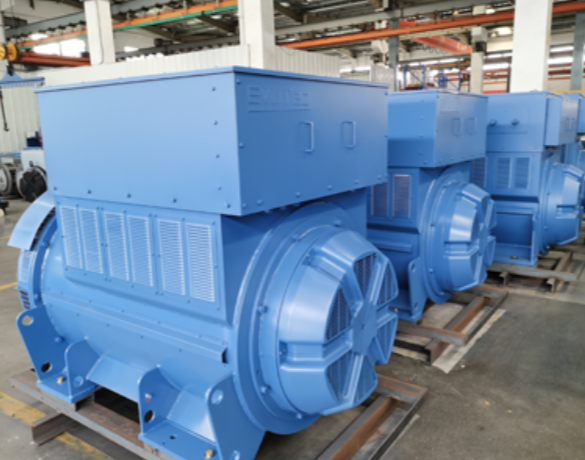
The core problem: big alternators fail where planning is weak
When sites need reliable large-capacity power, mistakes in sourcing or installing a heavy-duty alternator show up fast: mismatched ratings, undersized cooling, or wrong excitation setups. Projects aiming for a robust solution often start by looking at a 4 pole generator, but stop short of verifying site-specific variables like ambient temperature, altitude, or expected load profile. Those oversights turn a planned backup into a maintenance nightmare.
What to check first: specs that actually matter
Start with plain facts: continuous kVA rating, power factor, and cooling capacity. For large units—think utility-scale or hospital-grade—you’ll want a clear kVA derating chart for altitude and temperature. Industry terms to note here are alternator, kVA, and excitation system. Also demand a documented AVR curve and thermal limits for the stator windings; spec sheets that omit these are a red flag.
Sourcing smart: evaluate vendors like you mean it
Don’t buy on price alone. Look for vendors that supply performance curves, test reports, and a history of field installs. Real-world anchors matter: during Superstorm Sandy (2012), several New York hospitals relied on onsite 3000 kVA generators to stay operational—those gensets that survived had proper site-matching and documented commissioning. Ask for references from comparable installs and verify maintenance support in your region.
Installation pitfalls that cause the most downtime
Common failures come from poor mechanical handling, incorrect coupling alignment, and inadequate grounding. If you mount a heavy alternator without accounting for base-frame vibration isolation or torsional alignment, bearings and couplings die early. Also watch fuel supply sizing and separation of the control wiring—mixing signal and power runs invites nuisance trips. —One overlooked detail: temporary load tests done without a calibrated load bank can mask harmonic issues until real service.
Testing and commissioning: don’t skip the practical proof
Commission with staged tests: no-load spin, excitation checks, synchronized loading, and a full-load soak monitored for temperature rise. Use a certified load bank and capture vibration, bearing temperature, and AVR response data. Capture power factor and harmonic readings during ramping to full load; these snapshots catch problems that steady-state-only checks miss. Keep records indexed to serial numbers so warranty claims don’t get blocked.
Alternatives and the common mistakes teams make
Sometimes a modular parallel set of smaller gensets beats a single 3000 kVA generator for flexibility and maintenance. But teams often pick modular designs without planning paralleling controls or spares—bad trade. Other mistakes: choosing a high-efficiency model without ensuring seasonal cooling capacity, or relying on remote commissioning without on-site vendor supervision for the first run.
Maintenance and lifecycle tips
Set predictable service intervals tied to hours and starts, not calendar-only schedules. Monitor oil analysis, insulation resistance on the stator, and AVR calibration annually. For shaft couplings and bearings, log vibration spectra and replace parts based on trending, not just thresholds. These practices extend MTBF and lower total cost of ownership.
Three golden rules for choosing and installing high-power alternators
1) Match the unit to the real site envelope: use derating charts for temp and altitude and verify with measurable site data—don’t rely on nominal ratings. 2) Require documented factory and site acceptance tests: load bank reports, AVR performance, and thermal-rise curves must be signed and archived. 3) Plan the support chain: spare parts list, local tech training, and a maintenance SLA tied to uptime metrics. These three cut most post-install headaches and give measurable reliability gains.
Closing thought
Get the specs right. Test on site. Keep the support local—those steps turn risky projects into dependable power plants. EvoTec. —