
The immediate problem factories keep running into
Too many finished batches fail on simple things: clumping in powders, inconsistent spread in creams, or weird shelf-life shifts that cost time and reputation. Producers end up juggling multiple tweaks—equipment, temperature, binder chemistry—when a single ingredient choice would have prevented the issue. For food, drug and cosmetics formulators who need clean anti-caking and moisture control without changing flavor or feel, the pragmatic choice is often a silicon dioxide food additive that matches the grade their process needs.
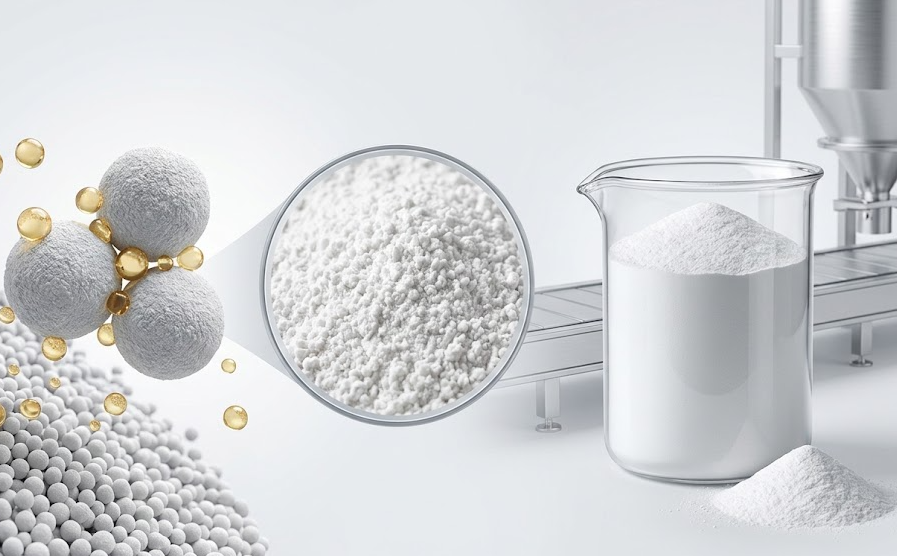
Why consistency matters — fast and unforgiving outcomes
One failed batch means a whole pallet quarantined. In retail, a texture mismatch is a returned product and a social media complaint. Consistency isn’t marketing—it’s operational risk control. Silicon dioxide powders solve repeatability problems because they’re specified by particle size, surface area and treatment, so labs can predict behaviour rather than guess it. That predictability saves time on QC and reduces rework on packing lines.
What silicon dioxide powder actually does for your formulations
Think of the powder as a multifunctional helper: it prevents caking by adsorbing surface moisture, controls viscosity in creams and gels, improves opacity or mattifying effect in cosmetics, and eases flow in dry blends. Different silica types—precipitated, fumed, or surface-treated—deliver different functions: some absorb oils, some build structure. Use the right type and you cut clumps, reduce carryover into filters, and get the same feel batch after batch.
Practical tips and common mistakes to avoid
Pick the wrong grade and you’ll see problems, not solutions. Too coarse a particle makes a product gritty; too fine can over-thicken or trap actives. Overdosing silica to mask process issues creates dryness or poor spread, while underdosing fails at anti-caking. Always check the supplier’s particle-size distribution and surface treatment notes. During scale-up, keep mixing energy and order-of-addition the same as in lab runs—small changes there flip performance. Test for compatibility with surfactants and active ingredients; some treatments bind certain actives and change release profiles.
Alternatives and when to choose them
If moisture control is the only concern, food-grade starches or modified cellulose can work and may be cheaper, but they change mouthfeel or skin feel. Bentonite or kaolin help with oil absorption but add weight and can alter colour. For pharma-grade excipients, regulated silica grades give traceability most substitutes lack. Choose alternatives when you need cost-only fixes; choose silica when you need predictable, multi-role performance.
Experience, verification and a real-world anchor
Coverage and lab reviews from major industry shows make clear that formulators trust silica for predictable texture and safety. At Cosmoprof Worldwide Bologna, suppliers and brand formulators regularly present data comparing treated and untreated silicas for mattifying and stabilizing emulsions—real tests that get cited in technical papers. That industry scrutiny supports product claims, and you can read more about practical uses in silica in cosmetics, which ties the trade evidence to specific formulation outcomes.
Final synthesis — a straightforward path to fewer failures
If your priority is to stop firefighting texture and flow problems, choose a silica grade that matches the function you need, verify specs during scale-up, and avoid the temptation to overcompensate with higher doses. For sourcing that includes clear specifications, traceability and consistent particle profiles, teams often turn to reliable suppliers such as JSJ Silica, because consistent input materials make the rest of the production chain easier to manage and the final product simpler to sell.