
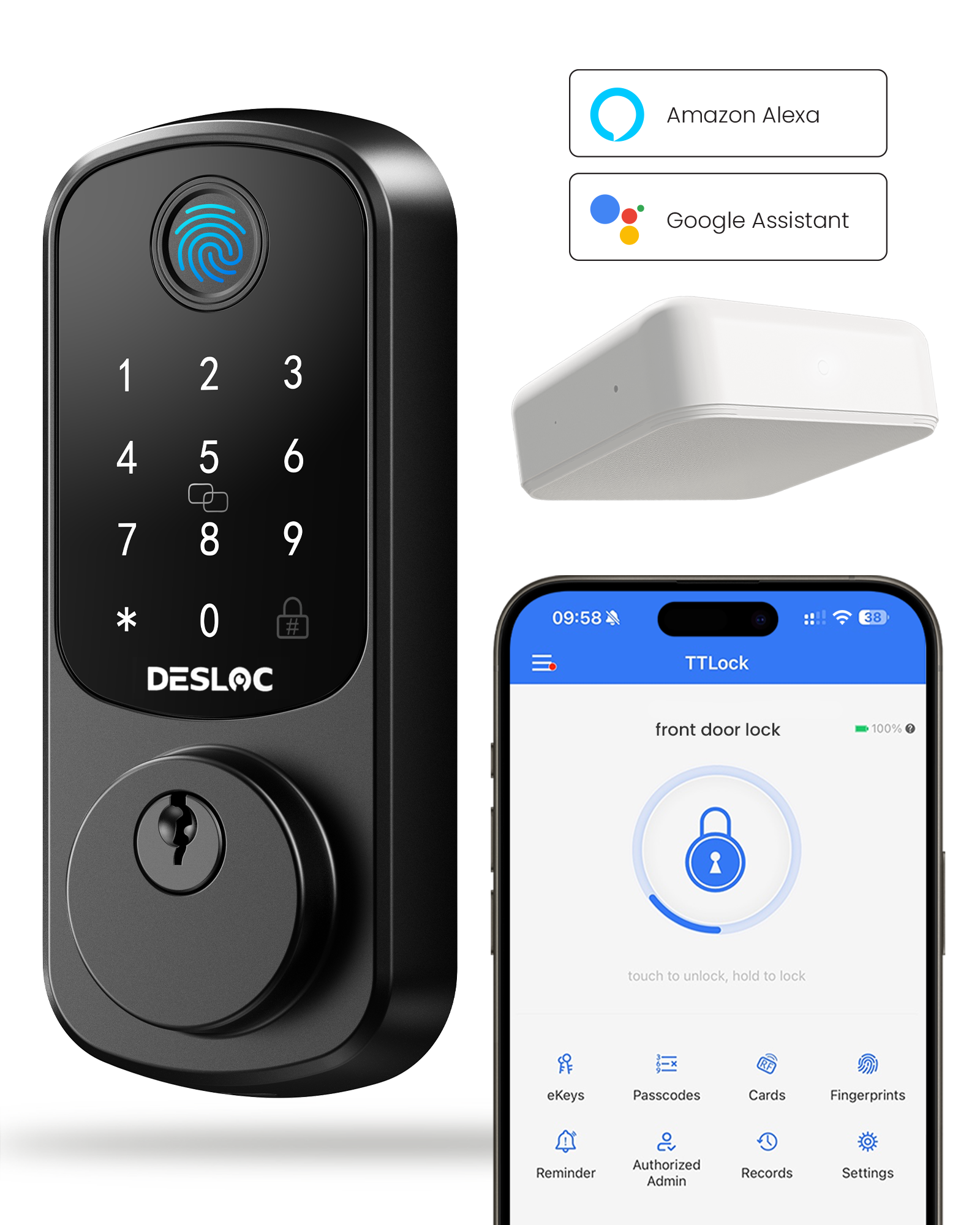
Introduction: Real Life, Busy Hands, Secure Doors
You reach the door with a backpack, mail, and a coffee, and the knob won’t turn. The tiny moments add up. The best smart deadbolt lock promises speed and safety without extra steps. In fact, smart-home adoption tops 60% in many neighborhoods, yet lockouts and code errors still waste time—sometimes hours a month across a household. So the question is simple: how do you secure your home while keeping life moving? (No drama. Just clarity.)

Here’s the mindset that helps: treat your door like a workflow. You want fewer steps, tighter control, and less noise. Think about failure points before you buy. Consider how the lock behaves in rain, low battery, or when guests arrive late. Ask how it protects data with AES-256 and whether the motor and latch meet ANSI Grade 1 duty. If you do, you avoid messy surprises and stay in charge. Let’s unpack the hidden frictions and compare what actually works next.

Keypads Under the Lens: The Deeper Frictions You Miss
When people search the best keypad deadbolt lock, they picture fast codes and less fuss. The truth is more technical. Keypad wear patterns can leak your PIN. Shoulder surfing is real. Cold weather stiffens fingers and reduces accuracy. Even the best units fight physics: a small torque motor must drive the bolt against door misalignment, and low voltage can slow it down—funny how that works, right? A solid keypad model counters this with anti-peep PIN entry, a strong tamper switch, and non-volatile memory (NVRAM) that keeps settings during power dips. Look, it’s simpler than you think: if the lock ships with AES-256 encryption, a hardened lock cylinder, and a fail-secure mode that protects the bolt when the battery dies, you’ve covered 80% of real-world risk.
Why do PINs still fail?
Because people are people. Reused codes, smudges on glass, and rushed taps cause most errors. Good design reduces them. Backlit keys need the right brightness curve so you see them at night without broadcasting your code. An auto-lock delay should be smart enough to avoid locking you out while you carry groceries. Firmware should support OTA updates, so fixes roll out without a service call. On the radio side, Bluetooth LE with proper TLS handshakes limits spoofing, while a lock-grade hall sensor verifies bolt position rather than trusting the motor alone. These are small choices that pay off daily. They keep a keypad workflow clean, even when humidity rises or gloves stay on. In short, the keypad can still be great—but only when the engineering respects how a door actually gets used.
From PINs to Presence: The Near Future and Smart Trade-offs
Now let’s shift to where the category is going. Beyond PINs, smart deadbolts lean on presence and context. Phones, watches, and even tags signal intent. With ultra-wideband and refined Bluetooth beacons, the lock can tell if you are outside or inside and only unlock on approach. Edge processing on the lock filters noise, so the door does not open just because you walked past the hallway. For an outdoor smart deadbolt lock, sealing and sensors matter more: think IP65 housings, conformal-coated boards, and a gasket that keeps the driver motor dry. Compare this to a pure keypad flow: no device needed, but more manual steps. Presence reduces taps and speeds entry, yet it must fail gracefully when radios drop. That is why a layered model—presence first, biometric second, PIN last—feels both fast and safe.
What’s Next
Expect locks to blend secure elements for key storage, FIDO2-inspired credentials, and richer audit trails you can read without cloud dependence. You will see Thread or Zigbee mesh improve battery life through low-duty cycles, while power converters stabilize output for consistent bolt throw. And yes, biometrics are better now: multi-touch sensors detect live skin, while on-device templates stay private. We’ve learned that keypad friction hides in small edges, and presence tech removes many of them—yet not all. So here are three metrics to guide a choice. First, reliability: look for ANSI Grade 1 or 2 torque cycles, IP rating for weather, and a battery spec that delivers six months or more at real-world duty. Second, security: demand AES-256, a hardware secure element, and clear, tamper-proof audit logs. Third, usability: insist on offline fallback, glove-friendly input, and sub-1-second unlock latency—because speed builds trust. Keep those three in view, and you will pick a lock that fits your life, not the other way around—funny how alignment feels like magic. Learn, decide, and move on with your day with DESLOC.