
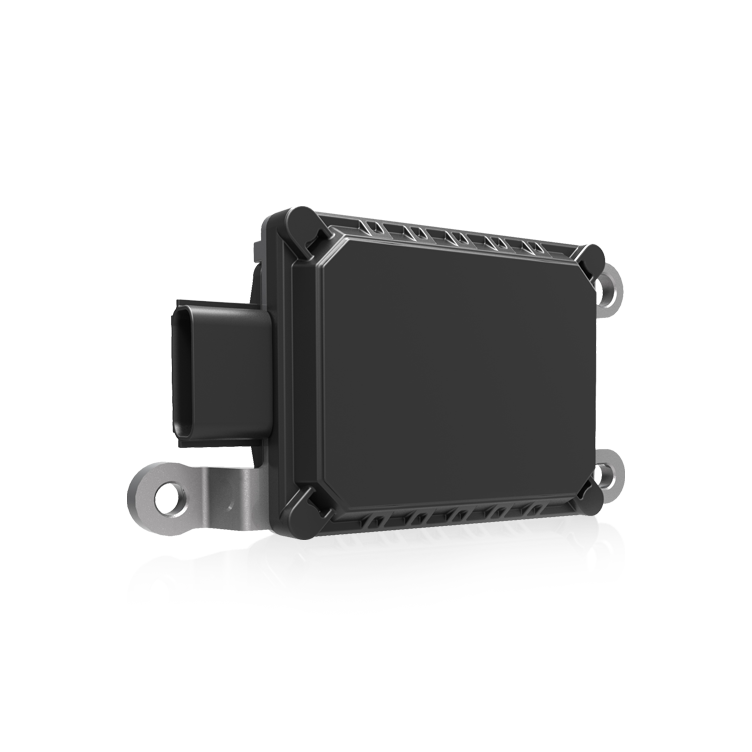
Comparative lead: lean manufacturing meets tiny mechanics
The case for compact, factory-direct digital platforms rests on two parallel currents: reduced system complexity and predictable manufacturing pedigree. Contemporary vehicle domain controller programs often pair MEMS gyroscopes with consolidated compute to replace bulky inertial suites — a shift visible in both low-cost mobility and premium ADAS tiers. For engineers mapping sensor stacks to control layers, the debate is no longer academic; it is about how a vehicle domain controller ingests angular rate data, balances thermal drift, and keeps the CAN bus tidy while meeting certification windows.
Technical axes of comparison: MEMS vs fiber‑optic gyros
MEMS gyros bring small form factor, low power, and tight cost control. Fiber‑optic gyros (FOGs) still lead where ultra-low drift and long-term stability are demanded, but they impose weight, integration friction, and higher BOM costs. From the perspective of a domain control unit, the trade-offs are concrete: sensor fusion complexity, sampling jitter on the real-time operating system, and the need for calibration over temperature. Systems with consolidated ECUs prefer MEMS because sensor fusion algorithms can compensate systematic errors — and because OTA updates allow iterative filter tuning after vehicles leave the line.
Factory-direct advantage: reproducibility, traceability, and supply rhythm
When a manufacturer owns the digital platform pipeline, calibration and variant management become deterministic. Factory-direct construction digital platforms deliver consistent calibration profiles across batches, lowering variant cost in the control software. This reduces rework during integration into the domain control unit — a boon for volume programs and for suppliers trying to harmonize CAN bus bandwidth and ECU load. Real-world programs following SAE J3016 definitions already prioritize predictable behavior at lower automation levels; that predictability benefits from factory-level control of sensors and software alike.
Field realities and where each sensor still wins
On open roads and in long‑life commercial vehicles, FOGs can outperform MEMS when hours of bias stability matter — think inertial navigation for off‑GNSS conditions. Yet mass-market cars, last‑mile delivery fleets, and many ADAS functions get better net performance by combining MEMS with advanced sensor fusion and redundancy. Engineers must watch latency, cross-axis sensitivity, and vibration susceptibility — not just headline noise density. The practical outcome: choose FOG only when the mission profile demands endurance-grade inertial performance; otherwise let MEMS live inside a carefully architected domain controller.
Common integration mistakes — and how factory platforms prevent them
Teams often slip by treating sensors as interchangeable parts. Mistakes include underestimating thermal bias over the vehicle lifetime, ignoring CAN bus congestion when adding high-rate inertial streams, and deferring calibration until late in integration. Factory-direct platforms reduce these risks by locking sensor variants, baking calibration into production, and feeding canonical profiles into the vehicle’s domain control unit during assembly — which avoids late-stage software gymnastics. Small human choices in architecture cascade into service costs; a consistent production story narrows those choices.
Advisory close: three golden rules for choosing sensors and platforms
1) Prioritize sustained bias stability and temperature characterization over peak noise figures; measurable drift across operating hours defines real-world navigation performance. 2) Architect for consolidation: assess how sensors affect ECU count, CAN bus utilization, and OTA pipelines — simpler domain controller architectures mean fewer field patches. 3) Lock production-level calibration into the factory workflow and vet supply continuity; a factory-direct construction digital platform shortens validation cycles and reduces variant sprawl.
These rules steer procurement and systems engineering toward pragmatic decisions that lower integration risk and service load. —