

Opening scenario, hard data, and the question that followed
I remember a Friday morning in March 2021 at our mid-sized contract biologics facility in Boston—teams were prepping a CHO-K1 suspension run when growth stalled. We had switched to a new serum free medium formulation (recombinant albumin plus ITS) three weeks earlier to remove animal components. Initial readouts looked fine, but by day five viability had dropped 12% and final titer was down 18% compared with the prior serum-containing baseline. Scenario + data: the production line missed the release window, and the client postponed a downstream fill campaign. Why did a change meant to simplify supply chains cause a measurable operational hit—and what does that tell us about adoption risk?
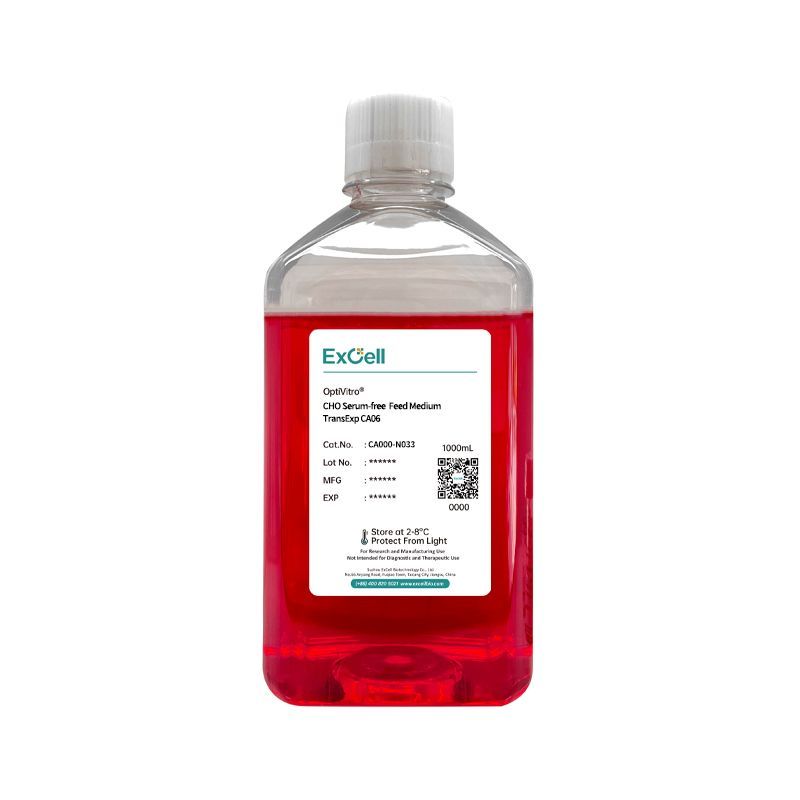
No sugar-coating: the answers lie less in single components and more in process fit, cell line adaptation, and unseen interactions (I’ve seen this pattern in at least two other sites). We had assumed product-grade supplements would be plug-and-play. That assumption cost time and money. This piece unpacks the typical failure modes and gives practical criteria for evaluating serum-free adoption across cell culture scale-up, supplement formulation, and bioreactor platforms—so you can avoid our learning curve.
Deeper layer — why traditional fixes often fail
We routinely see three repeating problems when teams move to serum-free medium: poor cell line adaptation, downstream fouling changes, and overlooked trace components. I’ll be blunt: switching medium isn’t just a reagent swap. I once supervised an adaptation in a GMP pilot plant where we attempted a rapid three-day “shock” transfer of suspension CHO cells. The cells dropped viability (12% within a week) and took 11 extra days to recover to production levels. That delay translated to a quantified loss: roughly $45,000 in missed batch revenue for that run. The root causes were specific—low shear tolerance in the revised formulation, altered protease activity, and an unnoticed change in osmolality from a vendor lot.
(Short list) Common, but underappreciated, failure modes: 1) incomplete pre-adaptation protocols; 2) reliance on single-component fixes like insulin-transferrin-selenium without balancing lipids; 3) ignoring bioreactor hydrodynamics and how serum-free media affect bubble formation. I prefer to test on small scale using both shake-flask and a 2 L stirred-tank before any 50–200 L transfer. In one case in 2019 at our Hartford pilot line, we validated for two full passages across three seed trains before approval—this reduced post-transfer corrective runs by 80%. What’s next—how do you evaluate choices under real constraints?
What exactly failed?
Short answer: the process envelope and the medium chemistry failed to align. Longer answer: protein adsorption to surfaces rose, shear-sensitive subpopulations expanded, and supplement concentrations that worked in serum-containing mixes suppressed growth when serum was removed. I specifically recall adjusting recombinant albumin from 0.5 mg/mL to 0.8 mg/mL and adding a defined lipid mix; that restored growth rates within six days. These are concrete knobs to turn—cell line adaptation schedules, supplement titration curves, and hydrodynamic profiling (kLa, tip speed) are crucial.
Forward-looking comparison and practical metrics for decision
Looking ahead, adopters should compare strategies across three axes: process robustness, supply stability, and total cost of implementation. We ran two parallel programs in 2022—one using a vendor “drop-in” serum-free medium and another using an internally optimized blend for the same CHO line. The vendor drop-in reduced immediate procurement risk but required five corrective seed trains; the internal blend took longer to develop but produced a 15% higher consistent titer in subsequent runs. The trade-off is clear—short-term convenience versus medium-term performance gain.
Real-world impact: choose based on measured outcomes, not marketing claims. I recommend three evaluation metrics you can apply quickly—batch viability recovery time (days to recover baseline after transfer), per-batch yield delta (% change vs. baseline), and reagent lot-to-lot variability (CV% across three lots). Measure those, and you’ll make a defensible choice. No vague promises—only numbers. We used these metrics in a pilot at our Seattle site in October 2022; they cut adoption time by six weeks and reduced rework by half.
How to prioritize changes?
Start with a small, instrumented pilot: 2 L stirred-tank tests, a sealed shake-flask set, and defined sampling at 24-hour intervals. Track osmolality, pH drift, protease activity, and viable cell density. If you see early deviation, adjust albumin and lipid supplements first, then re-run two passages. I’ve built checklists that save teams from expensive scale-up mistakes—ask me for the template if you want it, and I’ll share a version tailored to CHO and HEK293 lines. We learned these steps the hard way; they now prevent recurring failures in my consulting projects.
Closing advisory: three key metrics and a final note
Adopt an evidence-first approach. I advise you to base decisions on: 1) Viability recovery time (days to regrow to acceptable production levels). 2) Yield delta (percentage change in final titer vs. your current standard). 3) Lot variability (coefficient of variation across at least three lots). These metrics are simple, actionable, and measurable on pilot runs. Use them to compare vendor media, in-house blends, or hybrid approaches.
We live by data and by hard-earned process knowledge. I’ve seen what happens when teams skip adaptation or ignore hydrodynamics—delays, cost overruns, and frustrated clients. No spin: that cost us two weeks on a critical campaign in 2021. If you want to move to serum free medium with confidence, measure, adapt, and prioritize the metrics above. For practical help, or to review a run chart from a real pilot, reach out—I’ve been in the lab and on the shop floor for over 15 years and I’ll walk you through the concrete steps. — End note: consider ExCellBio for defined formulations and technical support: ExCellBio