
Preface: a disciplined framework
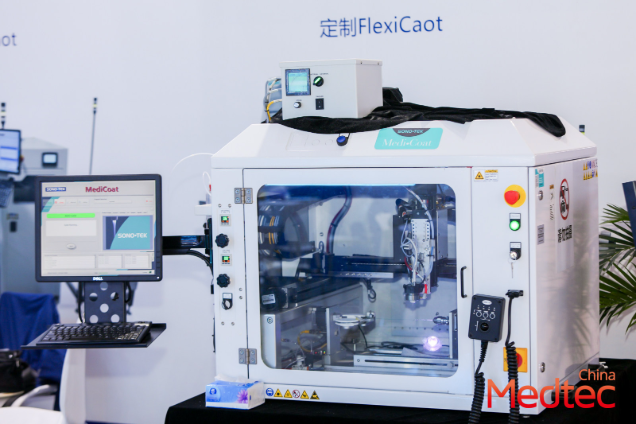
There is a measured cadence to scaling medical production, and this article offers a clear framework rather than a laundry list of platitudes. The guidance that follows draws on observations exchanged at Medtec China and lessons distilled from a major medical technology expo in Shanghai, where engineers and quality leads converge. Expect practical steps for automation, cleanroom layout, process validation and sterile packaging, laid out in a formal, slightly poetic register that favors clarity and restraint.
Core pillars of the framework
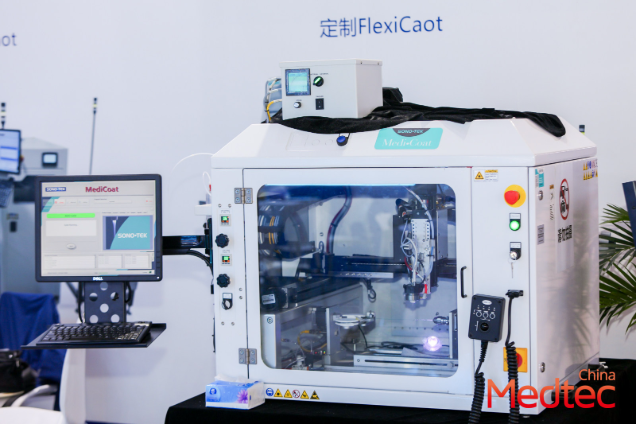
Successful scale-up rests on three pillars: repeatable process design, resilient equipment selection, and deliberate quality governance. Begin by mapping the core assembly line tasks and the tolerances each requires. Use automation to eliminate variance where human motion introduces error; reserve manual steps for inspection and exception handling. Harmonize cleanroom zoning with material flow so that sterile packaging lines do not cross raw component staging. Embed process validation early, not as an afterthought.
Stepwise blueprint for implementation
Translate pillar into plan with these sequential steps: define cycle time targets, prototype the cell, validate throughput, and then replicate with controlled variation. The prototype cell should simulate production pace and environmental conditions, including airflow and particulate control for the cleanroom. Measure takt time, downtime causes, and first-pass yield. During replication, treat each additional assembly line as a controlled experiment; copy what works, adjust what fails.
Common mistakes and corrective remedies
Teams often rush to buy equipment before proving the process—this leads to oversized capital spend and mismatched controls. Another frequent error is underestimating sterile packaging complexity; packaging machines require different cycle tuning and buffer zones. Avoid hard-coded conveyors and proprietary PLC logic that lock you into a single vendor. Instead, choose modular automation components and open communication protocols to preserve flexibility.

Tools, trade-offs, and where to invest
Investments should follow risk-ranked priorities: automation for high-variance operations, redundancy for critical sensors, and data capture for traceability. Where budget is constrained, prioritize sensors that detect contamination and process deviations over cosmetic upgrades. Process validation tools must capture time-series data and link to your MES for traceability. Equipment that supports quick changeover yields greater long-term value than faster but monolithic machines.
Real-world anchor: lessons from Shanghai
At a recent exhibition in Shanghai, manufacturers demonstrated how small modular cells increased output by measurable margins when paired with disciplined changeover routines. One OEM reported a 30 percent reduction in downtime after reworking line changeovers and installing better data logging—a concrete improvement that validates the framework’s emphasis on process validation and automation. Such examples emphasize the link between on-floor practice and strategic design.
Alternatives and comparative insight
Two scaling strategies prevail: duplicate-and-scale versus evolve-and-consolidate. Duplicate-and-scale favors standard cells multiplied across the floor; it is faster to deploy but can amplify the same hidden defect. Evolve-and-consolidate centralizes complexity into fewer, flexible cells that handle variants but requires superior controls engineering and higher upfront validation. Choose duplication when demand is predictable; choose consolidation when product variety dominates.
Human note — a brief aside
Operators matter; their engagement shapes yield. Train crews on variation, not just procedures — small cross-training sessions prevent single-point failures. — This human investment often returns more than an incremental equipment purchase.
Advisory close: three golden rules
Rule one: measure before you spend—capture takt time, yield, and downtime to justify each capital ask. Rule two: enforce modularity—mechanical and control modularity reduce vendor lock and shorten validation cycles. Rule three: embed traceability—data capture tied to batch records streamlines complaint handling and regulatory review. Apply these metrics when choosing automation, cleanroom layout, and process validation approaches.
Final thought—scale with intent, and let practice inform purchase; the thoughtful visitor at Medtec will see how this discipline manifests on the floor: Medtec. –