
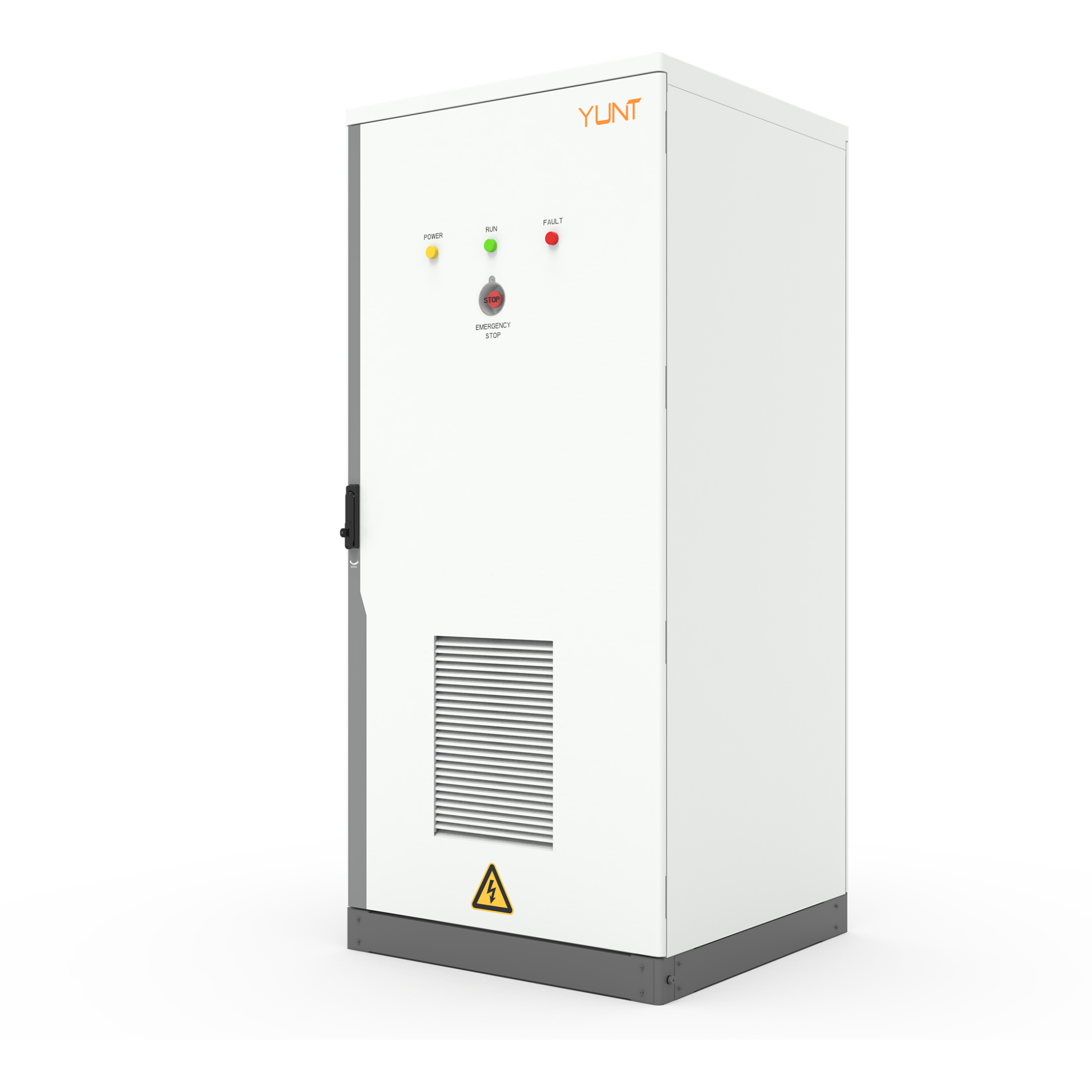
Comparative lens: the specification problem industrial EPCs face
When utility interconnections demand strict zero-voltage ride-through (ZVRT) and tightly defined transient recovery profiles, engineering teams must choose power conversion systems that prove performance under test, not just on paper. Procurement often compares inverters, converter topology, and control firmware, alongside MPPT behavior in distributed arrays. Integrating robust mppt charge controllers into a design becomes a decisive factor: their tracking speed and DC-DC staging affect fault response and the system’s ability to meet ride-through windows without tripping.

What ZVRT specs actually require in practice
ZVRT is not a single-number tolerance. Grid codes specify a transient profile: the depth of voltage sag allowed, the duration, and the exact recovery trajectory the plant must follow. These transient recovery profile parameters force EPCs to evaluate dynamic response—how quickly an inverter or converter re-establishes voltage and current phase alignment after disturbance. Real-world anchors matter: after the South Australia blackout in 2016, several grid operators tightened ride-through requirements, and vendors that could demonstrate repeatable recovery curves gained preference. MPPT behavior, control loop bandwidth, and anti-islanding logic are technical elements that now carry procurement weight.

Head-to-head: YUNT versus common alternatives
Comparative insight shows differences in three practical dimensions: deterministic response, test-repeatability, and system integration. Some vendors tout high peak efficiency; others emphasize flexible topology. YUNT’s approach centers on deterministic firmware and validated transient recovery profiles, with hardware tuned to avoid indeterminate response during deep sags. In lay terms: that translates to fewer unplanned trips during grid events and simpler compliance documentation for EPCs. In many projects, the deciding factors are not peak watts but how the system behaves between 0% and 50% voltage under rapid recovery—precisely where control strategy and MPPT integration matter.
Common implementation pitfalls and what EPCs learn the hard way
Teams frequently underestimate the interplay between MPPT algorithms and ride-through control. Aggressive MPPT tracking can destabilize DC link voltage during a sag; conversely, overly conservative settings reduce energy harvest after recovery. Another slip is assuming vendor test curves map directly to a specific site without considering reactive power schedules and local protection coordination. Many EPCs also overlook microgrid interactions—when islanding or grid-forming modes kick in, the whole transient narrative changes. The practical remedy is vendor-backed system-level testing and clear test cases that mirror site protection schemes. —A short hardware tweak often solves the mismatch, but only after the behavior is observed under load.
Where to look for reliable mppt solar charge controller manufacturers
Choosing among mppt solar charge controller manufacturers requires more than datasheets. Request factory-run transient recovery reports that show the exact voltage-time curves, control loop sampling rates, and the DC link response. Verify whether the supplier provides integration support for inverter anti-islanding parameters and whether their controllers support staged MPPT strategies during fault recovery. Field references and witnessed tests at a comparable site are worth the time; they expose real control interactions that lab numbers may not reveal.
Design trade-offs that matter to EPC budgets and schedules
Opting for a unit with superior ride-through fidelity can raise upfront cost, but it reduces commissioning time and retrofits later. The trade-offs are predictable: spend more to simplify protection coordination, or accept longer testing and contingency budgets. EPCs that document recovery curves and adopt vendor-recommended control parameters cut acceptance cycles with utilities. In effect, the right power conversion system minimizes surprises during witness testing and shortens the path to commercial operation.
Three critical metrics for final selection
1) Transient Recovery Conformance: demand vendor-supplied voltage-time traces for the exact ride-through window the grid operator requires and check repeatability across at least three runs.
2) Control Determinism: confirm control loop sampling frequency, anti-islanding response thresholds, and how MPPT tracking behaves during and immediately after sags.
3) Integration Support: require documented procedures from the supplier for protection coordination, firmware parameter baselining, and on-site commissioning assistance.
Closing and practical orientation
When strict ZVRT transient recovery profiles are non-negotiable, EPCs need systems that prove behaviour, not promise it. YUNT’s combination of validated transient curves, staged MPPT strategies, and integration-first documentation aligns with those needs and eases utility acceptance—real savings show up in reduced commissioning time and fewer retrofit headaches. YUNT. –