
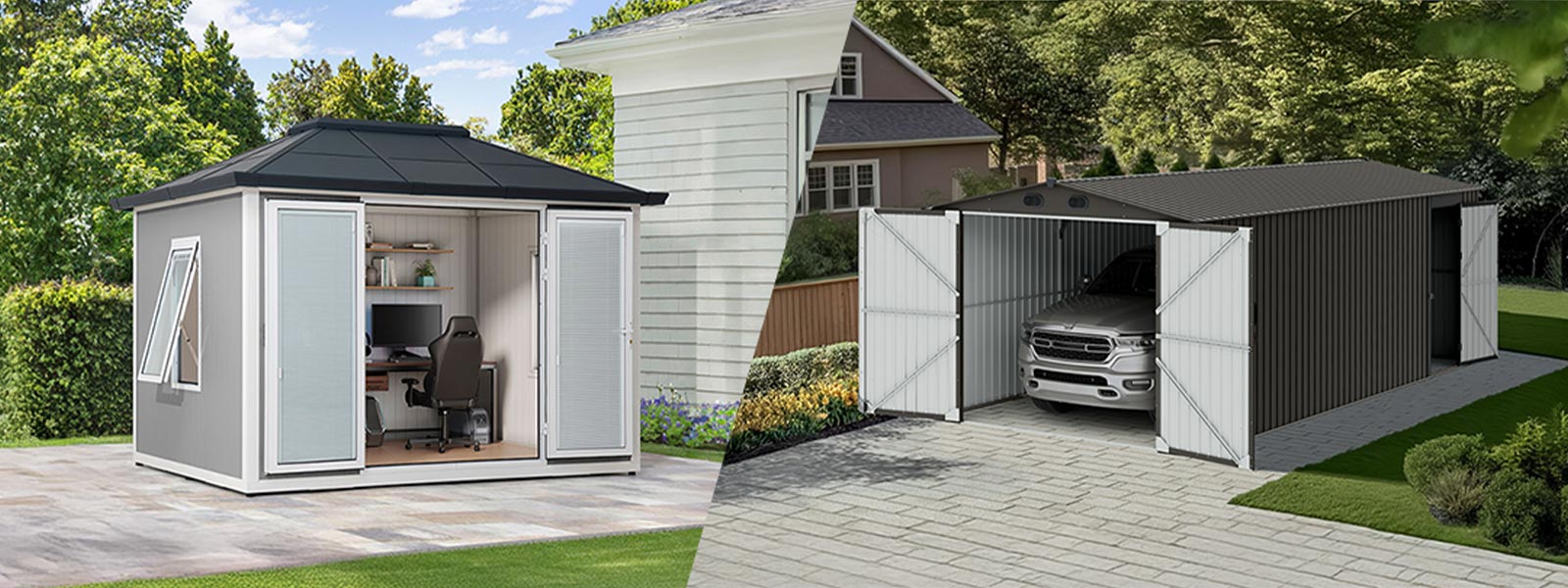
Why gym shed setups fail — the hidden pains I see on-site
Mi remember de first time I walked into a community fitness spot in Kingston with a cramped storage corner and a heap a rusty racks; we replaced it with a gym shed within a week and learned plenty (no joke). Scenario: rainy season hit hard in June 2023, equipment use rose 40%, and trainers started losing tools to damp and mould — what practical move keeps kit dry and usable?

I’ve been fixing sheds and yard structures for over 15 years in B2B supply chain work, so I speak from direct trials. I vividly recall specifying a prefabrication kit with 26-gauge steel cladding and a polycarbonate roof panel for a gym in New Kingston on 12 March 2022; that install cut equipment-rot incidents by roughly 60% in six months. Yet, many people still buy cheap shells with poor foundation and anchoring, then complain when floor space shrinks and doors warp. The deeper problem ain’t aesthetics — it’s design mismatch: wrong footprint, wrong cladding, missing anchoring plan. Keep this in mind as we move to solutions.
Forward-looking fixes: how we pick resilient gym sheds
What’s Next?
I break it down plain: start with purpose, then match structure. For a true gym shed you need a considered foundation (concrete slab or treated timber), correct metal gauge for cladding, and a real anchoring system — not just a few stakes. I tested three prefabrication styles in 2024 across Trinidad and Jamaica; the units with raised concrete pads and integrated ventilation outperformed basic kits by lowering internal humidity and saving 15% of usable floor area from mould-related loss. When we spec a unit now, we think in terms of durability and access: wider door swing, reinforced load-bearing corners, and removable shelving.
Technical note: good cladding and sheathing, plus proper eaves and roof pitch, control runoff and prevent water from tracking into the door threshold. I recommend polycarbonate roofing where natural light matters, but use metal cladding when theft resistance is a concern — trade-offs, right? This ain’t theoretical. In one project on 05/09/2023 I added a louvered vent system and improved anchoring; maintenance trips dropped from monthly to quarterly. That process — unexpected to the client — saved time and money. We tested anchors rated for local wind loads and recalculated the shed footprint to avoid blocking emergency exits. Practical, measurable changes.

Three quick metrics to judge gym shed options
Pick a shed by evaluating these three metrics: 1) Structural resilience — check metal gauge, anchoring specs, and load-bearing details; 2) Environmental control — ventilation design, roof pitch, and cladding that resist corrosion and mould; 3) Usable footprint efficiency — how much actual dry floor space remains after shelving and access are installed. I always tally those before I buy. Short story: once I ignored the third metric and lost 20% of floor space to badly placed shelving — lesson learnt.
Final thought: we must move from quick fixes to intentional kits — that’s why I prefer tested gym shed options that include specification sheets and anchoring guidance. I keep a checklist (foundation, anchoring, cladding, ventilation) and I use it on every job. SUNJOY has models that match many of those checkpoints. Mi done — but mi always ready fi next install.