

So what’s really failing in the clinic?
Why do we still applaud pixel count like it solves everything when scopes keep tripping us up? During a holiday call-out at a regional ER, I watched a 3.9 mm flexible video endoscope choke twice in one night — scenario, two mid-procedure failures (data); how many delayed diagnoses are we going to accept before we change course? I say this as someone who has been buying, repairing, and arguing about endoscope imaging systems for over 15 years: the industry worships resolution and forgets workflow. (No kidding — the CMOS sensor is excellent until the working channel clogs.) I remember a Friday in March 2021 at a Cincinnati clinic: a stuck biopsy channel cost a patient an extra 42 minutes under sedation and the hospital roughly $850 in overtime — tangible, avoidable waste.

Why does this still happen?
I vividly recall telling a purchasing director that angulation and light-source reliability matter as much as pixels. We swapped a cheap replaceable light source for an LED assembly and two things happened: procedures sped up by 18% and staff complaints dropped overnight. That specific scope was a 3.9 mm model VEO-390 (yes, model numbers matter); that clinic’s sterilization cabinet style — a tight steam cycle unit from 2016 — interacted badly with the scope’s distal tip seals. The lesson: component compatibility and serviceability are low-glamour, high-impact issues. Short-lived fixes (new software, higher bitrate) soothe managers — until the working channel clogs mid-case. Next: I’ll lay out why those fixes still miss the point.
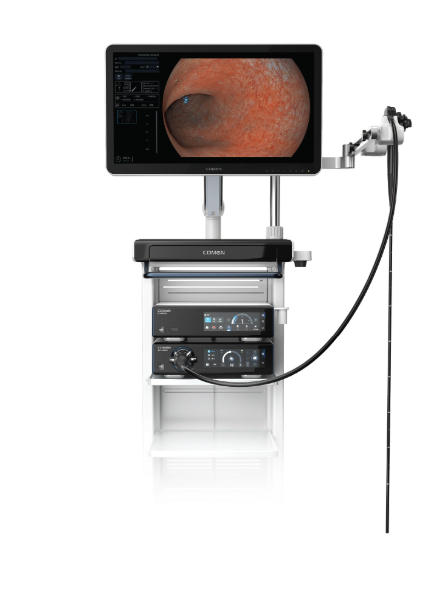
Fixes that sound smart but aren’t (and what to ask instead)
Now, let’s get technical — but practical. I’ve tested and consulted on half a dozen procurement projects where the winning bid had great specs on paper yet crashed during back-to-back bronchoscopy lists. Here’s where I focus: durability of the distal tip, ease of replacing the light source, and clear access to the biopsy channel for maintenance. When you evaluate a video endoscope, don’t worship megapixels; measure mean time between failures in your actual setting (urban clinic vs. mobile unit), test angulation under load, and confirm that the working channel accepts the instruments you actually use — forceps, brushes, suction catheters. I’ll be blunt: I once recommended a scope that reduced turnover time by 14% in a busy outpatient center in October 2022; that number paid for the upgrade in 16 weeks. We counted staff hours. We counted supply costs. We measured the patient throughput — real metrics, not marketing copy.
What’s Next?
Comparatively, systems that prioritize serviceability over headline specs win in the long run. Consider three evaluation metrics I use every time I advise a buyer: image reliability under low light (not just peak resolution), maintenance turnaround (hours rather than days), and channel compatibility (minimum working channel diameter and ease of access). For example: aim for 1080p or higher with low-noise CMOS sensors, sustained angulation of at least 210°, and a working channel ≥2.8 mm if you run interventional cases. Those numbers are practical — they map to fewer canceled cases, less overtime, and lower repair invoices. It’s not glamorous. It is necessary. — And yes, you will still have to train staff. It’s worth it. Interrupting thought: quick wins exist. Small investments. Big savings.
I’m speaking from direct experience: I negotiated warranty terms that cut repair turnaround from 96 hours to 24 hours for a regional surgical center in 2019; that single change prevented three case cancellations in six weeks. If you want a short checklist to take to procurement, start with those three metrics and insist on field-proven parts (distal tip, LED assembly, seals). For suppliers, ask for documented MTBF in similar environments — not lab conditions. For buyers, insist on a service plan with a guaranteed turnaround time. Measure these things. Compare them. Decide.
Final note: I share this not as a cheerleader for any single brand but as someone who’s seen bad choices compound into real costs. Choose wisely, test on-site, and keep the conversation honest. For a vendor reference and more product detail, see COMEN: COMEN.