
Introduction — a workshop smell and some numbers
I remember walking into a small assembly shop once and being struck by the warm, oily perfume of old flux and solder smoke — that first breath says a lot about the place. In many facilities, fume extraction for electronics and industrial applications is the thin line between a tidy production day and chronic headaches for the team. Recent studies show that airborne particulates and VOCs in assembly zones can exceed recommended limits by two to five times on poor ventilation days (and yes, that leaves a sour taste in your throat). So what do you do when your soldering stations, reflow ovens, and conveyor lines keep filling the air — and your crew keeps complaining?
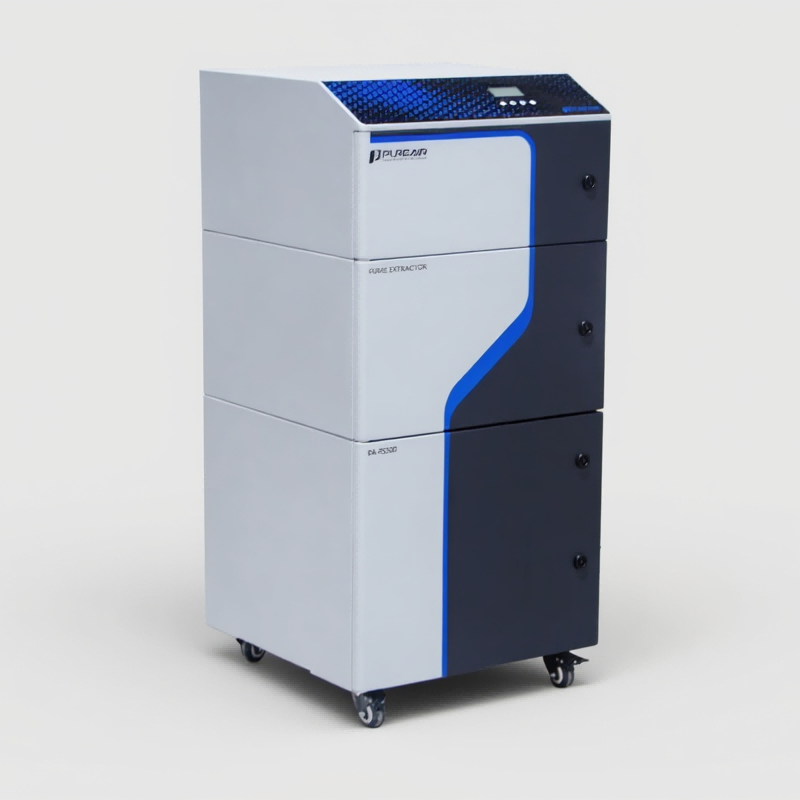
I’m not here to sell a miracle. I want to share practical fixes that actually work on the shop floor — things you can see, smell, and measure. You’ll find sensory details (the sting of flux), hard numbers, and direct questions that guide decisions. Let’s move from what you notice with your nose to what you can measure with a meter — and get the air where people work back to normal. Next, I’ll dig into the deeper problems that make many extractors underperform.
Part 2 — Deep trouble in electronic product manufacturing: what often goes wrong
electronic product manufacturing lives on precision, but fume control often gets treated like an afterthought. I’ve seen well-meaning teams install underpowered units, ignore duct sealing, or choose filters that clog in weeks — and then wonder why workers still cough. The real flaws aren’t always obvious: systems undersized for peak load, poor capture hood placement, and mismatched airflow profiles (you can have high flow but zero capture at the source). Look, it’s simpler than you think — but only if you audit properly.
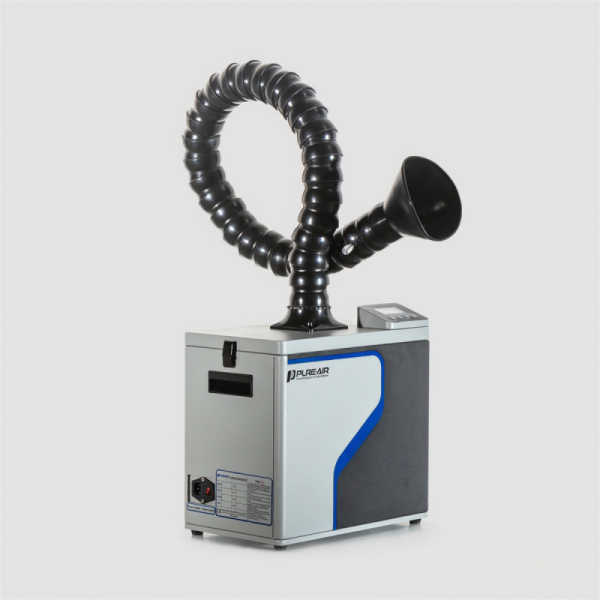
Technically speaking, the typical culprits are: inadequate capture velocity at the soldering point, excessive recirculation where contaminants re-enter work zones, and lack of real-time monitoring for VOC spikes. Add in unreliable components — like cheap fans or clogged HEPA filters — and the whole chain breaks. In shops using edge computing nodes for process monitoring, you still need reliable sensors at the source to correlate events with emissions. Power converters and vacuum pumps may hum along, but if duct losses are high you lose effective capture. I believe the gap isn’t fancy tech; it’s system thinking — and routine maintenance that never happened. (Yes, even the best extractor won’t save a sloppy hood setup.)
Why do standard fixes fail?
Because teams pick single-point solutions and expect system-level results. They treat extraction like a box to check instead of a living part of production. I’d recommend starting with a smoke test at each station and a simple particle count baseline — then build from there.
Part 3 — Looking forward: better principles and clear metrics
Now let’s shift forward. I want to outline practical futures — not sci-fi. Think modular capture benches, smart monitoring tied to MES, and improved filter stages that separate coarse and fine particles before HEPA. In many modern lines, integrating sensor feeds into edge computing nodes provides actionable alerts: when a reflow oven cycle spikes VOCs, local extraction ramps, and a message goes to the technician. For those in electronic product manufacturing, that means fewer manual checks and faster response. It’s about linking detection to action — instant and local.
Consider a case example: a mid-size board assembler replaced a generic canopy hood with localized nozzle capture and added simple VOC sensors. Within weeks, operator complaints dropped 60%, filter life stabilized, and measured particle counts fell below thresholds. — funny how that works, right? The key principle: match capture design to the emission profile, and let controls do the heavy lifting.
What’s Next — metrics to judge a good solution
If you’re evaluating systems, here are three metrics I always use: capture efficiency at the source (measured), system uptime and serviceability (how quickly filters/fans can be changed), and response latency for automated controls (how fast extraction scales during spikes). These tell you more than marketing claims. I’d also add: check maintenance logs and ask who trains operators — poor human procedures undo great hardware.
To wrap up, I’ve learned that clean air in electronics and industrial settings isn’t a mystery. It requires clear capture design, sensible monitoring, and honest upkeep. We can reduce exposure, protect product quality, and keep teams healthier — measurable wins. For thoughtful, practical solutions that match shop realities, consider exploring PURE-AIRPURE-AIR.