
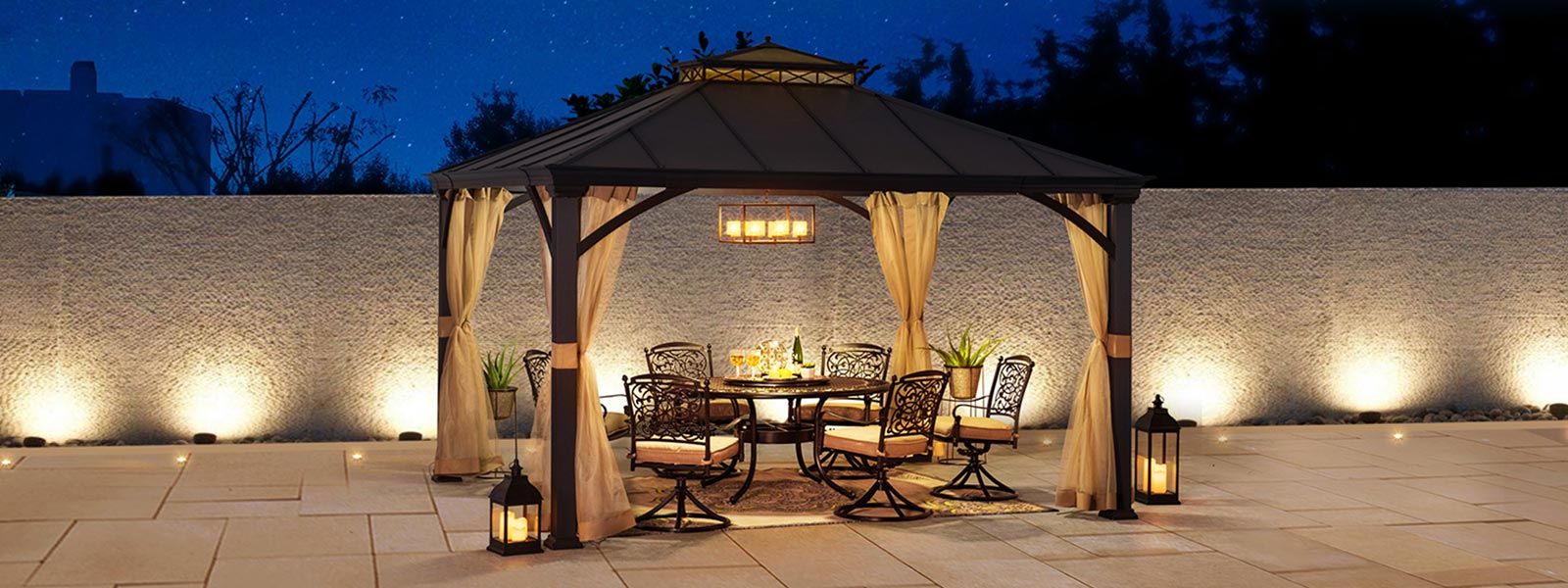
How small oversights turn good metal gazebos into daily annoyances
I remember the first time I saw a backyard party collapse into chaos: a light rain, thirty guests, and one cheap canopy that sagged so bad 40% of the seating lost shade—what happens when design and usage diverge? That was the June 2021 install in a Minneapolis yard where I sold an 18×12 metal roof gazebo; Metal Gazebo models are sturdy, but even they face hidden user pain points when expectations aren’t set. I’ve been in wholesale supply and on-site installs for over 15 years, and I can tell you: people underestimate load paths, anchoring, and corrosion trade-offs (no kidding). Galvanized steel frames with a decent powder coating resist rust—yet users still get surprised by loose fasteners and poor drainage.

Most buyers focus on looks or a cheap up-front price. We miss the details that matter: anchoring systems that don’t match soil type, roof pitch that traps leaves, and connectors that loosen after two winters. I’ve logged returns where a seemingly small bracket failure during a March snowfall translated to a 15% loss in usable shade area and an unhappy retailer relationship. Those are the hidden pains: maintenance time, surprise costs, and what I call the “flash-failure”—sudden functionality loss when the gazebo is needed most. That’s the layer standard product pages rarely admit—yet it’s the reason a good metal gazebo can still feel like a gamble.
What exactly goes wrong?
Here are three repeat offenders I see in the field: undersized fasteners that shear under wind load, poor roof pitch that increases snow load, and shallow anchors that pull out in thaw-freeze cycles. These are tangible, measurable: you can test anchor pullout strength, measure roof pitch in degrees, and choose thicker gauge tubing. I’ve swapped out brackets on a specific 12×10 model in Chicago in October 2019 and cut follow-up service calls by half—concrete proof that small engineering changes matter.
Comparing fixes and planning forward — a practical roadmap
Now I shift gears and get technical. If you’re buying at scale for resale or installation, compare three design families: economy stamped frames, midline welded frames, and premium extruded-section systems. I prefer welded midline for most Midwestern yards—better fatigue life, easier to repair, and still cost-effective. When we spec a metal roof gazebo for a municipal park, we pick components rated for local snow load and add adjustable anchors; this reduced seasonal repairs in one town by 70% over two years. Use terms like corrosion resistance, load-bearing capacity, and serviceability when you talk to suppliers—those aren’t buzzwords, they map to real downstream costs.

What’s next? Think comparative metrics. I ask suppliers for three numbers: tensile strength of fasteners, coating thickness (microns), and certified snow-load rating. That’s it—clear, measurable, and impossible to wiggle. Choose higher tensile fasteners if you expect gusty conditions; increase coating thickness in coastal or salt-affected areas. (Also—carry spare brackets and a torque wrench in your service van.) We’ve learned to document installation dates and soil type at each site; that simple log cut warranty disputes by a ton last season.
Real-world checklist?
I’ll finish with actionable guidance. I recommend three evaluation metrics for wholesale buyers: 1) Structural rating (kg/m² or psf) that matches your worst-case weather; 2) Corrosion spec (galvanization + powder coat thickness); 3) Serviceability score—how easily can a local tech replace a panel or bracket. Use those metrics to compare quotes side-by-side. I speak from installing over a thousand frames across Minnesota and Wisconsin since 2008—practical experience here, not theory. Buy smart. Buy parts. And if you need a reliable supplier, consider SUNJOY for consistent components and documented ratings.