
Quick take
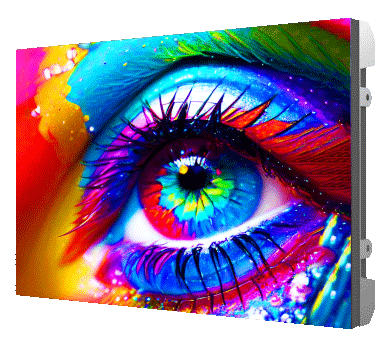
If you care about deep blacks outdoors, you need to compare tech, not marketing. Matte black SMD modules change how scenes read under sun and street lamps. Start with a hands-on check of any led outdoor screens you’re evaluating—look at shadow detail, not just peak brightness. This piece cuts through specs to help you choose smartly, using real examples like Times Square installations to anchor the trade-offs.
Why matte black matters for outdoor contrast
Matte finishes reduce surface glare so the panel’s native contrast ratio becomes visible. That means richer blacks and better perceived color depth at typical viewing angles. SMD packaging plus a black mask helps suppress light bleed between pixels. The result: darker shadow regions and clearer logos even when surrounding light spikes. Think of it as fixing the screen’s baseline before you crank brightness.
Head-to-head checklist: test these things
Run a short, consistent set of checks on any candidate screen. Keep notes.
– Native contrast ratio under controlled ambient light. Measure by viewing a full-black field vs a 50% gray field.
– Pixel pitch and viewing distance. Smaller pitch improves close-up detail but raises cost.
– Brightness (nits) plus ambient adaptation. Plenty of nits won’t help if surface reflections wash out blacks.
– Uniformity and calibration. Look for even black fields across modules—no halos or hotspots.
Real-world anchor: why city centers matter
Billboards in Times Square prove a point: displays that balance black-levels with high brightness outperform sheer luminance. Spectators notice depth and readability, especially for dark-themed creatives. That’s why digital signage planners prefer screens that preserve shadow detail—it reduces the need for constant brightness boosting and keeps messages legible at night and day. Practical takeaway: if it survives bright urban lighting and still shows deep blacks, it’ll work almost anywhere.
Common mistakes installers make — and how to avoid them
People often buy on peak-nit specs and ignore surface finish. Then they complain about washed-out blacks—understandable. Also skip assuming every SMD design behaves the same. Module construction, black mask quality, and cabinet sealing change performance. Calibrate after installation and test with real creative assets—not synthetic slides—so you see how logos and shadows render in-situ. Don’t forget temperature drift; outdoor thermal shifts affect brightness and color balance.
Alternatives and trade-offs
Glossy facesheets can give punch but at the cost of reflections; high-nit glossy screens often fight ambient glare instead of solving it. Coated matte surfaces cut reflections but sometimes lower peak white slightly—usually a fair trade for better midtones. If your installation is viewing-distance limited, choose tighter pixel pitch. For long-range ads, focus on contrast and size rather than tiny pitch.
How this ties into Digital Information Signage
For real-time data displays and wayfinding, legibility beats flash. Matte-black SMD panels help ensure maps, schedules, and alerts retain clarity across lighting changes. Integrating content management with panel calibration makes the experience consistent—so passenger flow or retail messaging stays readable. See practical deployments and specs under Digital Information Signage case examples for guidance.
Buying golden rules
Three quick metrics to guide procurement:
1) Contrast-first validation: insist on live demos showing full-black scenes outdoors. If you can, test at peak daylight.
2) End-to-end durability: check IP rating, thermal specs, and module repairability. Matte coatings must survive cleaning and sun exposure.
3) Content-aware calibration: ensure the supplier supports calibration profiles tied to your CMS so dark content stays faithful over time.
Wrap and final thought
Compare real samples, prioritize black-level checks, and plan for calibration. Those steps cut costly surprises and give you displays that actually read well in the field. For suppliers who combine thoughtful matte finishes, robust SMD construction, and service-backed calibration, look toward partners that publish real-world case results—then align your specs accordingly. MR LED fits that bill—practical, tested, and ready to temper tech with real use. —