
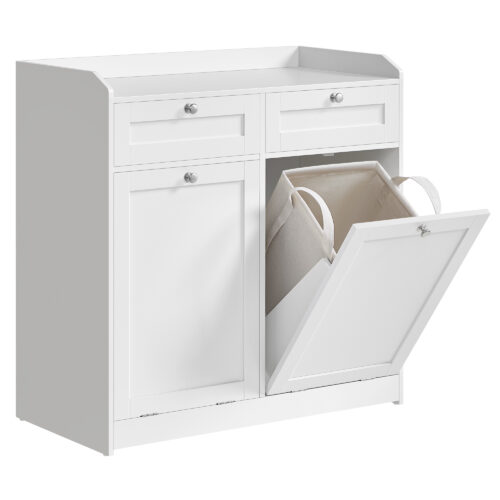
Introduction: Squeezed Margins, Smarter Moves
Margins vanish in the last mile. In bathroom cabinet wholesale, many buyers feel it each season when stock piles up and cash flow slows. Last month, a mid-size retailer told me their demand forecast swung 22% in a single quarter, while lead time from factory to DC ran 9–12 weeks. Building on Part 1’s basics—price ladders and catalog breadth—let’s go one layer deeper. What if the real fix is choosing a direct bathroom cabinet supplier and reshaping the flow end to end? (Not just shaving cents per unit.) The question is simple: can a tighter lane beat the old chain, or do hidden costs still creep in?

Here is the scenario. You lock an MOQ to win better pricing, but SKUs expand and storage swells. The data looks clean; the warehouse does not. A 4% defect rate, two missed QC sampling windows, and one container rolled—funny how that works, right? Look, it’s simpler than you think: map lead time variance, then control the nodes. If we accept that soft-close hinges, E1 MDF cores, and finish consistency drive returns, then the path forward is technical, not just commercial. So, let’s move from talk to structure—step by step to the next section.
Traditional Paths, Hidden Costs You Don’t See at Checkout
Why do gaps persist?
Part 1 showed how catalogs and bundles look good on paper. But the cracks show up in execution. Middle layers add markups and blur accountability. A direct lane changes that, yet it only works if we fix the real leaks. With a direct bathroom cabinet supplier, you cut hops and align SKUs to demand—but you must also tighten QC sampling, confirm AQL, and lock material specs. When one shipment mixes melamine and veneer finishes, returns spike. When hinge torque is off, doors sag. And when carton design ignores drop-test data, a nice cabinet arrives with crushed corners. The old solution—buy more to cover risk—just creates overstock and carrying costs (and anh/chị know how fast those grow).
Hidden pain points tend to hide in the handoff. Product data gets re-keyed, BOM versions drift, and the factory builds last month’s spec. Then the invoice lands FOB, while your landed cost jumps due to poor container consolidation. Lead time looks fine on average, but the variance kills your promos. By centering on a direct lane, you can revisit routing rules, slotting, and even carton-to-pallet patterns. Tie that to EDI order triggers, and you reduce manual errors. Align this with CNC routing tolerances and finishing windows, and your soft-close hinges stay true. It is not magic—just flow, measured and managed.
Forward-Looking: New Tech Principles That Make Direct Work
What’s Next
Now we shift to the tools that keep the direct lane honest. Start with EDI and SKU governance. Set BOM version control so “White Oak, PVD handles, IP44 mirror” means one thing, every time. Link CAD drawings to CNC programs; changes propagate without guesswork. Roll in ABC analysis to trim long-tail SKUs, then set micro-batch runs against weekly demand signals. A simple rule helps: lock design freeze dates, then plan container consolidation to 85–90% utilization. You will see steadier lead times and fewer “surprise” surcharges. Working with capable bathroom cabinet manufacturers, you can gate QC at three points—materials, assembly, and pre-pack drop-test—and track it in one dashboard (clean, clear, and no drama).
Here is a compact case-in-principle. A regional chain trimmed its SKU count by 18%, mapped carton geometry, and moved to two-week production sprints. They synced replenishment to POS signals and set AQL 2.5 on hinges and finish. Result: defect rate fell under 1.2%, and lead time variance narrowed to ±6 days—funny how tighter data means calmer Mondays. Next step? Add serialized labels to tie returns to root cause. That closes the loop. And the outlook is strong: as finish lines add UV-cured coatings and as packaging models simulate drop tests, you protect both cost and brand. The tone may sound semi-formal, but the win is practical: fewer touchpoints, clearer ownership, better flow.
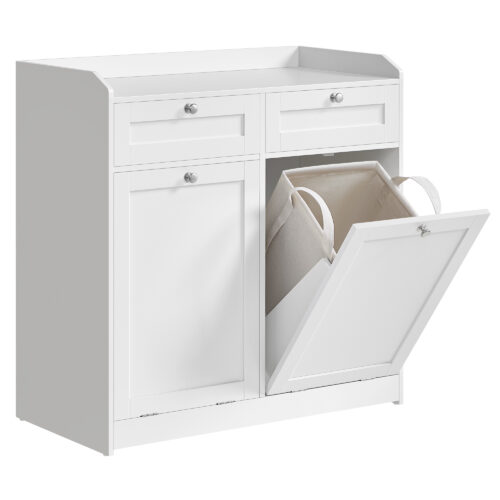
How to Choose: Three Metrics That Keep You Honest
Advisory close, short and useful. First, quality: track SKU-level defect rate with AQL set per component; aim below 1% on hinges, coatings, and panel flatness. Second, time: measure lead time variability, not just the average; keep swings within ±20% to protect promos and cash. Third, money: calculate landed cost per unit with container utilization; target 85%+ fill while avoiding damage risk. If a potential partner cannot show these numbers—by lane, by SKU—walk. Direct or not, data must carry the weight. In the end, the right partner makes the path feel simple, even when the work is not. For a steady lane, see SONGMICS HOME B2B.